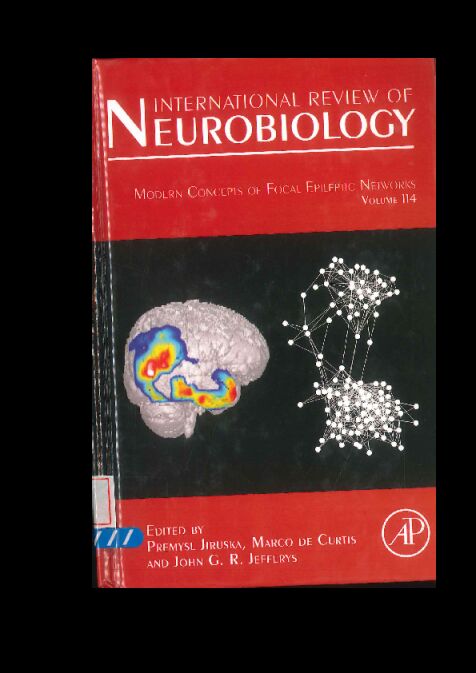
书名:Modern concepts of focal epileptic networks
责任者:Premysl Jiruska | Marco De Curtis and John G.R. Jefferys. | Jefferys, John G.R.
出版时间:2014
出版社:Elsevier Science ,
摘要
Published since 1959, International Review of Neurobiology is a well-established series appealing to neuroscientists, clinicians, psychologists, physiologists and pharmacologists. Led by an internationally renowned editorial board, this important serial publishes both eclectic volumes made up of timely reviews and thematic volumes that focus on recent progress in a specific area of neurobiology research.
Serial Editors: Patricia Janak and Peter Jenner.
Impact Factor 2017: 2.371 (Copyright ISI Journal Citation Report)
To view individual chapters for International Review of Neurobiology, please visit Science Direct.
Praise for the Series: "Invaluable reading." - NATURE "A valuable addition to any library as current reference material for advanced undergraduates, graduate students and professional scientists." - CHOICE
查看更多
目录
Contributors ix
1.Modern Concepts of Focal Epileptic Networks 1
Acknowledgments 5
References 5
2.Neocortical Focus: Experimental View 9
1.Introduction 10
2.Neocortical Neuronal Activities During States of Vigilance 10
3.Neocortical Neuronal Activities During Seizures 15
4.Alterations of Synaptic and Intrinsic Excitability During Seizures 17
5.Unbalance of Excitatory and Inhibitory Influences Leading to Seizure Generation 18
6.Focus of Epilepsy Versus Seizure and Interaction of Epileptic Focus with Intact Cortex 20
7.Neuronal Plasticity Leading to Development of Epilepsy 22
8.Conclusions 25
Acknowledgments 26
References 26
3.Malformations of Cortical Development and Neocortical Focus 35
1.Introduction 36
2.Normal and Abnormal Development of the Cerebral Cortex 37
3.The (Un)identified Neocortical Focus 45
4.Removal of a Neocortical Focus 50
5.Conclusion 53
Acknowledgments 53
References 53
4.Limbic Networks and Epileptiform Synchronization: The View from the Experimental Side 63
1.Background 64
2.Mechanisms Underlying Epileptiform Synchronization 66
3.Interactions Between Limbic Areas 73
4.Seizure-Onset Types 75
5.Modulation of Epileptiform Synchronization by Neurosteroids 78
6.Conclusions 81
Acknowledgments 81
References 81
5.Limbic Networks: Clinical Perspective 89C2\
1.Introduction 90
2.Clinical Features of Limbic Epilepsy 91
3.Structural Networks in Limbic Epilepsy 95
4.Functional Networks in Limbic Epilepsy 97
5.Metabolic Networks in Limbic Epilepsy 109
6.Conclusions 111
References 112
6.Modern Concepts of Seizure Modeling 121
1.Introduction 122
2.Detailed Biophysical Models 122
3.Lumped Models 137
4.Analogies 146
5.Discussion 148
Acknowledgments 149
References 149
7.Mechanisms of Ictogenesis 155
1.Introduction 156
2.Recording the Brain and its Networks During the Transition to Seizures 159
3.Cellular Substrates of Ictogenesis: Neurons and Neurotransmission 162
4.The Environment of Neurons' Ions, Astrocytes, and the Extracellular Space 170
5.Conclusion 174
Acknowledgments 175
References 175
8.Seizure Termination 187
1.Introduction 188
2.Metabolic Mechanisms of Seizure Termination 189
3.Network Aspects of Seizure Termination 193
4.Conclusions 202
References 203
9.Epileptic Focus and Alteration of Metabolism 209
1.Introduction 210
2.Acute Changes in Energy Metabolism During Seizures 212
3.Metabolic Dysfunction of Chronic Epileptic Tissue 216
4.Alteration of Mitochondrial Genome in Chronic Epileptic Tissue 220
5.Changes in Blood Flow Regulation in Epileptic Tissue 224
6.Alteration of Blood Brain Barrier 228
7.Conclusions 232
Acknowledgments 233
References 233
10.Modern Techniques of Epileptic Focus Localization 245
1.Introduction 246
2.Structural Imaging, Volumetrics, and Morphometric Analysis 247
3.Functional Neuroimaging in Epilepsies Using PET 253
4.Ictal Perfusion 260
5.Irritative Zone as Assessed by BOLD fMRI 265
6.Conclusions 271
Acknowledgments 271
References 271
11.From Treatment to Cure: Stopping Seizures, Preventing Seizures, and Reducing Brain Propensity to Seize 279
1.From Anticonvulsant Therapy to Disease-Modifying Treatment 280
2.Seizure Prevention: Toward Personalized Medicine to Stop Seizures from Happening 280
3.Seizure Prevention: Stopping Epileptogenesis 282
4.Reducing Potential Adverse Effects by Treating Seizures in Real Time 283
5.Real-Time Seizure Treatments: What to Deliver? 283
6.Optogenetics 284
7.Chemical Genetics 287
8.What to Hit: Are (ntemeurons a Good Target for Interventions? 288
9.Gene Therapy: Introducing Genes to Selected Neurons 290
10.Treatments to Restore Excitability: Is there a Possibility of a Cure? 291
11.How Far to Cure(s)? 293
Acknowledgments 294
References 294
Index 301
Contents of Recent Volumes 307
查看PDF
查看更多
馆藏单位
中国医科院医学信息研究所