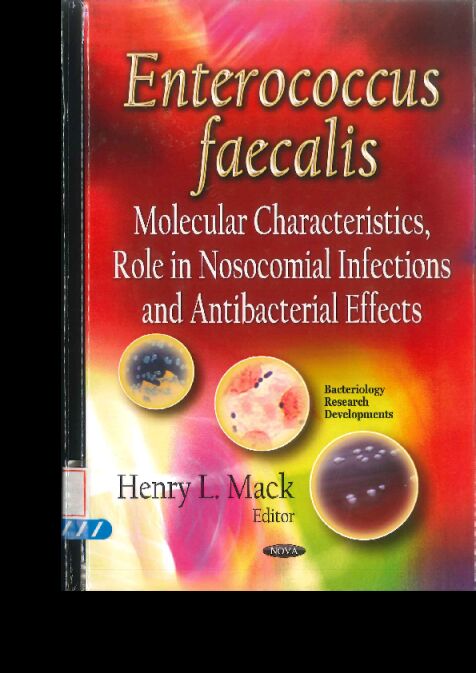
书名:Enterococcus faecalis
出版时间:2014
出版社:Nova Science Publishers, Inc.,
前言
Enterococcus faecalis is a gram-positive, coccus shaped, lactic acid bacterium, with demonstrated ubiquity across multiple anatomical sites. Enterococcus faecalis isolates have been isolated from clinical samples as the etiological agent in patients with overt infections, and from body sites previously thought to be sterile but absent of signs and symptoms of infection. E. faecalis is implicated in both human health and disease, recognized as a commensal, a probiotic and an opportunistic multiply resistant pathogen. E. faecalis has emerged as a key pathogen in nosocomial infections. Enterococcus faecalis is a commensal bacterium inhabiting the gastro-intestinal tract of humans. Interestingly, although it is not clear whether E. faecalis is part of the oral cavity microbiome, it is frequently recovered from root canal infections. Specifically, it is the major pathogen found in persistent infections associated with root canal treatment failure. Moreover, E. faecalis is one of the leading multidrug resistant nosocomial pathogens, causing infective endocarditis, and participating in urinary tract, wound, and device- device-related infections. This book discusses the molecular characteristics, its role in nonsocomial infections and the antibacterial effects of Enterococcus faecalis. It begins by discussing the virulence factors of enterococcus faecalis and concludes with E. faecalis in dental infections.
Chapter 1 - Enterococci are natural inhabitants of the intestinal microbiota of humans and animals. They can survive in many environments contaminated with human or animal faecal materials (such as water, soils receiving and any surfaces) as well as food products derived from animals. They are important causes of community-acquired and nosocomial infections, such as urinary tract infections, endocarditis and bacteraemia. Among enterococcal diseases, the majority are associated with Enterococcus faecalis species. Several factors are associated with a high risk of acquiring enterococcal infections, including antimicrobial resistance and expression of virulence determinants. The most known virulence factors are enterococcal surface protein, aggregation substance, cell wall adhesins, sex pheromones, production of extracellular superoxide, production of hydrolytic enzymes (such as gelatinase), secretion of cytolysin, production of biofilm, among others.
To cause infection, E. faecalis must have virulence traits which allow the infecting strains to colonize and invade host tissue and translocate through epithelial cells and evade the host's immune response.
This review explores the importance of the presence of virulence factors for understanding the potential pathogenic activity of E. faecalis.
Chapter 2 - Enterococcus faecalis is a gram-positive bacteria that, while a frequent gut commensal, is one of the leading causes of nosocomial infections, which comprise urinary tract infections, endocarditis, bacteremia and meningitis. An important clinical feature of this species is the resistance to a wide range of antimicrobial agents, as demonstrated in clinical, food and water isolates. It not only contains several natural antibiotic resistances, but it is also capable of acquiring new ones as a result of mutations or by acquisition of new genes. Thus, there is a continuous need to search for new drugs that may be used against E. faecalis. Some naturally occurring chemical compounds have played a central role in antibiotic drug discovery, with a very significant percentage of clinically proven drugs being derived from natural products. Recently, studies have been reporting that even commonly used herbs, fruits or vegetables, may contain molecules that could constitute potential new treatment against several bacterial infections, including multi-drug resistant bacteria. The present chapter focuses on the most recent published reports on naturally-derived antimicrobial molecules effective against E. faecalis. When available, the molecular mechanism of action will also be addressed.
Chapter 3 - Enterococci are recognized by their physiological versatility, which is responsible for the ubiquitous occurrence of these microorganisms. Because of this extraordinary capacity to survive under unfavorable conditions, they can persist in nosocomial environment for long periods, which may represent the source of exogenous enterococcal infections.
In humans, they compose genitourinary, oral and especially gastrointestinal microbiota. Enterococcus faecalis is, by far, the major species in both, colonized or infected patients. Although Enterococcus faecium is well-recognized by its resistance, E. faecalis consistently presents a more robust virulence arsenal. Its virulence has been defined as multifactorial, with participation of many different molecules and features, especially adhesins and the capacity of biofilm production.
Until the 70s, their pathogenic role had been neglected. However, since that period, they have been recognized as one of the leading cause of opportunistic infections in nosocomial setting, especially affecting immunosupressed, elderly or long-term hospitalized patients. The major clinical syndromes related to enterococci are bacteremia, endocarditis and urinary tract infections. Besides, they may be frequently associated to biliary, abdominal and wound infections.
The acceptance of this pathogenicity was coincident, and possibly related with the increase use of broad-spectrum antimicrobial agents, such as third-generation cephalosporins, to whom enterococci are intrinsically resistant. Indeed, this intrinsic resistance is extended to the majority of antimicrobials commonly used to treat gram-positive cocci infections. Therefore, this feature makes them much more adapted to the nosocomial environment than other bacterial genus.
Along with their intrinsic resistance characteristics, enterococci present an extraordinary capacity to acquire mobile genetic elements, carrying resistance genes to different classes of antimicrobials, including: chloramphenicol, tetracyclines, macrolides, glycopeptides and high levels of aminoglycoside. Therefore, efficient antimicrobials are scarce, leading to difficulties in treatment of enterococcal infections. The occurrence and dissemination of multidrug-resistant strains is well-recognized and represents a challenge to medical and infection control staff.
The most impactful phenotype is the Vancomycin-Resistant Enterococci (VRE), commonly related to multidrug-resistant isolates. Despite the introduction of new drugs active against VRE, resistance to them, including linezolid, tigecycline and daptomycin, have been described around the world. VRE genotype may be related to nine different van genes, located in mobile genetic elements. The most relevant genotype is, by far, vanA-VRE, which may present a clonal or heterogeneous dissemination, although the former seems to be more frequent and is associated with exogenous acquisition through healthcare staff. Long-term hospitalization, stay in intensive therapy unit and previous usage of antimicrobials have been associated to VRE acquisition.
VRE is endemic in many regions of the world and management of outbreaks requires strategies to avoid new cases and to reduce transmission rates, which includes isolation of infected or colonized patients. This management is difficult because, once established in determined nosocomial setting, VRE is hard to eradicate.
In conclusion, enterococci is a challenging opportunistic pathogen in nosocomial settings, especially because of its resistance traits, ability to survive for long periods in the environment, difficulty to eradicate and control its dissemination and the multifac torial virulence, which can cause life threatening infections in specific and severely ill patients.
Chapter 4 - Enterococcus faecalis is a Gram-positive, coccus shaped, lactic acid bacterium, with demonstrated ubiquity across multiple anatomical sites. Enterococcus faecalis isolates have been isolated from clinical samples as the etiological agent in patients with overt infections, and from body sites previously thought to be sterile but absent of signs and symptoms of infection.
E. faecalis is implicated in both human health and disease, recognized as a commensal, a probiotic and an opportunistic multiply resistant pathogen. E. faecalis has emerged as a key pathogen in nosocomial infections.
E. faecalis is well equipped to avert recognition by host cell immune mediators. Antigenic cell wall components including lipotechoic acids are concealed from immune detection by capsular polysaccharides produced by some strains. Thereby preventing complement activation, the pro-inflammatory response, opsonisation and phagocytosis. E. faecalis also produces a suite of enzymes including gelatinase and cytolysin, which aid in both virulence and host immune evasion. The ability of enterococci to form biofilms in vivo further increases virulence, whilst simultaneously preventing detection by host cells.
E. faecalis exhibits high levels of both intrinsic and acquired antimicrobial resistance. The mobility of the E. faecalis genome is a significant contributor to antimicrobial resistance, with this species also transferring resistance to other Gram-positive bacteria.
Whilst E. faecalis is of increasing concern in nosocomial infections, its role as a member of the endogenous microbiota cannot be underestimated. As a commensal and probiotic, E. faecalis plays an integral role in modulating the immune response, and in providing endogenous antimicrobial activity to enhance exclusion or inhibition of opportunistic pathogens in certain anatomical niches.
In this chapter the authors will review possible mediators of enterococcal transition from commensal microbe to opportunistic pathogen, considering isolates obtained from patients diagnosed with pathogenic infections and those obtained from asymptomatic patients.
Chapter 5- The genus Enterococcus belongs to the indigenous gastrointestinal microbiota of humans and animals, and is present in food of animal origin as well as in vegetables. Whenever these bacteria cause invasive infections, their eradication is difficult. This phenomenon is linked to the natural and acquired antimicrobial resistance of enterococci as well as the existence of cell components that can behave as virulence factors. Cytolysin production contributes with the severity of infectious diseases in animal models and in humans. It has been proven that 60% of Enterococcus faecalis strains isolated from different infections sites are cytolysin producers. Their presence is associated with a five-fold increase of death risk in bacteremic patients. Clinical and microbiological resolution of severe infections can be affected when they are caused by cytolysin-producers E. faecalis strains that display high-level gentamicin resistance (HLGR). Enterococci carry a wide variety of mobile genetic elements and they are regarded as a reservoir of acquired antimicrobial resistance genes for Gram-positive bacteria. Multiple antimicrobial resistance is common among enterococci and constitutes a relevant Public Health issue. In 1979, HLGR (MIC ≥ 500 μg/mL) in enterococci was reported for the first time. HLGR represents a significant therapeutic problem for human medicine, especially for patients with invasive infectious diseases that require bactericidal efficacy such as meningitis, endocarditis and osteomyelitis. The most frequent HLGR gene among enterococci is aac (6')-ie-aph (2")-la that encodes AAC(6')-APH(2"), an enzyme with acetyl transferase and phospho transferase activities. This bifunctional gene confers resistance to aminoglycosides available for therapeutic use with the exception of streptomycin. As a consequence, the synergistic role (bactericidal effect) of aminoglycosides with cell wall-active agents such as ampicillin or vancomycin is precluded. Along the last decade, E. faecalishas emerged as a relevant health-care associated pathogen. An identical mechanism for HLGR has been reported for human, animal and food enterococcal strains. In addition, exchange of these resistance genes through horizontal transfer is feasible. Risk factors for the acquisition of infection with high-level gentamicin resistant enterococci have been identified: previous long-term antimicrobial treatment, number of prescribed antimicrobials, previous surgeries, perioperative antimicrobial prophylaxis, hospitalization term/ antimicrobial treatment, urinary catheterization and renal failure. Infections caused by high-level gentamicin resistant E. faecalis constitute a severe risk for patients with invasive conditions and long-term hospitalization. Clonal expansion and emergence of unique bacterial strains contribute to the significant enhancement of infectious diseases caused by high-level gentamicin resistant E. faecalis.
Chapter 6 - Enterococcus faecalis is a persistent agent that frequently causes infection of the tooth root canal and failure of endodontic treatments. The infection is hard to be treated. Chemo mechanical cleaning and shaping of the root canal can greatly reduce the number of bacteria. However, the use of intracanal medications to disinfect the root canal system has been advocated to enhance the success of the treatment.
Calcium hydroxide is widely used as an intracanal medicament in endodontic therapy. The in vitro calcium hydroxide action and its vehicles evaluated against Enterococcus faecalis showed that this bacterium had the higher inhibition zones with calcium hydroxide + p-monochlorophenol; calcium hydroxide + p-monochlorophenol-propylene glycol pastes and 1% chlorhexidine gluconate in comparison to other intracanal medicaments. The vehicle used to prepare the calcium hydroxide paste might contribute to its antibacterial action. Chlorhexidine gluconate gel used alone, and camphorated p-monochlorophenol and camphorated p-monochlorophenol- propylene glycol as vehicles of calcium hydroxide, could be recommended, in an antimicrobial sense.
Since chlorhexidine gluconate may be used in different forms, another experience demonstrated the best of them to evidence efficacy to eliminate the most resistant intracanal bacteria. Maxillary anterior human teeth were prepared, sterilized and infected with Enterococcus faecalis for 3 days. Specimens were filled with calcium hydroxide + distilled water, 2% chlorhexidine gel and calcium hydroxide + 2% chlorhexidine (aqueous solution) and incubated at 37℃. At different times the dressings were removed and the teeth were immersed in Brain Heart Infusion broth. Enterococcus faecalis growth was evaluated by monitoring turbidity of the culture medium. Specimens were observed by scanning electron microscopy. Chlorhexidine gel was effective in eliminating Enterococcus faecalis at day 1. Calcium hydroxide + distilled water and calcium hydroxide + chlorhexidine aqueous solution showed no antimicrobial effect on Enterococcus faecalis. Scanning electron microscopy observations evidenced these results. Chlorhexidine gel was the only effective intracanal medicament against Enterococcus faecalis.
A common clinical problem in Endodontics which is the re-infection of the root canal by Enterococcus faecalis, and ultimately, the failure of the endodontic treatment, may be satisfactory solved by the use of 2% chlorhexidine gluconate gel.
Chapter 7 - Due to their ability to survive adverse conditions, enterococci are widespread in nature and can be found in milk, dairy products and human and animal gastrointestinal tracts. Still, the use of enterococci in food preparation is controversial, since they have traditionally been branded as indicators of faecal contamination and their role in food spoilage is well known. However, some enterococcal strains exhibit antimicrobial effects and have probiotic potential, contributing to the improvement of the general state of health. For that reason, the authors have analyzed natural isolates of Enterococcus faecalis originating from various dairy products manufactured in rural households located in the mountains of Serbia. Genotyping analysis of selected enterococci showed high diversity among the isolates. The antimicrobial activity of the isolates showed a great effect on the number of pathogenic and non-pathogenic strains, including L. monocy to genes, L. innocua, E. coli, Pseudomonas sp., and Candida pseudotropicalis. Furthermore, analysis of the presence of known bacteriocin encoding genes showed that the genes for various enterocins were present. Although in some strains more than one enterocin gene was detected, there was no correlation between the number of enterocin genes and the antimicrobial spectrum. Nevertheless, in order to characterize the strains that could be safely used as starter cultures in functional food, the frequency of virulence determinants and antibiotic resistance, as well as the synthesis of biogenic amines, was analyzed. The results show that the presence of virulence determinants and antibiotic resistance is strain dependent and region specific. In addition, a large percentage of the strains have the ability to decarboxylate tyrosine and other amino acids. Such capacity for decarboxylation of amino acids limits the use of the strains in the food industry. Based on these results, it can be concluded that enterococci isolated from animal food must be viewed with particular caution because they are reservoirs of genes for antibiotic resistance and virulence.
Chapter 8 - Enterococcus faecalis is a commensal bacterium inhabiting the gastrointestinal tract of humans. Interestingly, although it is not clear whether E. faecalis is part of the oral cavity microbiome, it is frequently recovered from root canal infections. Specifically, it is the major pathogen found in persistent infections associated with root canal treatment failure. Moreover, E. faecalis is one of the leading multidrug resistant nosocomial pathogens, causing infective endocarditis, and participating in urinary tract, wound, and device-device-related infections. The present chapter discusses E. faecalis virulence factors contributing to its high prevalence in nosocomial infections and root canal post treatment disease, including its ability to compete with other microorganisms, its cell to cell communication, its ability to invade various tissues, resist nutritional deprivation, facilitate the adherence of host cells and extracellular matrix, produce an immunomodulatory effect and cause toxin-mediated damage. Antiseptic techniques, conventional as well as novel, to overcome the survival ability of E. faecalis as well as virulence factors, are discussed in detail.
查看更多
目录
Preface vii
Chapter 1 Virulence Factors of Enterococcus faecalis: The Promoters for Their Pathogenicity 1
Joana Barbosa, Sandra Borges and Paula Teixeira
Chapter 2 Naturally-Derived Molecules As a Strategy for Countering E. faecalis Infection 19
David M. Pereira
Chapter 3 Enterococcus faecalis: Role in Nosocomial Infection, Resistance Traits and Molecular Epidemiology 29
Juliana Caierao
Chapter 4 Promiscuity, Pheromones and Pathogenicity: Why All Enterococci Are Not Created Equal 69
Elise Pelzer, Irani Rathnayake and Flavia Huygens
Chapter 5 High-Level Gentamicin Resistance in Enterococcus faecalis: Molecular Characteristics and Relevance in Severe Infections 93
Monica Sparo and G. Delpech
Chapter 6 Ente rococcus faecalis in Endodontics 109
Maria Gabriela Pacios and Maria Elena Lopez
Chapter 7 Molecular Characterization of Natural Dairy Isolates of Enterococcus faecalis and Evaluation of Their Antimicrobial Potential 123
Katarina Veljovic, Amarela Terzic-Vidojevic, Maja Totinacki, Sanja Mihajlovic, Goran Vukotic, Natasa Golic and Milan Kojic
Chapter 8 Enterococcus faecalis in Dental Infections: Virulence Factors, Molecular Characteristics, Antibacterial and Anti-Infective Techniques 137
Nurit Beyth, Ronit Poraduso-Cohen and Ronen Hazan
Index 165
查看PDF
查看更多
馆藏单位
中国医科院医学信息研究所