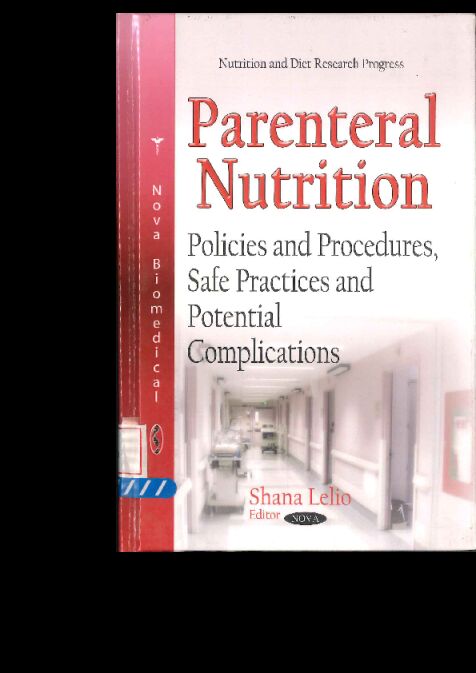
书名:Parenteral Nutrition
ISBN\ISSN:9781633211124,1633211126
出版时间:2014
出版社:Nova Biomedical,
前言
Parenteral nutrition (PN) is the feeding modality of choice for patients with non-functional gastrointestinal (GI) tracts who are unable to maintain their nutrition and hydration enterally. Parenteral nutrition is a complex therapy involving the intravenous infusion of macro and micronutrients directly into the bloodstream for optimal absorption. The main components of parenteral formulas include dextrose, amino acids and lipids. Although PN is a lifesaving therapy for many patients, it is associated with serious short and long-term complications that can be life-threatening. Therefore, selection of the appropriate patient for parenteral therapy is crucial. This book discusses the policies, procedures, safe practices and potential of parenteral nutrition, as well as nutritional considerations for head and neck cancer patients; nutrition support teams and the role of registered dieticians; parenteral nutrition associated liver disease; and refeeding syndrome in children.A\Chapter 1 - Parenteral nutrition (PN) is the feeding modality of choice for patients with non-functional gastrointestinal (GI) tracts who are unable to maintain their nutrition and hydration enterally. Although it is a lifesaving therapy, it is associated with serious complications. A specialized nutrition support team can help select patients who are appropriate for parenteral nutrition. There are short term and long term indications for TPN. Short-term indications include ileus, tube feeding intolerance, small bowel obstruction, bowel rest and perioperative. Long-term indications include short bowel syndrome, recurrent small bowel obstructions, intestinal fistulae, gastrointestinal dysmotility, mesenteric ischemia, inflammatory bowel disease and radiation enteritis.A\Once the patient is selected and a medical plan is made, appropriate intravenous access should be placed. For those requiring short-term parenteralnutrition, peripheral intravenous access is reasonable, however it is preferred to administer parenteral nutrition through a central vein. Central venous access can be gained via peripherally inserted central catheter, central venous catheter, tunneled catheter or med port. Short-term complications of parenteral nutrition include catheter related infections, catheter related thrombosis and deep vein thrombosis, abnormal blood sugars and electrolytes, fluid overload or dehydration. Long-term complications include parenteral nutrition induced liver disease, metabolic bone disease, catheter related infections and sepsis, mechanical complications of central catheters, and catheter thrombosis and blood clots. These complications can be minimized and sometimes prevented if managed by a specialized nutrition support team or a team with good knowledge about parenteral nutrition both in the inpatient and outpatient settings.A\Chapter 2 - Approximately 35-60% of all head and neck cancer patients are malnourished at the time of their diagnosis, either due to tumor burden and obstruction of intake and/or the anorexia/cachexia associated with their cancer. Most of those patients will require parentral nutrition before and after surgical treatment, adjuvant chemotherapy, and/ or radiotherapy. Moreover, head and neck cancer generally affect older population with multiple medical comorbidities that may complicate managing their nutritional needs. Nutritional interventions should be initiated before the cancer treatment begins and these interventions need to be ongoing following completion of treatment to ensure optimal outcomes for patients. A nutritional assessment must be part of all comprehensive treatment plans for patients with head and neck cancer. Alternative nutritional interventions such as immune-enhancing nutrients or anti-cytokine pharmaceutical agents may also be effective as adjuvant therapies, but more research is needed to quantify their clinical effect. This chapter aims to describe the assessment, treatment and modes of administration of nutrition and its impact on the outcome of head and neck cancer patients.A\Chapter 3 - Nutritional counseling by RD has demonstrated that improves the quality of life through nutrient intake in hospitalized patients. In the last decades the role of registered dietitians (RD) has evolved including new responsibilities, activities and areas of work.A\Between these, it is the integration of RD in nutrition support teams, with other professionals as physicians, pharmacists and nurses. One of the major roles of these teams is improving the safety and effectiveness of Parenteral Nutrition, therefore RD knowledge is of great interest in the management of critically ill patients. RD attends daily rounds, manage complex nutrition therapies and participate in policy and protocol development, perform research, feedback and education to other professionals. Other activities of RD is to document in the patienf s progress notes recommendations to the attending physician and bring information about: anthropometrics, fluid status, amount of nutrition received and estimated nutrition needs.A\There are some settings, where RD has been granted privileges for order writing. Thus leading to greater assurance that an intervention will occur, improving nutritional status, better glycemic, caloric and electrolytic control as well as reduction in inappropriate parenteral nutritional use and cost savings.A\Therefore, RD has to continue to integrate and expand their role in the management of parenteral nutrition, in Intensive Care Units (UCI) and in less critical patients who are taking artificial nutrition.A\Chapter 4 - Parenteral nutrition associated liver disease (PNALD) is one of the most common complications of neonatal parenteral nutrition, yet much of its pathogenesis and treatment remains a mystery, In infants, this disease encompasses a spectrum of hepatobiliary changes including both cholestasis and fibrosis; but not generally steatosis. The earliest stage is often signaled by a serum direct bilirubin of >2mg/dL (>34umol/L) while dependent on parenteral nutrition (PN). If the child remains reliant on PN, the cholestasis may progress to portal hypertension, cirrhosis, and eventually end-stage liver disease. Although a definitive treatment for PNALD does not exist, considerable research on the topic has been conducted, thus a review of the literature is the first step to better understand this illness.A\In the following chapter the authors outline the history and incidence of this disease, beginning with the first reporting in the early 1970s to its current presence in modern neonatal intensive care units. They then explore the multiple factors believed to contribute to PNALD, including immature neonatal handling of bile (especially in those born premature) and a lack of enteral stimulation seen in those infants solely dependent on PN. Other factors such as sepsis and related inflammatory insults are examined. The authors explore recent studies implicating pro-inflammatory omega-6 fatty acids and the resulting encouraging trials with omega-3 fatty acids. Lastly, the authors discuss other damaging components of PN, including concerns about contaminants such as aluminum.A\For each of the above mentioned theories of pathogenesis, multiple treatment methods have been proposed and attempted, but none alone has eliminated this disease. It is apparent that this multi-factorial issue will require a multi-faceted approach. The authors examine many of the attempted treatments and summarize their effectiveness, concluding with the most widely used and effective treatment regimes.A\Chapter 5 - Parenteral nutrition-associated liver disease (PNALD) has been common in patients who require long-term parenteral nutrition (PN), it occurs in 15%-40% of adults receiving home PN and 40%-60% of infants receiving long-term PN for intestinal failure (IF), Clinical diagnosis of PNALD includes biochemical markers for liver disease, such as aspartate aminotransferase (AST), alanine aminotransferase (ALT), total bilirubin (TB), direct bilirubin (DB), and ruling out all other potential causes of liver disease. Meanwhile, liver biopsy is needed to definitively diagnose PNALD. The pathogenesis of PNALD is raultifactorial and remains unclear. Risk factors include disruption of the enterohepatic circulation of bile acids, intestinal stasis with subsequent bacterial overgrowth, bile sludging with subsequent bile duct obstruction, early and/or recurrent central venous catheter-related sepsis, and nutrient deficiency or excess.A\There is no specific treatment, Management strategies for its prevention and treatment depend on an understanding of many risk factors, and in general include consideration of early enteral feeding, the use of specialized lipid emulsions such as fish oil emulsions, and isolated small intestinal or combined liver-intestinal transplantation.A\Chapter 6 - Refeeding syndrome is a well-described state of the series of metabolic and biochemical changes that occur during the supplemental feeding of malnourished patients. The shifts in fluids and electrolytes can lead to complications during artificial feeding and if not recognized and untreated can lead to death. Although the physiology and pathophysiology is well known, the circumstances under which the syndrome appears, clinical manifestations and management of these patients is less clear. To date, there are no published randomized controlled studies for refeeding syndrome in pediatric population. Published studies are generally lower level of evidence (level 3 and 4) that include cohort studies, case reports and expert opinions.A\After the brief report of pathophysiology, the authors described refeeding syndrome cases from their clinical practice. Mainly, occurrence in pediatric patients has been reported in children with cancer. Then follow the patients with primary gastroenterological or neurological disease in the intensive care unit. In this chapter the authors describe risk assessment by defining the degree of malnutrition and planning of nutrition support. Baseline biochemical tests and laboratory monitoring, using reference change value of the most important analytes, can identify refeeding syndrome before symptoms appear. In this regard, the refeeding syndrome is laboratory diagnoses that provide a signal for treatment that is significantly simplified and includes termination of feeding, correction of electrolytes and continuation of feeding gradually and slowly.
查看更多
目录
Preface vii
Chapter 1 Parenteral Nutrition: Policies and Procedures, Safe Practices and Potential 1
Chapter 2 Nutritional Considerations for Head and Neck Cancer Patients 21
Chapter 3 Nutrition Support Teams and the Role of Registered Dietitians 39
Chapter 4 Parenteral Nutrition Associated Liver Disease: A Current Review Focused on the Infant 49
Chapter 5 Current Management of Parenteral Nutrition-Associated Liver Disease in Adults 85
Chapter 6 Refeeding Syndrome in Children: Risk Assessment, Diagnostics and Management 109
Index 137
查看PDF
查看更多
馆藏单位
中国医科院医学信息研究所