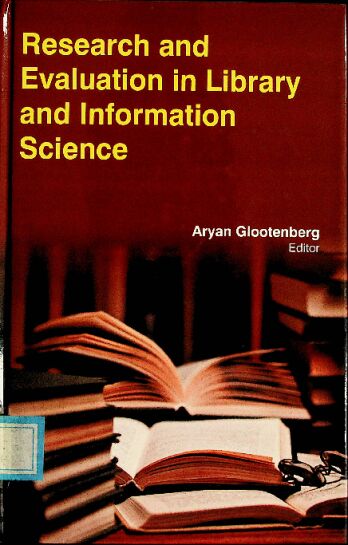
书名:Research and evaluation in library and information science
出版时间:2014
出版社:Koros Press,
分类号:文化、科学、教育、体育
版次:Rev. ed.
摘要
The methodology of evaluative research usually represents a compromise between "pure" research and the demands and strictures of the applied setting, between maintaining the integrity of the research and providing data that will be useful for decision-making. The differences between evaluative research and other research centre on the orientation of the research and not on the methods employed. Evaluative research has a problem solving orientation, implying movement and adjustment as a program moves from ideation through testing to full implementation and subsequent correction. In other regards, evaluative research is not very distinctive. Neither the orientation of evaluative research nor the techniques through which it is carried out are unique. For instance, evaluative research is embodied in the "evaluation of alternative strategies" step often included as an element in a strategic planning cycle. In marketing, evaluative research is implied in any effort to evaluate the market penetration of a new product. Is it possible that the nondistinctiveness of its orientation and techniques results in the lack of deliberate attention paid to evaluative research per se in many fields, including, in this writer's estimation, library and information science? Program Orientation.
To be evaluative research, an investigation must focus on a program and on a consumer. Its sole purpose is to assess the affect of a program on its consumer. Furthermore, evaluative research ordinarily studies actual programs in the field. While either experimentally implemented or fully implemented programs may be the subject of the evaluative research effort, laboratory experimentation, in the sense of isolating the research from environmental influence, is rarely considered within the limits of evaluative research. Field experimental research is the rule where experimental research is employed. While some writers insist that program is the focus of evaluative research, others assert with equal strength that the evaluation of internal organizational processes (such as the efficiency of staff or the cost of providing services) is essential in a full agenda of evaluative research. In this case, everyone is correct; for in the ideal, an internal process would be studied only as it could ultimately be tied to program affect. Evaluative research seeks to discover causal sequence or the impact of a program on its audience. It necessarily strives to determine a cause-effect relationship. Evaluative research is commonly divided into two classes formative and summative. Formative is the type of evaluative research that occurs during a program's implementation in order to make mid- course corrections; formative evaluative research may therefore put considerable stress on such interim elements as how resources are being applied to a program and on the initial response of the audience to the program. Summative research occurs at the end of the program or at the completion of one cycle of a program in order to assess the impact of the total program. It may reinvestigate much the same things as formative research but will also include measures of program effectiveness, or impact and overall program efficiency. Evaluative research is normally conceived in quantitative terms, but it can be equally valid in qualitative form. For instance, information systems ethnography, an almost anthropological assessment of information exchange and transformation processes, may be used to evaluate the success of a "program" or system of information exchange in narrative unquantified terms.
The present book is a concise and up-to-date work including all aspects of this subject. Every effort has been made in the representation manner in this book so that the students do not get confused while going through this book.
查看更多
目录
Preface (vii)
1. Components of Library Research 1 • Staffing • Broad Shares of Library Expenditures • Book and Serial Production • Book and Serial Pricing • Origins of the Serials Crisis
2. Preservation Metadata for Digital Collections 33 • National Consultative Meeting • Action Items Arising from the Meeting • A Draft Research Agenda for Digital Publications
3. Digital Conversion of Nineteenth Century Publications 45 • Intellectual Significance • Appendix 2 Lists Facts and Stets of ACDP • Microfilming, Scanning and Image Enhancement • Electronic Alchemy
4. Archiving, Preservation and Tomorrow's Digital Heritage 66 • Sharing Ideas: Models for International Collaboration • Approaches to Assist in Preserving Access • A Balancing Act: PictureAustralia • The Importance of Standards • Statement of Principles for the Preservation • Principles
5. Source Software Improves Libraries 90 • Basic Computer Programmes • Advanced Programmes • Web Publishing • Conclusion
6. Electronic Publishing Research 98 • Primary and Secondary Texts: the Genbank Example • Electronic Production and Distribution • Changes in Scholarly Ethos and Communication • Issues to be Resolved: Adulteration of Text, Functioning of the Network • Collection Development and Document Delivery
7. Current Procedures in Systems Study 120 • Preliminary Survey—Premise • Worksheet—System Components • Analysis Phase of the Systems Study—Determination and Survey of Inputs/Outputs • Survey of Inputs—Summary Worksheet • Flow Charting
8. Online Libraries and Support System 145 • Commercial Online Systems • In-house Circulation Developments • Acquisitions • Bibliographic Utilities • Copy Cataloguing Procedures • Productivity and Performance Standards • Education Through Digital Libraries • Case Study of Japan • Telecataloging
9. Accessing the Library Websites 209 • Digital Reference • E-mail Reference • Implications of Digital Reference • The Development of Chinese Modern Library • Development of Chinese library • Development of Library: Problems and Solutions • Problems and Solutions
10. Defining a Web Services Interface 252 • Existing Repositories • A URL Based Repository Interface • Network Address Translation • IPv6 Routing • IPv6 Routing Protocols • IPv6 Route Aggregation and Summarization • Windows Support for IPv6 Static Routing
11. IP Addressing and Library Science 275 • IPv4 Addressing • IPv4 Address Prefixes • Types of IPv4 Addresses • Automatic Private IP Addressing • IPv6 Addressing IPv6 Interface Identifiers • IPv6 Address Prefixes
Bibliography 301
Index 303
查看PDF
查看更多
作者简介
Aryan Glootenberg he is M.Lib from Amsterdam University. On his account there are International and National level journals. He is taking workshops on How to use softwares in Library. His work on Library Science has been acknowledged and recommended by various Universities.
查看更多
馆藏单位
中科院文献情报中心