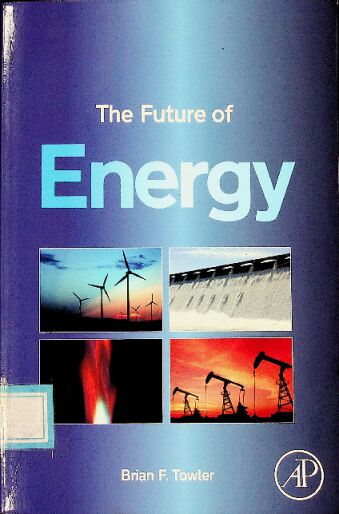
书名:The future of energy
出版时间:2014
出版社:Academic Press,
前言
I was motivated to write this book because I have read many books, articles and news stories that suggest that we are running out of cheap energy and the world will soon be plunged into a never-ending cycle of wars designed to secure the few remaining energy resources. The second perception about energy is that the current energy sources are destroying the environment and we have to find safer, cleaner energy sources that will allow us a better, simpler lifestyle. This is the story of energy and what I found.
Energy fuels economies and lifestyles, and if we don't have enough, then the future could be bleak. So, is the world running out of energy, and do we have to fight wars to secure enough cheap energy supplies to maintain our current lifestyle or should we be lowering our standard of living so that the world has enough energy supplies? What are the alter- natives? What is the future of energy? I will show in this book that we have plenty of energy supplies; we do not have to fight wars to maintain our lifestyle. There are some misguided politicians who think otherwise, and I hope this book will demonstrate to them the errors of their thinking.
The second and related question is: should we be developing cleaner forms of energy so that our energy sources are not destroying the environ- ment? In seeking to answer this question, I came to a surprising conclu- sion: all forms of energy have an impact on the environment. That is because energy is part of the environment. If you manipulate energy sources, you will have an impact on the environment. The more successful an energy source is, the more impact it has on the environment. I formu- lated that idea into an important principle in Chapter 1 called The Towler Principle. We do have the ability to mitigate and minimize the environmen- tal impacts, to lessen their impacts, and that should be our goal.
In examining these questions, I have tried to tell the story in simple and easily understood terms. In Chapter 2, I introduce the units used for energy, of which there are many. But they can be converted from one unit to another. In Chapter 3, I introduce the laws of thermodynamics, which are fundamental to understanding energy processes. These are not diffi- cult principles to understand, but you cannot hope to understand energy if you do not have a rudimentary knowledge of these laws.
In each chapter on specific energy sources, I not only describe how the source is used to generate energy, but also show a lot of graphs and sta- tistics to prove and illustrate my points. If this becomes too much informa- tion to absorb at once, the reader can skip to the end of the chapter where a summary of the conclusions will be found. Chapter 16 ties all these conclusions together and answers the questions raised in the book. It reaches optimistic conclusions. We have plenty of energy: we don't have to fight wars; we don't have to destroy the environment. The future is bright because we have enough energy, and we know how to access it and use it.
查看更多
目录
Preface ix
Acknowledgments xi
1. The History and Culture of Energy I
The Towler Principle 2
The History of Energy Use 2
The Movement to Oil 6
Summary 15
2. How Is Energy Measured 17
Hydrocarbon Fuels 23
Wood Fuels 24
Units of Power 24
3. Energy Science and Thermodynamics 27
The First Law of Thermodynamics 27
The Second Law of Thermodynamics 31
4. Environmental Issues 39
The Carbon Dioxide Issue 39
Coal 51
Oil 53
Natural Gas 53
Wind 54
Solar 55
Hydroelectric 55
Nuclear 56
5. Crude Oil 57
U.S. World Oil Production and the Peak Oil Theory 59
The U.S. Gas Supply Analogy to World Oil Production 67
New Supplies of Oil in the United States and the implications for the World Oil Market 71
The World Picture 82
The Future of Oil 87
6. Natural Gas 89
The World Picture 90
Liquefied Natural Gas 91
Natural Gas Production in the United States 100
Natural Gas Storage 110
The Price of Gas 115
State Production and Transportation of Natural Gas in USA 121
Fracture Stimulation Techniques 125
Liquid Transportation Fuels from Natural Gas 127
The Future of Natural Gas 132
7. Nuclear Energy 135
The Uranium Fuel Cycle 141
Fast Breeder Reactors 144
Uranium Reserves and Sources 146
Nuclear Power Plant Safety 151
The Three Mile Island Incident 152
The Chemobyl Disaster 152
The Fukushima-Daiichi Incident 155
Nuclear Fusion Reactors 155
The Future of Nuclear Power 159
8.Solar Power 161
Photovoltaics 164
Concentrated Solar Power 169
Solar Efficiency of CSP Installations 175
Selected Location Studies 178
Environmental Issues 182
Economics 183
The Future of Solar Energy 185
9.Wind Energy 187
Wind Energy Statistics 187
Physics and Engineering of Wind Power 189
Carbon Dioxide Emissions and Pollution 197
Land Use Issues 198
The Portsmouth Abbey Wind Turbine 201
Impact on Birds, Bats and Other Flying Wildlife 210
Impacts on People 211
Safety 211
Health and Esthetics 211
Energy Reliability 212
Energy Storage 214
Summary 214
10. Hydroelectricity 215
Hydroelectric Basics 216
The Columbia River Hydroelectric System 218
The Grand Coulee Dam 224
The Other Columbia River Dams 228
Pumped Hydroelectric Storage 230
Summary 235
11. Geothermal Energy 237
The Geysers Dry Steam Geothermal Power Plant 243
Other Geothermal Applications 244
Enhanced Geothermal Systems 245
Environmental Issues 253
The Future of Geothermal Energy 255
12. Ethanol, Biodiesel, and Biomass 257
Ethanol Production 258
Fuel Economy of Ethanol 261
Biodiesel Production 261
Direct Conversion of Woody Biomass into Gasoline,Diesel and Other Liquid Fuels 267
Environmental Issues 270
The Future of Biomass 270
13. Coal and Clean Coal Technologies 273
World Coal Production 274
U.S. Coal Production 279
Australian Coal Production 280
Chinese Coal Production 284
Health, Safety, and Environmental Issues in Coal Use 286
Clean Coal Technologies 287
Coal to Liquids Technologies 291
Underground Coal Gasification 296
The Future of Coal 298
14. Carbon Capture and Storage 301
Carbon Emissions 302
Phase Behavior of Carbon Dioxide 304
Carbon Capture Methods 306
Carbon Storage Concepts 307
Carbon Storage Projects 309
The Future of Carbon Capture and Storage 311
15. Hydrogen 313
Hydrogen Technologies 313
The Hydrogen Economy 316
The Future of Hydrogen and the Hydrogen Economy 330
16. What Is the Future of Energy? An Energy Policy for the United States 335
Natural Gas 337
Coal 339
Nuclear Power 340
Hydroelectric 341
Wind 341
Solar 342
Geothermal 342
Oil 342
U.S. Energy Policy Development 343
Appendix A The Carrot Cycle 345
Appendix B Hubbert's Peak Oil Theory from Chapter 5 349
Bibliography 357
Glossary 359
Index 367
查看更多
作者简介
Brian F. Towier Extracting energy from the environment always involves some type of impact on the environment. Based on this principle, The Future of Energy discusses the sources, technologies, and trade-offs involved in meeting the world's energy needs. Historical, scientific, and technical backgrounds set the stage for discussions on a wide range of energy sources, including conventional fossil .fuels such as oil, gas, and coal, as welt as emerging renewable energy sources such as solar. wind, geothermal, and biofuels. From this text, readers will learn that there are no truly "green" energy sources and understand the advantages and disadvantages involved in using each energy source.
查看更多
馆藏单位
中科院文献情报中心