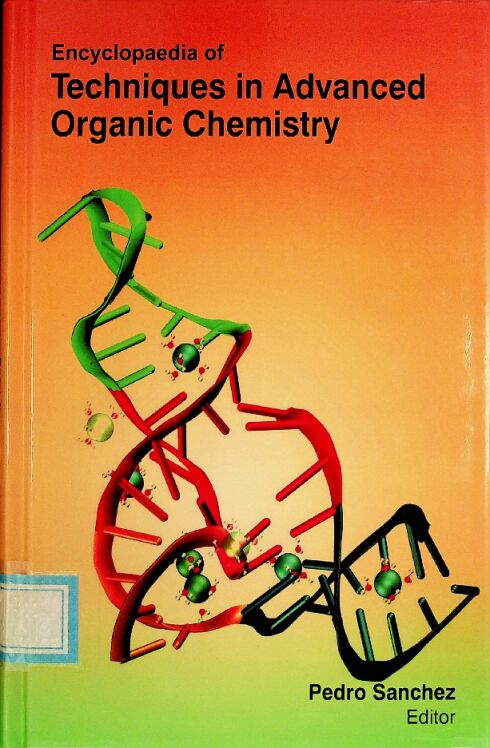
书名:Encyclopaedia of techniques in advanced organic chemistry. Volume 4, Advanced bioorganic chemistry
出版时间:2012
出版社:Auris Reference,
前言
Some forms of chemical biology attempt to answer biological questions by directly probing living systems at the chemical level. In contrast to research using biochemistry, genetics, or molecular biology, where mutagenesis can provide a new version of the organism or cell of interest, chemical biology studies sometime probe systems in vitro and in vivo with small molecules that have been designed for a specific purpose or identified on the basis of biochemical or cell-based screening. Chemical biology is one of many interfacial sciences that are characteristic of a general trend away from older, reductionist fields toward those whose goals are to achieve a description of scientificholism. In this sense, it is related to other fields such as proteomics. Chemical biology has historical and philosophical roots in medicinal chemistry, supramolecular chemistry (particularly host-guest chemistry), bioorganic chemis try, pharmacology, gene tics, biochemis try, and metabolic engineering. Proteomics investigates the proteome, the set of expressed proteins at a given time under defined conditions. As a discipline, Proteomics has moved past rapid protein identification and has developed into a biological assay for quantitative analysis of complex protein samples by comparing protein changes in differently perturbed systems. Current goals in proteomics include determining ptotein sequences, abundance and any post・translational modifications. Also of interest are protein-protein interactions, cellular distribution of proteins and understanding protein activity. Another important aspect of proteomics is the advancement of technology to achieve these goals. Protein levels, modifications, locations and interactions are complex and dynamic properties. With this complexity in mind, experiments need to be carefully designed to answer specific questions especially in the face of the massive amounts of data that are generated by these analyses. The most valuable information comes from proteins that are expressed differently in a system being studied. These proteins can be compared relative to each other using quantitative proteomics which allows a protein to be labelled with a mass tag. Proteomic technologies must be sensitive and robust, it is for these reasons, the mass spectrometer has been the workhorse of protein analysis. The high precision of mass spectrometry can distinguish between closely related species and species of int eres t can be isolated and fragmen ted within the instrument. Its applications to protein analysis was only possible in the late 1980s with the development of protein and peptide ionization with minimal fragmentation. These breakthroughs were ESI and MALDI. Mass spectrometry technologies are modular and can be chosen or optimized to the system of interest. Chemical biologists are poised to impact proteomics through the development of techniques, probes and assays with synthetic chemistry for the characterization of protein samples of high complexity. These approaches include the development of enrichment strategies, chemical affinity tags and probes. Samples for Proteomics contain a myriad of peptide sequences, the sequence of interest may be highly represented or of low abundance. However, for successful MS analysis the peptide should be enriched within the sample. Reduction of sample complexity is achieved through selective enrichment using affinity chromatography techniques. This involves targeting a peptide with a distinguishing feature like a biotin label or a post translational modiflcation. Interesting methods have been developed that include the use of antibodies, lectins to capture glycoproteins, immobilized metal ions to capture phosphorylated peptides and suicide enzyme substrates to capture specific enzymes. Here, chemical biologists can develop reagents to interact with substrates, specifically and tightly, to profile a targeted functional group on a proteome scale. Development of new enrichment strategies is needed in areas like non ser/thi/tyr phosphorylation sites and other post translational modifications. Other methods of decomplexing samples relies on upstream chroma to graphic separa tio ns. Chemical synthesis of affinity tags has been crucial to the maturation of quantitative proteomics. iTRAQ, Tandem mass tags (TMT) and Isotope�coded affinity ta呂(ICAT) are protein mass-tags that consist of a covalently attaching group, a mass (isobaric or isotopic) encoded linker and a handle for isolation. Varying mass-tags bind to different proteins as a sort of footprint such that when analyzing cells of differing perturbations, the levels of each protein can be compared relatively after enrichment by the introduced handle.
The book provides authoritative and critical assessments of the many aspects of organic chemistry. This text is especially written with these students in mind. The language is simple explanations clear and presentation very systematic. These will prove essential reading for organic chemistry students at the upper undergraduate level.
查看更多
目录
Preface vii
1. Introduction Phases of Matter • Carbon-based Life • Molecular Evolution • Hypothetical Types of Biochemistry • Other Types of Speculations • Organic Compound • Classification of Organic Compounds • Biosynthetic Pathways • Enzyme Catalysis • Catabolism • Metabolism • Cofactor • Metabolic Pathway 1
2. Chemistry of Carbohydrate and Proteins Chemistry of Carbohydrate • Aldoses • Ketoses • Monosaccharide Derivatives • Carbohydrate Synthesis • Glycosidic Bond Formation • Current Met hods in Glycoside Synt hesis • Fischer Glycosidation • Koenigs-Knorr Reaction • Protecting Groups • Oligosaccharides • Carbohydrate-mediated Cell Adhesion • Molecular Recognition and Catalysis • Supramolecular Metalloproteins • Metalloproteins • Iron-sulfur Protein • Structural Motifs • Signal-transduction Metalloproteins • Cytochrome P-450 • Molecular Binding of Metal Complexes by Macroycles • Coordination Complex • Molecule • Molecular Recognition • Crown Ether • Crown Ethers in Nature • Acyclic Diterpenoids • Terpenoid • Biosynthesis 62
3. Molecular Devices Deoxyribonucleic Acid • Properties • Base Pairing • Sense and Antisense • Supercoiling • Alternate DNA Structures • Quadruplex Structures • Chemical Modifications • Biological Functions • DNA Replication • DNA Polymerase • DNA Replication within the Cell • Dynamics at the Replication Fork • Polymerase Chain Reaction • DNA-modifying Enzymes • Topoisomerases and Helicases • Genetic Recombination • DNA Microarray • Significance Analysis of Microarrays • Cell Signalling and Gene Transcription • Unicellular and Multicellular Organism Cell Signalling • Classification of Intercellular Communication • Gene Transcription • Major Steps • Transcription Factories • Designing Designs for Research • Minimizing Threats to Validity • Advances in Quasi�Experimentation • The Advantages of Multiple Perspectives • Evolution of the Concept of Validity • Development of Increasingly Complex Realistic Analytic Models 119
4. Enzyme Chemistry Organic Food • Nutritional Value and Taste • Organic Clothing • Organic Cotton • Organic Baby Products • Defining Large Proteins and M13 Coat Proteins • Phage Particles • Helices and Metallacycles • Arc Length, Curvature and Torsion • Texaphyrin-type Expanded Porphyrins • Porphyrin • A Porphyrin-related Disease: Porphyria • Signs and Symptoms • Diagnosis • Porphyrin Coordinated to Iron: Heme • Porphin • General Properties of the Cycloalkanes • Nomenclature • IUPAC Nomenclature • Aims of Chemical Nomenclature • Types of Nomenclature • Monosaccharides • General Formula of Carbohydrates • D- and L-glucose 176
5. Biochemistry of Blood Cell Blood Cell, Vitamins and Cytoplasm • Nucleus • Mammalian Erythrocytes • Human Erythrocytes • Diseases and Diagnostic Tools • White Blood Cells (Leukocytes) • Medication Causing Leukopenia • Platelets (Thrombocytes) • Role in Disease • Vitamins • Nutrition and Diseases • Vitamins for Building Red Blood Cells and Immune System • Blood 223
Bibliography 265
Index 269
查看PDF
查看更多
作者简介
Pedro Sanchez did his Ph.D.in 2002 and Postdoctoral Fellow in 2002-2004.He is chief researcher in American Research Center.His research program is focused on the synthesis and characterization of novel polymeric and composite materials, with an emphasis on the control of nanoscale structure.Recent developments in polymer and colloid chemistry offer the synthetic chemist a wide range of tools to prepare well-defined, highly functional building blocks.
查看更多
馆藏单位
中科院文献情报中心