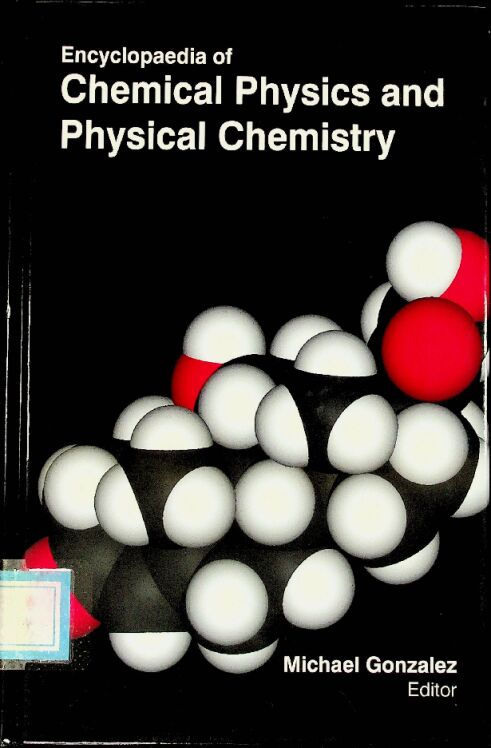
书名:Encyclopaedia of chemical physics and physical chemistry. Volume 3, Advances in thermodynamics
出版时间:2012
出版社:Auris Reference,
前言
The philosophy of thermal and statistical physics is that part of the philosophy of physics whose subject matter is classical thermodynamics, statistical mechanics, and related theories. Its central questions include: What is entropy, and what does the second law of thermodynamics say about it? Does either thermodynamics or statistical mechanics contain an element of time-irreversibility? If so, what does statistical mechanics tell us about the arrow of time? Thermodynamics is the study of the macroscopic behaviour of physical systems under the influence of exchange of work and heat with other systems or their environment. It is not concerned with the microscopic properties of these systems, such as the movements of atoms.
At the very heart of contemporary thermodynamics lies the idea of thermodynamic equilibrium, a state in which no macroscopic properties of the system change over time. In orthodox versions of thermodynamics, properties such as temperatute and entropy are defined for equilibrium states only. The assertion that all thermodynamic systems occupying a fixed volume will reach equilibrium in infinite time, which has been central but tacit to thermodynamics, has recently been dubbed the "minus first law of thermodynamics.,, Traditionally, thermodynamics has often been described as a “theory of principle.n This is a theory in which a few empirical generalisations are taken for granted, and from them the rest of the theory is deduced. According to this view, there is a strong correspondence between three empirical facts and the firs11hree laws of thermodynamics.
Thermostatics, then, is zeroth-order thermomechanics. But, this is just taxonomy. (Despite the advisability of knowing what one is talking about, the authors have no intention to limit this discussion to the names of things.) Truesdell quipped that the reason classical thermodynamics is not understood is that it is not understandable. Occasionally, we shall point out situations that remind us ofTruesdelFs remark. We shall never get out of this appendix without encountering something hopelessly confusing. Nevertheless, without departing far from "classical thermostatics” (or by grossly simplifying such departures), we shall provide ourselves with an improved conception of this much maligned subject. We will try to avoid telling unforgivable lies by inserting appropriate notes and disclaimers where they belong. That said, let us proceed in our attempt to fathom the "unfathomable”. We would like to thank the many experts with whom we have exchanged correspondence and conversation; however, to avoid the risk of forgetting someone, we shall name no one. They know who they are.
The book seeks to serve as a practical guide to enable students to grasp the latest in chemical physics and physical chemistry.
查看更多
目录
Preface vii
1. Introduction The Control Volume • The Equation of State of an Ideal Gas • Heat Capacity or Specific Heat • Calculation of Specific Heats • Isothermal and Adiabatic Expansion • Hydrostatic Equilibrium of the Atmosphere • The Iso thermal Atmosphere • Properties of a Substance and the St ate of a System • The Adiabatic Atmosphere • Heat Engines • Refrigerators • Concept • Thermodynamic System • Thermodynamic State • Boundaries • Thermodynamics System • Pure Substances and Simple Compressible Substances • Homogeneous System • Heterogeneous System • Macroscopic Properties of System • Thermodynamic Equilibrium • Mechanical Equilibrium • Thermal Equilibrium • Chemical Equilibrium • Qasi-static Process • Reversible Process • Irreversible Process • Zeroth Law of Thermodynamics • Explanation of Temperature • Properties—Pressure • Volume • Temperature • Enthalpy • Definition of Gas • Types of Gases • Perfect Gas Law • Boyles Law • Rationalizing Boyle's Law • Boyles Law Problems • Charle's Law • Effects of Changing Temperature • Charles Law Problems • Avagadro's Law • Regnault's Law • Universal Gas Constant • Solved Problems • Characteristic Gas Constants • Specific Heat at Constant Pressure • Specific Heats • Specific Heat of an Ideal Gas 1
2. Concept of Mechanics New tons Law • Motion • Graphing Motion • Free Fall Motion • Trajectory • Force • Exerting Forces on Each other at Distance • Weight • Positive and Negative Signs of Force • Equilibrium • Inertia • Mass • Rigid Body • Equations of Motion • Newton's Laws of Motion • Principle of Work and Energy • Principle of Conservation of Energy • Parallelogram Laws • Newton's Law of Grav辻ation • Gravitional Potential Energy • Force • Force System • Resultant of a Force System • Resultant of Coplanar Concurrent Force System • Resolution and Composition of Forces • Turning Effect of Forces • Moment of a Force • Varignons Theorem • Resultant of Coplanar Forces 64
3. System and Thermodynamics Ttools—Control Volume • The Equation of State of an Ideal Gas • Heat Capacity or Specific Heat • Calculation of Specific Heats • Isothermal and Adiabatic Expansion • Hydros tat ic Equilibrium of the Atmosphere • The Isothermal Atmosphere • Properties of a Substance and the State of a System • The Adiabatic Atmosphere • Heat Engines 121
4. Focus on Thermal and Statistical Physics Philosophy of Thermal and Statistical Physics • Industrial Ecology • Psychrometries • Psychrometric Properties • Social Thermodynamics Theory • Quantum Thermodynamics • Statistical Mechanics • Thermoeconomics 150
5. Equilibrium, Non-Equilibrium and Maximum Entropy Thermodynamics Equilibrium Thermodynamics • Non-Equilibrium Thermodynamics • Maximum Ent ropy Thermodynamics 172
6. Thermogravimetrie Analysis Thermodynamic Limit • Hea t Dea th Paradox • Thermodynamic State • Thermodynamic Square • Thermodynamic Versus Kinetic Reaction Control • Thermogravimetrie Analysis • Thermoph otov oltaic • Active Components and Mat erials Selection • Photovoltaic Cells • Government Applications • Commercial Applications • Work Thermodynamics • Thermodynamic Free Energy • Entropy and Life • Entropy and Arrow of Time 190
7. Thermalization, State of Matter Thermal Bath Thermodynamics • Thermalization • State of Matter • The Three Classical States • Non Classical States • Low-Temperature States • High-Energy States • Other Proposed States • Thermodynamic Equilibrium • Types of Equilibrium • Control Volume • Thermodynamic Instruments • Isothermal Process • Isenthalpic Process • Quasistatic Process • Reversible Process (Thermodynamics) • Irreversible Process Thermodynamics 230
8. Thermodynamic Diagrams Thermodynamic Temperature • History of Thermodynamics 251
Bibliography 275
Index 271
查看PDF
查看更多
作者简介
Michael Gonzalez is Dean and Professor of Chemistry at School of Chemistry, New York. He obtained Ph.D.from Harvard University in Chemical Physics and B.Sc.from University of California in Chemistry. His areas of interest are: Metal oxides/Metal overlayers,Crystallography,Reactivity/Catalysis,STM/Atomic force microscopy. Synchrotron radiation,Diffraction.Dr.Gonzalez's has to his credit authored many books.
查看更多
馆藏单位
中科院文献情报中心