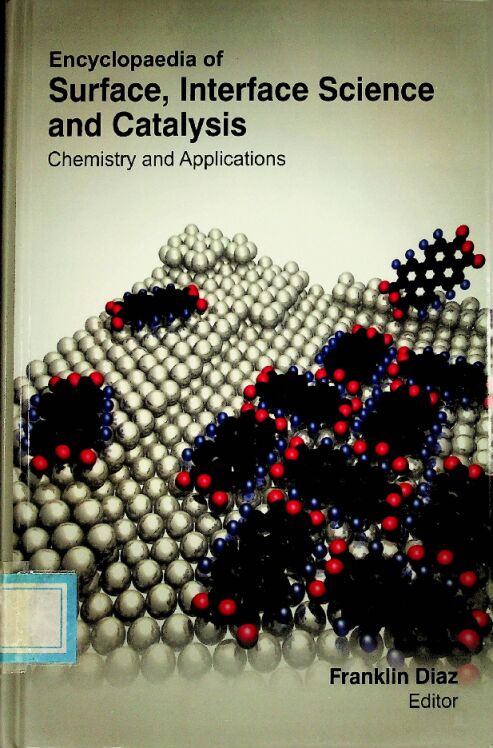
书名:Encyclopaedia of surface, interface science and catalysis
ISBN\ISSN:9781781540169,1781540160
出版时间:2012
出版社:Auris Reference,
前言
In Gram-negative bacteria, the cell surface is a complex mixture of carbohydrates, lipopolysaccharides, lipids and proteins. The bacterial cell surface serves two central purposes: protection from and interaction with the environment. In pathogens, protection is achieved e.g. by capsule and biofilm formation, by binding and inactivation of components of the host immune system, or by variable expression of surface molecules to evade detection. We are interested in the regulation of surface molecule expression: at what time point are surface molecules made? What environmental signals trigger the production or shut it down? We are also interested in the process of biofilm formation. What det ermines the formation of biofilms? What surface molecules are involved and how are they synthesized? Bacterial infections can manifest themselves in very different forms, from mild skin irritation to diarrhea, from fever to the formation of tumours. Nevertheless, different infections by different microbes follow similar patterns: adhesion to host cells is followed by complex interactions that involve secretion of effector proteins (e.g. toxins) into host cells and induction of signalling processes by the host cells. We are interested in the onset of infection, which is mostly determined by the ability of the pathogen to adhere to host cells; we study protein and carbohydrate adhesins. How are these adhesins synthesized and exported to the cell surface? How is the synthesis regulated? What are the host cell binding partners of different adhesins? We try to exploit our knowledge to create technical applications, typically in joint projects with other groups or industrial partneis. Such applications include the production of aitificial outer membrane proteins for sensory applications, and the evaluation of surface ptoteins for their use as vaccine targets, biomarkers, or as antigens for the production of therapeutic antibodies.
In the field of biochemistry, a receptor is a molecule most often found on the surface of a cell, which receives chemical signals originating externally from the cell. Through binding to a receptor, these signals direct a cell to do something—for example to divide or die, or to allow certain molecules to enter or exit. Receptors are protein molecules, embedded in either the plasma membrane (cell surface receptors) or the cytoplasm or nucleus (nuclear receptors) of a cell, to which one or more specific kinds of signalling molecules may attach. A molecule which binds (attaches) to a receptor is called a ligand, and may be a peptide (short protein) or other small molecule, such as a neurotransmitter, a hormone, a pharmaceutical drug, or a toxin.
Numerous receptor types are found within a typical cell and each type is linked to a specific biochemical pathway. Furthermore each type of receptor recognizes and binds only certain ligand shapes (in analogy to a lock and key where the lock represents the receptor and the key, its ligand). Hence the selective binding of specific a ligand to its receptor activates or inhibits a specific biochemical pathway. Ligand binding stabilizes a certain receptor conformation (the three- dimensional shape of the receptor protein). This is often associated with gain of or loss of protein activity, ordinarily leading to some sort of cellular response. However, some ligands (e.g. antagonists) merely block receptors without inducing any response. Ligand-induced changes in receptors result in cellular changes which constitute the biological activity of the ligands.
This book contains a brief review of absorption and catalysis, for practical purposes. This also presents some important information on adsorbents and catalysts.
查看更多
目录
Preface vii
1. The Genes of Men and Moulds Enzymes • The Metabolism of Fats • Genetic Infbrmation and Evolution • Theories of the Origin of Life • Theories of Organic Evolution • Programmed Evolution as a Probable Divine Mechanism of Creation • Role for the C Terminus of the Saccharomyces Cerevisiae Gtpase Snull4 1
2. Chemical Characterisation and Bioactivity of Polycyclic Aromatic Hydrocarbons The Kinetics of Growth • General Properties of Enzymes • The Oxidation-Reduction Systems • The Pyruvate Oxidative Pathway • The Oxidation and the Synthesis of Fats • The Oxidation and Synthesis ofProteins • Cell Division • Cell Growth 73
3. Cuticular Hydrocarbons Recent Advances in Analytical Techniques • Novel Hydrocarbons • Chemotaxonomy and Chemosystematics • Physiological Roles of Cuticular Hydrocarbons • Ecological Roles of Cuticular Hydrocarbons • Social Insects • Future Needs and Directions 130
4. Combustion and Thermal Treatment Emissions of Persistent Free Radicals • Pulmonary Effects. Decreased Lung Function • Reproductive Effects • Extensions to Path-dependence • The Society of Tangible Needs • Emerging Socie ties • Int erconnection and Deviations bet ween the Three Theories • The Benefits and Potential Risks • Hazardous Waste Site Remediation • Nanoremediation 163
5. Learning of User Interfaces Task Analytic Approach • Accounting for Transfer of Learning • Visuahsation User Interface Issues • Multi-sensory Interfaces • Interfaces to Accord with the Digital Earth Initiative 214
6. Geochemical Constraints on Kaolinisation Petrography of Kaolin Occurrences Kaolin Veins • Geochemical Modelling • Geochemical Modelling Results: Mineralogy and Phase Relations • Kaolinite and Smectite Interaction 254
Bibliography 273
Index 277
查看PDF
查看更多
作者简介
Franklin Diaz is BE in Chemical Engineering and PhD in Physical Chemistry.At present he is associate professor of Chemical Engineering. His main study focus on Methodical focus on model predictive control, robust control and nonlinear control; control engineering applications in the field of automotive engineering,railway engineering,medical engineering and industry automation.
查看更多
馆藏单位
中科院文献情报中心