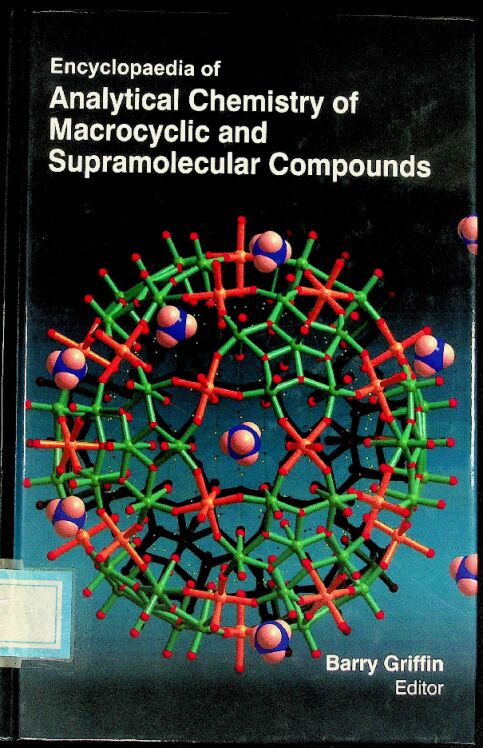
书名:Encyclopaedia of analytical chemistry of macrocyclic and supramolecular compounds. Volume 2, Chromatographic separations chemistry
出版时间:2012
出版社:Auris Reference,
前言
Chromatography, literally "colour writing', was first employed by Russian scientist Mikhail Tsvet in 1900. He continued to work with chromatography in the first decade of the 20th century, primarily for the separation of plant pigments such as chlorophyll, carotenes, and xanthophylls. Since these components have different colors (green, orange, and yellow, respectively) they gave the technique its name. New types of chromatography developed during the 1930s and 1940s made the technique useful for many separation processes. Chroma to graphy t echnique developed subs tantially as a resu It of the work of Archer John Porter Martin and Richard Laurence Millington Synge during the 1940s and 1950s. They established the principles and basic t echniques of partition chroma to graphy, and their work encouraged the rapid development of several chromatographic methods: paper chroma to graphy, gas chroma togtaphy, and wha t would become known as high performance liquid chromatography.
Since then, the technology has advanced rapidly. Researchers found t hat the main principles of Tsvefs chroma to graphy could be applied in many different ways, resulting in the different varieties of chroma to graphy described below. Advances are continually improving the technical performance of chromatography, allowing the separation of increasingly similar molecules. Column chromatography is a separation technique in which the stationary bed is within a tube. The particles of the solid stationary phase or the support coated with a liquid stationary phase may fill the whole inside volume of the tube (packed column) or be concentrated on or along the inside tube wall leaving an open, unrestricted path for the mobile phase in the middle part of the tube (open tubular column). Differences in rates of move ment through the medium are calculated to different retention times of the sample. In 1978, W. C. Still introduced a modified version of column chromatography called flash column chromatography (flash). The technique is very similar to the traditional column chromatography, except for that the solvent is driven through the column by applying positive pressure. This allowed most separations to be performed in ess than 20 minutes, with improved separations compared to the old method. Modern flash chromatography systems are sold as pre-packed plastic cartridges, and the solvent is pumped through the cartridge, y stems may also be linked with detectors and fraction collectors pioviding automation. The introduction of gradient pumps resulted ln quicker separations and less solvent usage.
In expanded bed adsorption, a fluidized bed is used, rather than a solid phase made by a packed bed. This allows omission of initial c ear^n& steps such as centrifugation and filtration, for culture broths or s uiries of broken cells. Phosphocellulose chromatography utilizes binding affinity of many DNA-binding proteins for phosphocellulose. The sponger a proteins interaction with DNA, the higher the salt concentration needed to elute that protein. Planar chromatography is a separation technique in which the stationary phase is present as ;r on a plane. The plane can be a paper, serving as such or impregnated y a substance as the stationary bed (paper chromatography) or a ayer of solid particles spread on a support such as a glass plate (thin layer chromatography). Different compounds in the sample mixture ti avel different distances according to how strongly they interact with 泸 stationary phase as compared to the mobile phase. The specific Retention factor (Rf) of each chemical can be used to aid in the identification of an unknown substance.
These book are devised for such courses. Separate chapters are devoted for the various analytical techniques.
查看更多
目录
Preface vii
1. Introducation Chromatography • Refining the Techniques • Techniques by Chromatographic Bed Shape • Planar Chromatography • Techniques by Physical State of Mobile Phase • Techniques by Separation Mechanism • Special Techniques 1
2. Column Chromatography Stationary Phase • Column Chromatogram Resolution Calculation • High-Performance Liquid Chromatography • Types • BioaffiLnity Chromatogtaphy • Paper Chromatography • Rf Value • Retardation Factor 15
3. Gas Chromatography GC Analysis • Sample Size and Injection Technique • Data Reduction and Analysis • Gas Chromatography-Mass Spectrometry • Environmentai Monitoring and Cleanup • Prolate Trochoidal Mass Spectrometre • Ion-mobility Spectrometry—mass Spec trometry • Inverse Gas Chromatogtaphy • Surface Energy • Adhesion • Wetting • Real Smooth Surfaces and the Young Contact Angle • Wetting Transition 37
4. Thin Layer Chromatography Unresolved Complex Mixture • Affinity Chromatography • Supercritical Fluid Chromatography 93
5. Ion Chromatography Principle • Isoelectric Point • Size-exclusion Chromatography • Normal Distribution 109
6. Reversed-phase Chroma to graphy Stationary Phases • Simulated Moving Bed • Fast Protein Liquid Chromatography • Countercurrent Chromatography • Aqueous Normal-phase Chromatography • Multicolumn Countercurrent Solvent Gradient Purification • Purnell Equation 154
7. Chromatography in Blood Processing Van Deemter Equation • Rodrigues Equation • Binding Selectivity • Solvent Extraction • Recep tor (Biochemis try) • Liquid-liquid Extraction • Measures of Effectiveness • Signal Transduction • Ligand-gated Ion Channel • Enzyme-linked Receptor • Receptor Tyrosine Kinase • RET Proto-oncogene • Vascular Endothelial Growth Factor 170
8. Clinical Significance VEGF in Disease • Neovascular Age-related Macular Degeneration • Peripheral Membrane Protein • Transporters of Small Hydrophobic Molecules • Proteases in Angiogenesis • MMPs • Proteases Involved in the Recruitmentof Bone Marrow Derived Cells During Angiogenesis • Steroid Hormone • Cell Surface Receptor • Structure and Mechanism • Neuromodulation • Second Messenger System • Integrin 217
Bibliography 259
Index 263
查看PDF
查看更多
作者简介
Barry Griffin is professor of analytical chemistry. He earned his B.S.in 1970 and Ph.D.in 1974. His research interest include Analytical,Energy Science,Materials and Polymer Chemistry,Surfaces and Solid State.His notable publications are: Selective Interlayers and Contacts in Organic Photovoltaic Cells,Photoemission spectroscopy of tethered CdSe nanocrystals: Shifts in ionization potential and local vacuum level as a function of nanocrystal capping ligand etc.
查看更多
馆藏单位
中科院文献情报中心