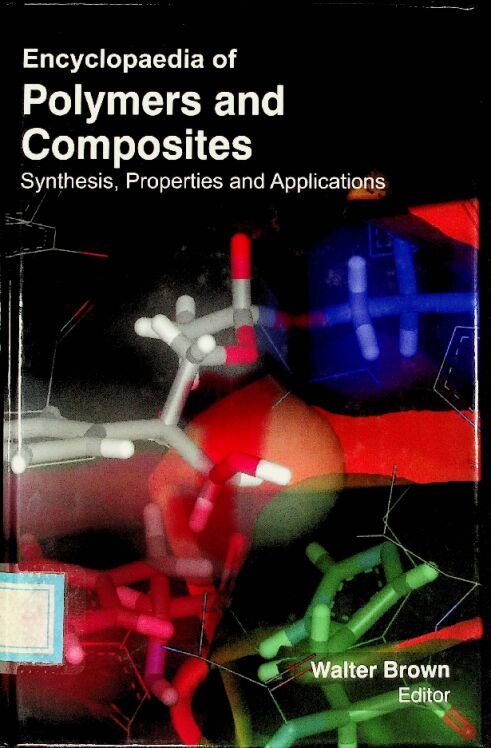
书名:Encyclopaedia of polymers and composites
出版时间:2012
出版社:Auris Reference,
前言
Organic chemistty is the study of the properties of the compounds of carbon that are organic. All carbon compounds except for a few inorganic carbon compounds are organic. Inorganic carbon compounds include the oxides of carbon, the bicarbonates and carbonates of metal ions, the metal cyanides, and a few others. There are over six million organic compounds characterized, including the foods we eat, furs and feathers, hides and skins, and the organisms they came from, not to mention plastics, synthetic and natuial fibres, dyes and drugs, insecticides and herbicides, ingredients in perfumes and flavouring agents, and petroleum products. The name organic chemistry came from the word organism. Prior to 1828, all organic compounds had been obtained from organisms or their remains. The belief then was that the synthesis of organic compounds from inorganic compounds in the laboratory was impossible. All efforts had failed, and scientists became convinced that some "vital force” that living organisms had was necessary to make an organic compound. The synthesis of urea from inorganic substances in 1828 led to the disappearance of this vital force theory.
The field of polymer photochemistty continues to be an active area in applied photochemistry, with many topics having strong academic and industrial interest. Photo-polymerization and photocuring science and technologies, as before, continue to be developed, particularly with regard towards designing novel and specific initiators and materials for specialist applications. Interest in active ionic initiators and radical�ionic processes continues to expand, while the photocrosslinking of polymers is attractive in terms of enhancing the physical and mechanical properties of electronic materials and the development of liquid crystalline materials. The optical properties of polymers continues to be an active area of strong development, with a continued growth in photochromic and liquid crystalline materials. Last year saw a major literature explosion in LED's. The photooxidation of polymers on the other hand continues to decline at a low profile. Bio・ and photodegradable plastics are important for agricultural usage although academic interest here is again minimal. The same applies to polymer stabilization, where commercial applications dominate very much, with emphasis on the practical use of stabilizers. For dyes and pigments stability is a major issue, especially in cat a lytic chemistry.
The book is intended for use in graduate and undergraduate courses, but practicing engineers and researchers in industry and academe will also find it a useful reference.
查看更多
目录
Preface vii
1. Uses of Polymers Plastic • Bakelite • Polyvinyl Chloride • Polychlorinated Dibenzodioxins • Nylon • Nylon 6 • Nylon 6-6 • Ballistic Nylon • Ripstop • Bioplastic • Biodegradable Plastic • Oxo Biodegradable 1
2. Common Plastics and Uses Polyethylene Terephthalate • Polyethylene • Polyvinylidene Chloride • Polypropylene • Acrylonitrile Butadiene Styrene • Compact Disc 66
3. Glasses Polyacrylic Acid • Polyphenyl Ether • Polylactic Acid • Polybutylene • Polybutylene Terephthalate • Polyimide • Poly(methyl methacrylate) • Poly oxy me thylene • Polysulfbne • Ethylene-Vinyl Acetate • Styrene Maleic Anhydride 115
4. Special Purpose Plastics Melamine Resin • Plastarch Material • Phenol Formaldehyde Resin • Modified Starch • PEEK • Polyetherimide • Urea- Formaldehyde • Plastics Engineering 170
5. Plastics Processing Injection Molding • Injection Molding Machine • Reaction Injection Molding • Hobby Injection Molding • Fusible Core Injection Molding • Matrix Molding • Plastics Extrusion • Blow Molding • Thermoforming • Compression Molding • Calendering • Transfer Molding • Laminate 186
6. Fibreglass Molding Mold Making • Fibre-Reinforced Plastic • Long Fibre Reinforced Thermoplastic • Fibreglass • Pultrusion • Filament Winding • Vacuum Forming • Ultrasonic Welding • Plastic Recycling • Plasticulture • Flame Retardant • Thermoplastic 231
7. Polyisocyanurate Manufacturing • Synthetic Resin • Polyester Resin • Microplastics • Synthetic Fibre • Elastomer • Polycaprolactone • Polydioxanone • Polyglycolide • Poly hydroxybutyrate • Acrylate Polymer • Acrylic Fibre • Acrylic Resin • Polyhydroxyethylmethacrylate • Poly methylpentene • Polyolefin • Poly-4-Vinylphenol • Polyaryletherketone • Polyaspartic • Polyamide 279
8. Polyurethane Applications Usage Per Application • Houses, Sculptures, and Decorations • Polyethylene Naphthalate • Polypropylene Carbonate • Polys tannane • Poly thiophenes • Polytrime thylene Terephthalate • Polyvinyl Fluoride • Polyvinyl Nitrate • Polyvinylidene Fluoride • Prepolymer • Renewable Polyethylene 313
Bibliography 345
Index 349
查看PDF
查看更多
作者简介
Walter Brown is Professor of Material Science & Engineering.His Primary interests include developing new conductive polymer compositions and developing quantitative a relationships for constructing conjugating conductive polymers with predictable optical,electrical,and electrochemical properties.His Studies focus on the preparation and reactivity of various quinodimethane intermediates and polymerization to high molecular weight polymers.Further, he is investigating novel, non-redox methods for doping conjugated polymers to highly conductive compositions.
查看更多
馆藏单位
中科院文献情报中心