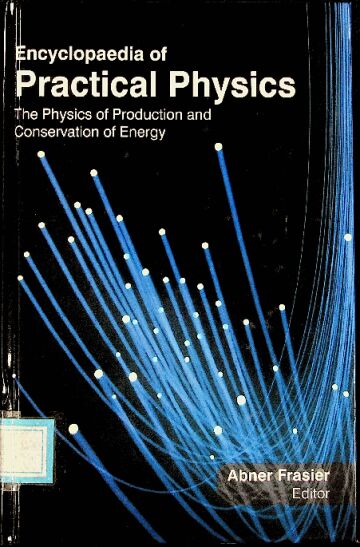
书名:Encyclopaedia of practical physics
出版时间:2012
出版社:Auris Reference,
前言
Renewable energy is energy which comes from natural resources such as sunlight, wind, rain, tides, and geothermal heat, which are renewable.Renewable energy is an alternative to fossil fuels and nuclear power, and was commonly called alternat iue energy in the 1970sand1980s.In 2008, about 19% of global final energy consumption came from renewables, with 13% coming from traditional biomass, which is mainly used for heating, and 3.2% from hydroelectricity.New renewables accounted for another 2.7% and are growing very rapidly. The share of renewables in electricity generation is around 18%, with 15% of global electricity coming from hydroelectricity and 3% from new renewables. Windpower is growing at the rate of 30% annually, with a worldwide installed capacity of 158 gigawatts(GW) in 2009, and is widely used in Europe, Asia, and the United States.At the end of 2009, cumulative global photovoltaic(PV) installations surpassed 21GWandPV power stations are popular in Germany and Spain. Solar thermal power stations operate in the USA and Spain, and the largest of these is the 354 megawatt(MW) SEGS powerplant in the Mojave Desert.The world's largest geothermal power installation is The Geysers in California, with a rated capacity of 750MW.Brazil has one of the largest renewable energy programs in the world, involving production of ethanol fuel from sugarcane, and ethanol now provides 18% of the country's automotive fuel.Ethanol fuel is also widely available in the USA.
Climate change concerns, coupled with high oil prices, peakoil, and increasing government support, are driving increasing renewable energy legislation, incentives and commercialisation.New government spending, regulation and policies helped the industry weather the global financial crisis better than many other sectors.Scientists have advanced a plan to power 100% of the world's energy with wind, hydroelectric, and solar power by the year 2030, recommending renewable energy subsidies and a price on carbon reflecting its cost for flood and related expenses.Energy development is the effort to provide sufficient primary energy sources and secondary energy forms for supply, cost, impact on air pollution and water pollution, mitigation of climate change with renewable energy.Technologically advanced societies have become increasingly dependent on external energy sources for transportation, the production of many manufactured goods, and the delivery of energy services.This energy allows people who can afford the cost to live under otherwise unfavourable climatic conditions through the use of heating, ventilation, and/or air conditioning.Level of use of external energy sources differs across societies, as do the climate, convenience, levels of traffic congestion, pollution and availability of domestic energy sources.
The book are guiding referral to students, researchers, energy planners, environmental activists and administrators.
查看更多
目录
Preface vii
1. Introduction 1
Renewable Sources of Energy·Hydroelectricity·Geothermal·Nuclear Fission·Non Renewable Sources of Energy·Economic Models·Increased Energy Efficiency·Storage of Energy·Methods of Energy Storage·Biofuels·Liquid
Nitrogen·Oxyhydrogen·Hydrogen Peroxide
2. Uses of Hydrogen Peroxide and Energy 27
Municipal Wastewater Applications·Cost Effective Control of Hydrogen Sulfide in Municipal Sludge·Sulfide Oxidation with Hydrogen Peroxide·Mechanical Methods·Compressed Air Energy Storage·Practical Constraints in Transportation·Vehicle Applications·Types of Systems·Flywheel Energy Storage·Applications of Transportation·Hydraulic Accumultor·Types of Accumulators·Hydroelectric Energy Storage·Worldwide use of Pumped-storage Hydroelectricity·Spring·Gravitational Potential Energy(Device) ·Electrostatic Potential Energy·Nuclear Potential Energy·Biological Methods·Industrial Applications·Glycogen·Glycogen Depletion and Endurance Exercise
3. Electrochemical Methods 96
Batteries·Categories and Types of Batteries·Battery Cell Types·Cell Balancing Electronics·Flow Batteries·Differences
from Standard Fuel Cells·Fuel Cells·High Temperature Fuel Cells·FuelCell Electric Vehicles(FCEVs)
4. Electrical Methods 141
Capacitors·Supression and Coupling·Super Capacitors·Heavy and Public Transport·Superconducting Magnetic
Energy Storage(SMES) ·Low-temperature versus High-temperature Superconductors·Thermal Methods·Ice Storage
·Molten Salt·Cryogenic Liquid Air or Nitrogen·Seasonal Thermal Store·Solar Pond·Fire less Locomotive·Hot Bricks
·Using Storage Heaters·Steam Accumulator·Eutectic Syste·Eut eric System·Other Critical Points
5. Hydroelectricity 187
Various Methods of Generation·Sizes and Capacities of Hydroelectric Facilities·Advantages and Disadvantages of
Hydroelectricity·Ecosystem Damage and Loss of Land·Comparison with other Methods of Power Generation·Hydraulic Engineering·List of Hydroelectric Power Stations·How Hydroelectricity Works·Efficiency of Hydroelectric Stations·Hydroelectricity Pros and Cons·Hydroelectricity Facts·Windmills for Electricity·National Policy for Hydro Power Development·Present Status in India·Hydro Research Centres·Government Intiative in India·Solar Power·The Future of Gathering Solar Energy·Howto Use Solar Energy to Generate Electricity·Solar Panels·Advantages of Thin Film Solar Panels at Home·Solar Air Panels·Solar AirPanel Make and Work Procedure·Average Solar Panel Cost·High Efficiency Solar Panels·Solar Energy Risks·Solar Energy Disadvantages·Solar Energy Benefits and Drawbacks·Uses of Solar Energy·Solar ElectricFence·Solar Energy Facts·How Solar Energy Works·Solar Energy as an Alternative Source of Energy·Solar Energy for Kids·Solar Energy Pros and Cons·Solar Energy for Homes·Evacuated Tube Solar Collectors·Facts about Solar Energy·Future Applications·Challenges and Constraints
6. Solar Power in India 275
Solar Engineering Training·Solar Water Heaters·Solar Energy Research, GOVT Initiative·Solar Energy Consciousness·Festivals for Solar Energy Consciousness·Benefits of Chhath Process
Bibliography 289
Index 293
查看更多
作者简介
Abner Frasier is a theoretical physicist, bestselling author, and popularizer of science.He's the co-founder of Green Energy and continues Einstein's search to unite the four fundamental forces of nature into one unified theory.Starting his science-writing career as an internat Science News and then as a charter member of Discover's writing staff, Frasier continues to write about astronomy and physics in a variety of national publications.
查看更多
馆藏单位
中科院文献情报中心