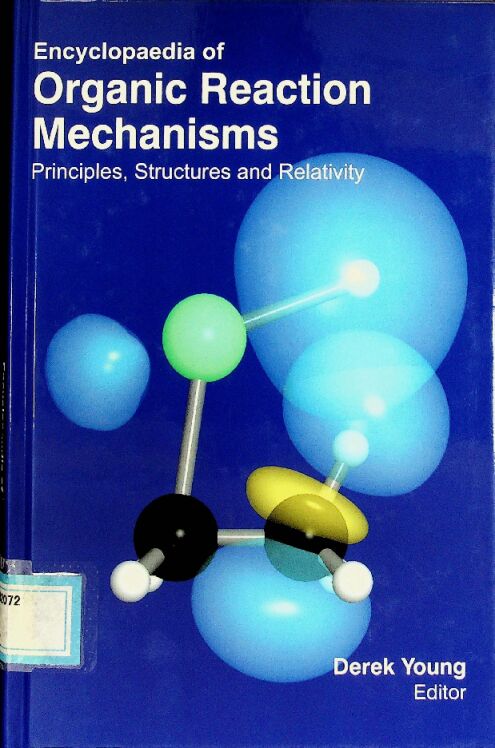
书名:Encyclopaedia of organic reaction mechanisms
ISBN\ISSN:9781781540138,1781540136
出版时间:2012
出版社:Auris Reference,
前言
It is well known that there are millions of organic compounds around, which are either originated from the nature or prepared synthetically. Examples of organic compounds include carbohydrates, proteins, enzymes, vitamins, lipids, nucleic acids, synthetic polymers, synthetic fabrics, synthetic rubbers, plastics, medicines, drugs, organic dyes and so on. Now the immediate question is: Why the carbon atom is so special and forms millions of compounds? To answer this question, we should know about catenation. Catenation is the ability of atoms of same element to bond covalently among themselves and form, long chains or rings. Carbon has a stronger tendency to catenate since it is a smaller atom and can form stronger covalent bonds with other carbons. The C-C bonds are stronger due to effective overlapping of atomic orbitals.
The adjective "aromatic'' is used by organic chemists in a rather different way than it is normally applied. It has its origin in the observation that certain natural substances, such as cinnamon bark, wintergreen leaves, vanilla beans and anise seeds, contained fragrant compounds having common but unexpected properties. Cinnamon bark, for example, yielded a pleasant smelling compound, formula C9HsO, named cinnamaldehyde. Because of the low hydrogen to carbon ratio in this and other aroma tic compounds (note that the H:C ratio in an alkane is >2), chemists expected their structural formulas would contain a large number of double or triple bonds. Since double bonds are easily cleaved by oxidative reagents such as potassium permanganate or ozone, and rapidly add bromine and chlorine, these reactions were applied to t hese aroma tic compounds. Surprisingly, products that appeared to retain many of the double bonds were obtained, and these compounds exhibited a high degi-ee of chemical st ability compared with known alkenes and cycloalkenes (alipha tic compounds).
On treatment with hot permanganate solution, cinnamaldehyde gave a stable, ciystalline C_HG09 compound, now called benzoic acid. The H:C ratio in benzoic acid is <1, again suggesting the presence of several double bonds. Benzoic acid was eventually converted to the stable hydrocarbon benzene, C(.HG, which also proved unreactive to common double bond transformations, as shown below. For comparison, reactions of cyclohexene, a typical alkene, with these reagents are also shown (green box). As experimentai evidence for a wide assortment of compounds was acquired, those incorporating this exceptionally stable six-carbon core came to be called "aromatic”.
This book is not a physical organic chemistry text. The sole purpose of this book is to teach students how to come up with reasonable mechanisms for reactions that they have never seen before. As most chemists know, it is usually possible to draw more than one reasonable mechanism for any given reaction.
查看更多
目录
Preface vii
1. Basic Concepts of Organic Chemistry Lewi's Dot Model • Valence Bond Theory • SP3 Hybridization of Carbon • SP Hybridization of Carbon • The Formation of Molecular Orbitals in Ethane • Organic Radicals • Electron Paramagnetic Resonance • Methods of Generating Free Radicals • Thermal Cracking • Photolytic Bond Homolysis • Electron Transfer • Hydrogen and Halogen A to m Abstraction • Examples of Organic Reactions • Bond Energy • Energetics • Reaction Rates and Kinetics • Thermodynamic and Chemical Stability 1
2. Benzene and Other Aromatic Compounds The Molecular Orbitals of Benzene • A Mechanism for Electrophilic Substitution Reactions of Benzene • Orientation and Reactivity Efifects of Ring Substituents • Natural Nitrogen Compounds • Properties of Amines • Basicity of Amines • Acidity of Amines • Alkylation • Reaction with Benzenesulfbnyl Chloride (The Hinsberg Test) • Annulenes • Barrelene • Aromatic Ions • Nucleophilicity and Basicity Factors in Organic Reactions 38
3. Stereoisomers Alkene Stereoisomers • The Sequence Rule for Assignment of Alkene Configura tions • Cycloalkane Stereoisomers • Conformational Isomerism • Ethane Conformers • Butane Conformers • Ring Conformations • Substituted Cyclohexanes • Chirality and Symmetry • Enantiomorphism • Polarimetry • Structural Classification of Atoms or Groups • Meso Compounds • Isomer Summary • Boiling and Melting Points • Hydrogen Bonding • Water Solubility • More about Intermolecular Forces 81
4. Conformations of Cyclohexane Cyclohexane Conformations • Ring Strain in Cyclopropane • Functional Group Reactions • Reactions of Alkanes 121
5. Heat of Combustion Selectivity • Addition Reactions of Alkenes • Addition of Lewis Acids (Electrophilic Reagents) • Stereoselectivity in Addition Reactions to Double Bonds • Bronsted Acid Additions • Addition Reactions Initiated by Electrophilic Halogen • Oxidations • Oxidative Cleavage of Double Bonds • Free Radical Reactions of Alkenes • Dienes • Addition by Electrophilic Reagents • Nucleophilic Addition Reactions & Reduction • Acidity of Terminal Alkynes • Reactions of Alkyl Halides • Substitution & Elimination • Nucleophilicity • Solvent Effects • The Alkyl Moiety 140
6. Alcohol Nomenclature Reactions of Alcohols • Electrophilic Substitution at Oxygen • Hydroxyl Group Substitution • Elimination Reactions • Oxidation Reactions of Alcohols • Phenols • Oxidation of Phenols • The Chemistry of Ethers • Ether Synthesis • Reactions of Ethers • The Chemistry of Epoxides 200
7. Sulfur and Phosphorus Compounds Nucleophilicity of Sulfur Compounds • Oxida tion States of Sulfur Compounds • Oxidation of Alcohols by DMSO • Nucleophilicity of Phosphorus Compounds • Oxidation States of Phosphorus Compounds • Phosphorus Compounds as Reducing Agents • Phosphorus & Sulfur Ylides • Other Acylation Reagents and Techniques • Vinylagous Systems • Relationship of Carbonyl Reactivity to IR Stretching Frequency • Organocopper Compound 222
Bibliography 251
Index 255
查看PDF
查看更多
作者简介
Derek Young is Professor ofPharmacology and Toxicology.He completed his B.S.in 1989 and Ph.D.in1992.His research interests are:Organic Chemistry,Chemical Biology and Synthesis/Synthetic Methods Development. Dr.Young has over 100 publications, including twenty book chapters, one book and eight patents.
查看更多
馆藏单位
中科院文献情报中心