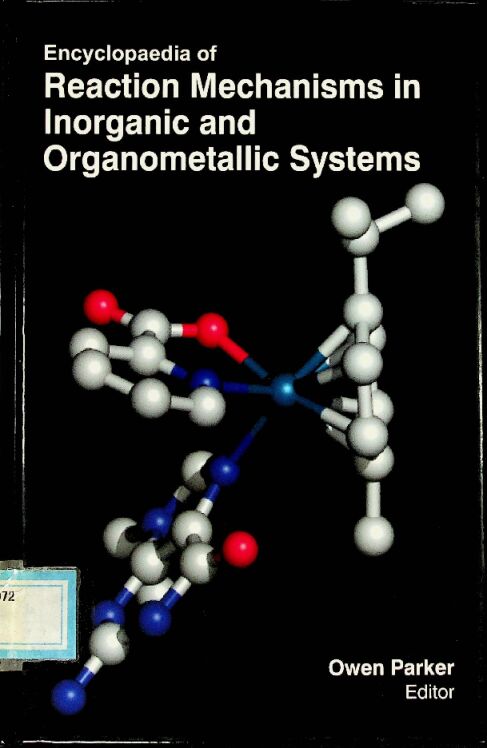
书名:Encyclopaedia of reaction mechanisms in inorganic and organometallic systems. Volume 3, Reaction in bioogranic systems
出版时间:2012
出版社:Auris Reference,
前言
Bio-Organic Chemistry can be defined as the application of chemical principles and techniques to solve biological problems. Bioorganic chemistry is a rapidly growing scientific discipline that combines organic chemistry and biochemistiy. While biochemistry aims at understanding biological processes using chemistry, bioorganic chemistry attempts to expand organic-chemical researches (that is, structures, synthesis, and kinetics) toward biology. When investigating metalloenzymes and cofactors, bioorganic chemistry overlaps bioinorganic chemistry. Biophysical organic chemistry is a term used when attempting to describe intimate details of molecular recognition by bioorganic chemistry. Bioorganic chemistry is that branch of life science, which deals with the study of biological processes using chemical methods. We use the words "bioorganic chemistry^^ to describe what it is we do or what it is we would like to do.
It is not a new combination of words, but we ourselves may have realized only recently that our research interests do not end with organic chemistry — structural, synthetic, or kinetic — but that they now involve biological material. Structure guides us as to the potential det ails of how active biological par tners may interact. Synthesis provides us with compounds that nature may not have created in sufficient quantity for investigation and also with analogues of natural species. Physical organic chemistiy and analytical methodology provide quan titative measures and intima te det ails of reaction pat hways. In short, we use familiar principles and techniques toward solution of problems relevant to biology.
In addition, we may be guided in oui' chemical studies by inspiration resulting from some tangential biological observation. Bioorganic chemistry represents a merger of organic chemistry and biochemistry. In certain investigations, such as those involving metalloenzymes and cofactors, the contiguous areas of bioorganic and bioinorganic chemistry also merge. Even the composite term, iophysical organic chemistry, has been used as a detailed descrip tor in molecular recognition.Bioorganic chemistry had multiple origins. Nutritional research identified factors essential in the human diet, and their structures and syntheses led to the recognition of the modes of action of the so- called vitamins and related cofactors, or coenzymes. Secreted factors that exert a stimulatory effect on cellular activity, the hormones, could be bet ter understood at the moleculai- level once t heir structure determinations and syntheses made them available in reasonable amounts. Concepts of the biogenesis of natural products played, and continues to play, a major role in the development of bioorganic chemistiy.
The establishment of the complete stereochemical pathways of biosynthesis adds exquisiteness to this endeavour. Applications of the principles of physical organic chemistry led to important historical advances. A set of foui* examples from the research of Frank Westheimer and his coworkers will serve to illustrate the point, starting with catalysis of the mutarotation of glucose by amino acids, which represented his first foray into the realm of enzymes. Later work included the classic study of hydride transfer to the coenzyme NAD+ from various substrates, which led to the recognition of enzyme stereo- specificity to account for the hydrolytic chemistry of phosphate esters and t hen by the firs t photo affinity labelling experimen t ——with diazoacetylchymotrypsin.
The book has been designed to cover the syllabus of this subject. Care has been taken to make the treatment of the subject simple and accessible to the average students.
查看更多
目录
Preface vii
1. Introduction Enzyme Catalysis 1
2. Enzyme Catalysis Cofactors and Coenzymes • Inorganic • Kinetics • Inhibition • Types of Inhibition • Reversible Inhibitors • Irreversible Inhibitors • Catalysis • Electrostatic Caalysis 14
3. The Effect of Changing Condtions in Enzyme Catalysis The Efiect of Substrate Concentration on the Rate of Enzyme-Controlled Reactions • Explaining the Rate against Temperature Graph • Six Types of Enzyme Catalysts 81
4. Enzymes in Organic Synthesis Hydrolysis of Racemic Esters 106
5. Protein Folding Relationship between Folding and Amino Acid Sequence • Physical Principles • Secondary Structure • Side-Chain Geometry Prediction 126
6. DNA Binding and Cleavage Restriction Enzyme 181
7. Mechanisms of Drug Action Effects on the Body • Antimicrobial Pharmacodynamics • Introduction to Drug Action • Mechanisms of Drug Action and Resistance (Focus on Antimalarials) • Drug Resistance • Classification of Antiplatelet Agents • ADP-Receptor Blockers: Thienopyridines • The Nervous System • Drugs and The Body • Drug Interactions • Absorption • The Distribution of Drugs in The Body • Other Antibiotics • Evidence from in Vitro and in Vivo Studies of IH • Propranolol 210
Bibliography 257
Index 261
查看PDF
查看更多
作者简介
Owen Parker is Professor of Chemistry &Biochemistry. His specialization is in Homogeneous catalysis (C-H and C-halogen bond activation,oxidation), Luminescent materials, Conducting polymers, Metal coordination chemistry, Development of highly fluorinated ligands, Bioinorganic chemistry and Metals in medicine and disinfection science. Most of his research projects are interdisciplinaryin nature.
查看更多
馆藏单位
中科院文献情报中心