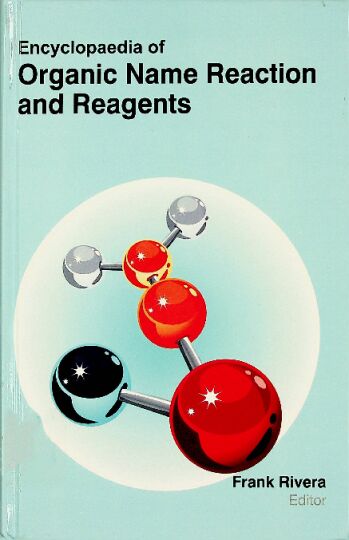
书名:Encyclopaedia of organic name reaction and reagenets. Volume 1
出版时间:2012
出版社:Auris Reference,
前言
In organic chemistry, the focus is on the element carbon. Carbon is central to all living organisms; however, thousands of nonliving things are made from carbon compounds.Diamonds are carbon atoms in a crystal structure. Diamonds are so hard because the atoms of carbon are so closely bonded together in the crystal form.That same ability to pack closely together makes carbon an excellent structural element in its other forms as well. One atom of carbon can combine with up to four other atoms. Therefore,organic compounds usually are large and can have several atoms and molecules bonded together. Organic molecules can be large,and they comprise the structural components of living organisms:carbohydrates,proteins,nucleic acids, and lipids.In theiroutershells,carbon atoms have fourelectrons that can bond with other atoms. When carbon is bonded to hydrogen, the carbon atom shares an electron with hydrogen,and hydrogen likewise shares an electron with carbon.Carbon-hydrogen molecules are referred to as hydrocarbons. Nitrogen,sulfur,and oxygen also are oftenjoined to carbon in living organisms. Large molecules form when carbon atoms are joined together in a straight line or in rings.The longer the carbon chain, the less chemically reactive the compound is. However,in biology,othermeasures of reactivity are used.Oneexample isenzymatic activity,which refers to how much more quickly acertain molecule can allow a reaction to occur.
One key to knowing that a compound is less reactive is that its melting and boiling points are high.Generally,the lowera compound's melting and boiling points, the more reactive it is.For example,the hydrocarbon methane,which is the primary component of naturalgas, has just one carbon and four hydrogen atoms. Because it is the shortest carbon compound,it has the lowest boiling point(-162°C)and is a gas at room temperature.It is highly reactive.On the other hand, a compound made of an extremely long carbon chain has a boiling point of174℃C(compared towater,which hasa boiling point of 100°C). Because it takes so much more for it to boil,it is much less reactive andis notgaseous at room temperature.Inorganicchemistry,molecules that have similar properties(whether they are chemical or physical properties)are grouped together. The reason they have similar properties is because they have similar groups of atoms; these groups of atoms are called functionalgroups. Chemical propertiesinvolveone substance changing into another substance by reacting. An example of a chemicalproperty is the ability ofchlorine gas to react explosively when mixed with sodium.The chemical reaction creates a new substance,sodium chloride.Physicalproperties referto different forms of a substance,but the substance remains the same; no chemical reaction or change to a new substance occurs. Some of the properties that the functional groups provide include polarity and acidity. For example,the functionalgroup calledcarboxyl(-COOH)is a weak acid. Polarity refers to one end of a molecule having a charge(polar), and the other end having no charge (nonpolar). For example, the plasma membrane has hydrophilic heads on the outside that are polar, and the hydrophobic tails(which are nonpolar)form the inside of the plasma membrane.
To come right to the point, the huge number of name reactions and reagents is really quite impressive. There is far more involved in volumes, since a great many new transformations that have been developed over the intervening time now find their way into the book. Each reaction is covered withexamples from the,which is a powerful springboard for further inquiry. Unfortunately,the explanations of some of the reactions come up a bit short. As each of the reactions and reagents are treated within arelatively briefspace,anunbelievable number of transformations are found within these 824 pages.This work is too comprehensive to be purely a reference book,even though it is excellent value for the money,but it will play a significant role as a reference work in the academic and professional realm.—Editor
查看更多
目录
Preface xi
VOLUME 1
A 1 Abramovitch-Shapiro Tryptamine Synthesis · Acetalisation· Acetoacetic Ester Condensation· Achmatowicz Reaction·Acylation·Acyloin Condensation·Adams'Catalyst·Adkins Catalyst·Adkins-Peterson Reaction·AkaboriAminoAcid Reaction· Alcohol Oxidation ·Alder-ene Reaction·Alder-Stein Rules·Aldol Reaction·Aldol Condensation·Algar-Flynn-Oyamada Reaction·Alkylimino-de-oxo-bisubstitution·Alkyne Trimerisation·Alkyne Zipper Reaction · Allan-Robinson Reaction· Allylic Rearrangement·Amadori Rearrangement·Amine Alkylation·Angeli-Rimini Reaction·Andrussow Process·Appel Reaction· Michaelis-Arbuzov Reaction· Arens-van Dorp Synthesis·Aromatic Nitration·Arndt-Eistert Reaction·Auwers Synthesis· Azo Coupling
B 73 Baeyer-Drewson Indigo Synthesis· Baeyer-Villiger Oxidation· Bakeland Process (Bakelite)· Baker-Venkataraman Rearrangement· Bally-Scholl Synthesis· Balz-Schiemann Reaction · Bamberger Rearrangement ·Bamberger Triazine Synthesis· Bamford-Stevens Reaction · Barbier-Wieland Degradation· Bardhan-Senguph Phenanthrene Synthesis· Barfoed's Test· Bartoli Indole Synthesis·Barton Reaction· Barton-Kellogg Reaction·Barton-McCombie Deoxygenation· Barton Zard Synthesis· Barton Vinyl Iodine Orocedure· Baudisch Reaction·Baeyer's Reagent·Baylis-Hillman Reaction· Bechamp Reaction· Bechamp Reduction · Beckmann Rearrangement· Bellus-Claisen Rearrangement·Belousov- Zhabotinsky Reaction· Benary Reaction· Benedict's Reagent·Benkeser Reaction·Benzidine Rearrangement·Benzilic Acid Rearrangement·Benzoin Condensation·Bergman Cyclisation· Bergmann Azlactone Peptide Synthesis·Bergmann Degradation·Bergmann-Zervas Carbobenzoxy Method·Bernthsen Acridine Synthesis· Bestmann's Reagent · Betti Reaction· Biginelli Reaction·Birch Reduction·Bischler-Möhlau Indole Synthesis· Bischler-Napieralski Reaction · Biuret Test· Blaise Ketone Synthesis·Blaise Reaction·Blanc Chloromethylation·Bodroux Reaction ·Bodroux-Chichibabin Aldehyde Synthesis·Bogert- Cook Synthesis·Bohn-Schmidt Reaction·Boord Olefin Synthesis·Borodin Reaction·Borsche-Drechsel Cyclization·Bosch-Meiser Urea Process·Bouveault Aldehyde Synthesis·Bouveault-Blanc Reduction·Boyland-Sims Oxidation·Boyer Reaction·Bredt's Rule· Brown Hydroboration· Bucherer Carbazole Synthesis·Bucherer Reaction·Bucherer-Bergs Reaction·Buchner Ring Expansion·Buchner-Curtius-Schlotterbeck Reaction·Buchwald- Hartwig Amination · Bunnett Reaction
C 208 Cadiot-Chodkiewicz Coupling · Camps Quinoline Synthesis·Cannizzaro Reaction·Carbohydrate Acetalisation·Carbonyl Reduction·Carbonylation· Carroll Rearrangement·Castro- Stephens Coupling·Catalytic Reforming·Corey-Itsuno Reduction· Chan-Lam Coupling · Cheletropic Reaction · Chichibabin Reaction·Chichibabin Pyridine Synthesis·Chiral PoolSynthesis· Chugaev Elimination · Ciamician-Dennstedt Rearrangement· Conrad-Limpach Synthesis · Cope Reaction· Cope Rearrangement· CBS catalyst· Coupling Reaction·Criegee Rearrangement·Cross Metathesis· Crum Brown-Gibson Rule· Curtius Rearrangement · Cyanohydrin Reaction
VOLUME 2
D 273 Dakin Oxidation · Dehydration Reaction · Demjanov Rearrangement·Dess-Martin Periodinane·Diazonium Compound· Dieckmann Condensation · Diels Reese Reaction·Directed Ortho Metallation·Doebner-Miller Reaction·Dichlorocarbene·Dowd-Beckwith Ring Expansion Reaction · Duff Reaction· Dyotropic Reaction
E 314 ElcB Elimination Reaction·Eglinton Reaction·Elbs Persulfate Oxidation ·Elbs Reaction·Electrocyclic Reaction·Elimination Reaction · Ene Reaction· Etard Reaction
F 366 Favoursk Reaction·Fenton's Reagent·FischerIndole Synthesis· Fischer-Tropsch Process · Forster-Decker Method
G 388 Gabriel Synthesis· Gassman Indole Synthesis·Gattermann- Koch Reaction·Gattermann Reaction·Gilman Reagent·Gould- Jacobs Reaction· Grignard Reaction· Guerbet Reaction
H 404 Haloform Reaction·Halogen Addition Reaction· Hammick Reaction · Haber-Weiss Reaction· Haworth Reactions· Heck Reaction·Hydration Reaction·Hinsberg Reaction·Hydrocarbon cracking
I 438 Ing-Manske Procedure·Ipso Substitution·Ishikawa Reagent· Isomer · Ivanov Reaction
J 449 Jacobsen Rearrangement·Janovsky reaction·Japp-Klingemann Reaction·Johnson-Claisen Rearrangement·Julia Olefination
K 461 Kabachnik-Fields Reaction·Kiliani-Fischer Synthesis·Kindler Reaction·Knorr pyrazole synthesis·Koenigs-Knorr Reaction· Krohnke Pyridine Synthesis
L 491 Larock Indole Synthesis·Lebedev Process·Lehmstedt-Tanasescu Reaction·Letts Nitrile Synthesis·Leuckart Reaction·Levinstein Process·Lindlar Catalyst·Lucas'Reagent·Luche Reduction
M 510 Maillard Reaction· Madelung Synthesis·Malaprade Reaction·Mannich Reaction·Martinet Dioxindole Synthesis·McFadyen- Stevens Reaction· McMurry Reaction · Menshutkin Reaction·Michael Reaction·Miyaura Borylation Reaction·Mitsunobu Reaction·Molisch's Test·Mukaiyama Aldol Addition·Myers- Saito Cyclization
VOLUME 3
N 537 Nametkin Rearrangement·Nazarov Cyclisation Reaction·Nef Reaction· Nicholas Reaction · Nitroaldol Reaction· Noyori Asymmetric Hydrogenation
O 579 Ohira-Bestmann reaction· Olah Reagent·Oppenauer Oxidation· Ostromyslenskii reaction · Oxo Synthesis · Oxymercuration Reaction · Ozonolysis
P 604 Paal-Knorr Synthesis · Passerini Reaction·Paterno-Büchi Reaction·Pauson-Khand Reaction·Pelouze Synthesis·Perkin Reaction · Perkow Reaction ·Petasis Reaction· Peterson Olefination· Pfitzinger Reaction· Phenanthridine· Pictet- Spengler Reaction·Piria Reaction·Piria Reaction·Prileschajew Reaction · Pschorr Reaction· Pschorr Reaction · Pummerer Rearrangement
Q 655 Quelet Reaction
R 656 Ramberg-Bäcklund Reaction·Rauhut-Currier Reaction·Reed Reaction·Reformatsky Reaction·Reimer-Tiemann Reaction· Reissert Indole Synthesis·Reissert Reaction·Reppe Synthesis· Riley oxidations·Ritter Reaction·Rosenmund Reduction· Rothemund Synthesis
S 675 Sandmeyer Reaction·Schiff Base·Sakurai Reaction· Schmidt Reaction · Scholl Reaction· Shapiro Reaction· ShenckEne Eeaction · Stetter Reaction · Swarts Reaction
T 702 Tamao Oxidation·Tafel Rearrangement·Ter Meer Reaction·Thiele Reaction·Thiol-yne Reaction·Thorpe Reaction·Tiemann Rearrangement· Tollens'Reagent· Transfer Hydrogenation· Traube Purine Synthesis· Tscherniac-Einhorn Reaction· Tschitschibabin Reaction
U 744 Ugi Reaction· Upjohn Dihydroxylation· Urech Cyanohydrin Method · Urech Hydantoin Synthesis
V 753 Varrentrapp Reaction· Vilsmeier-Haack Reaction·Von Braun Amide Degradation·Von Braun Reaction·Von Richter Cinnoline Synthesis· Von Richter Reaction
W 759 Wacker-Tsuji Oxidation · Wagner-Jauregg Reaction· Wallach Rearrangement· Wenker Synthesis·Weinreb Ketone Synthesis· Wessely-Moser Rearrangement·Wharton Reaction·Whiting Reaction·Wittig Reaction·WohlDegradation·Wohl-Aue Reaction· Wöhler Synthesis·Wohl-Ziegler Bromination·Wolffenstein-Böters Reaction·Wolff Rearrangement·Wolff-Kishner ReductionWoodward-Hoffmann Rules· Wurtz Reaction ·Wurtz-Fittig Reaction
Y 794 Yamaguchi Esterification
Z 796 Zeisel Determination · Zerewitinoff Determination·Ziegler Condensation·Zimmermann Reaction·Zincke Nitration·Zincke Reaction·Zincke-Suhl reaction
Bibliography 813
Index 817
查看PDF
查看更多
馆藏单位
中科院文献情报中心