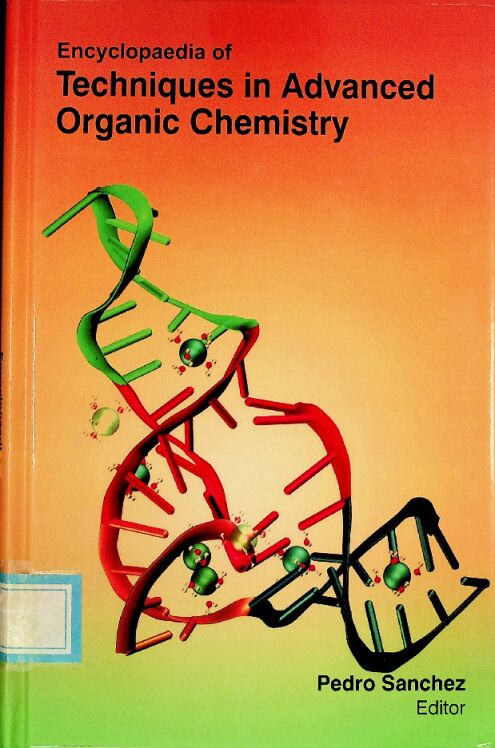
书名:Encyclopaedia of techniques in advanced organic chemistry. Volume 2, Experiments in organic chemistry
出版时间:2012
出版社:Auris Reference,
前言
To understand life as we know it, we must first understand a little bit of organic chemistry. Organic molecules contain both carbon and hydrogen. Though many organic chemicals also contain other elements, it is the carbon-hydrogen bond that defines them as organic. Organic chemistry deftnes life. Just as there are millions of different types of living organisms on this planet, there are millions of different organic molecules, each with different chemical and physical properties. There are organic chemicals that make up your hair, your skin, your fingernails, and so on. The diversity of organic chemicals is due to the versatility of the carbon atom. Carbon (C) appears in the second row of the periodic table and has four bonding electrons in its valence shell. Similar to other non-metals, carbon needs eight electrons to satisfy its valence shell. Carbon therefore forms four bonds with ot her a toms (each bond consisting of one of carbon's electrons and one of the bonding atom's electrons). Every valence election participates in bonding, thus a carbon atom's bonds will be distributed evenly over the atom's surface. In addition to carbon and hydrogen, hydrocarbons can also contain other elements. In fact, many common groups of atoms can occur within organicmolecules, these groups of atoms are called functional groups. One good example is the hydroxyl functional group. The hydroxyl group consists of a single oxygen atom bound to a single hydrogen atom (-OH). The group of hydrocarbons that contain a hydroxyl functional group is called alcohols. The alcohols are named in a similar fashion to the simple hydrocarbons, a prefix is attached to a root ending (in this case “anol”)that designates the alcohol. The existence of the functional group completely changes the chemical properties of the molecule. Ethane, the two-carbon alkane, is a gas at room temperatute; ethanol, the two-carbon alcohol, is a liquid.
Physical properties of organic compounds typically of interest include both quantitative and qualitative features. Quantitative information includes melting point, boiling point, and index of refraction. Qualitative proper ties include odor, consistency, solubility, and colour. In contrast to many inorganic materials, organic compounds typically melt and many boil. In earlier times, the melting point (m.p.) and boiling point (b.p.) provided crucial information on the purity and identity of organic compounds. The melting and boiling points correlate with the polarity of the molecules and their molecular weight. Some organic compounds, especially symmetrical ones, sublime, that is they evaporate without melting. A well known example of a sublimable organic compound is para-dichlorobenzene, the odiferous constituent of modern mothballs. Organic compounds are usually not very stable at temperatures above 300 °C, although some exceptions exist. Neutral organic compounds tend to be hydrophobic, that is they are less soluble in water than in organic solvents. Exceptions include organic compounds that contain ionizable groups as well as lowmolecular weight alcohols, amines, and carboxylic acids where hydrogen bonding occurs. Organic compounds tend to dissolve in organic solvents. Solvents can be either pure substances like ether orethyl alcohol, or mixtures, such as the paraffinic solvents such as the various petroleum ethers and white spirits, or the range of pure or mixed aromatic solvents obtained from petroleum or tar fractions by physical separation or by chemical conversion. Solubility in the different solvents depends upon the solvent type and on the functional groups if present.
The book provides authoritative and critical assessments of the many aspects of organic chemistry. This text is especially written with these students in mind. The language is simple explanations clear and presentation very systematic. These will prove essential reading for organic chemistry students at the upper undergraduate level.
查看更多
目录
Preface
1. Experiments in Organic Compounds Properties of Amines • Acidity of Amines • Alkylation • Reaction with Benzenesulfbnyl Chloride (The Hinsberg Test) • Annulenes • Barrelene • Aromatic Ions • Nucleophilicity and Basicity Factors in Organic Reactions • Phosphorus Compounds as Reducing Agents • Phosphorus and Sulfur Ylides • Other Acylation Reagents and Techniques • Vinylagous Systems • Relationship of Carbonyl Reactivity to IR St retching Frequency • Electron Transfer • Hydrogen and Halogen Atom Abstraction 1
2. Experiments in Organic Chemical Reactions Structural Classification of A to ms or Groups • Meso Compounds • Isomer Summary • Boiling and Melting Points • Hydrogen Bonding • Water Solubility • More about Intermolecular Forces • Bronsted Acid Additions • Addition Reactions Initiated by Electrophilic Halogen • Addition Reactions Involving Other Cyclic Onium Intermediates • Oxidative Cleavage of Double Bonds 53
3. Experiments in Organic Reagents Introduction to Halogenoalkane Reactivity • The Nucleophilic Substitution of Halogenoalkane by Cyanide Ion • Nucleophilic Substitutions at Sat urated Carbon Cent res • Electrophilic Substitution at Unsaturated Carbon Centres • Organic Chemistry/Alkenes • Reaction of Amines with Nitrous Acid • Aryl Amines • 2°-Aryl Amines • 3°-Aryl Amines • Reactions of Aryl Diazonium Sal ts • Nucleophilic Subs tit ution • Electrophilic Substitution • Electrophilic Aromatic Substitution • Organic Reaction • Chemical Bonds to Carbon • Nucleophilic Acyl Substitution • Finkelstein Reaction 97
4. Experiments in Organic Transformation Aromatic Compounds • Aliphatic Acids • Classification based on Electronic Structure • History of Heterocyclic Chemistry • Chemical Species • Chemical Principles/Solution Equilibria: Acids and Bases • Equilibria in Aqueous Solutions • Ionization of Water and the pH Scale • Strong and Weak Acids • Strong and Weak Bases • Electrical Conductivity • Bent Bonds • Aromatic Bond • Importance of Aromatic Compounds • Metallic Bond • Delocalisation • Electron Deficiency and Mobility • Recognising Acids, Bases, and Salts • Strengths of Acids and Bases 152
5. Chemical Analysis of Organic Compounds Abiogenesis Hypothesis • Involvement in Life Processes • Creation of Order • One-Component Reaction—Diffusion Equations • The Collision Theoiy of Reaction Rates • The Energy of the Collision • Collisions • Rates of Reactions • Heterogeneous Catalyst Theory • Homogeneous Catalysis and Theory • Methods of Collecting Rate Data • Rate Expressions and Orders of Reaction • Deducing Orders of Reaction 208
Bibliography 251
Index 255
查看PDF
查看更多
作者简介
Pedro Sanchez did his Ph.D.in 2002 and Postdoctoral Fellow in 2002-2004.He is chief researcher in American Research Center. His research program is focused on the synthesis and characterization of novel polymeric and composite materials, with an emphasis on the control of nanoscale structure.Recent developments in polymer and colloid chemistry offer the synthetic chemist a wide range of tools to prepare well-defined, highly functional building blocks.
查看更多
馆藏单位
中科院文献情报中心