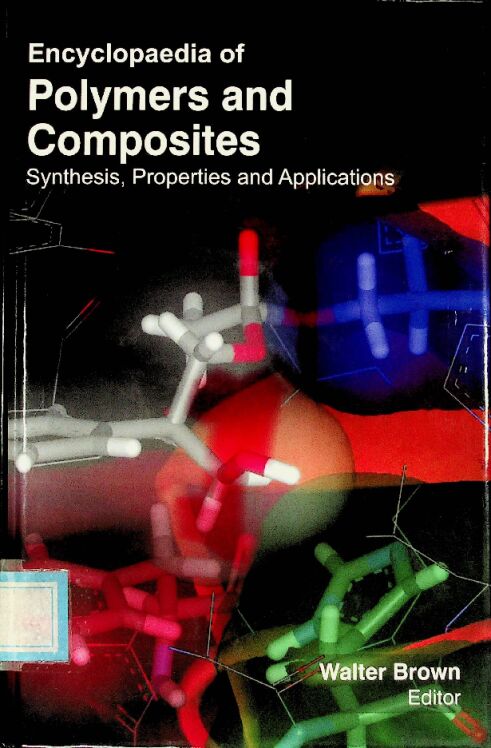
书名:Encyclopaedia of polymers and composites
出版时间:2012
出版社:Auris Reference,
前言
The para rubber tree initially grew in South America. Charles Marie de La Condamine is credited with introducing samples of rubber to the Academie Royale des Sciences of France in 1736. In 1751, he presented a paper by Franr|ois Fresneau to the Academie which described many of the properties of rubber. This has been referred to as the first scientific paper on rubber. When samples of rubber first arrived in England, it was observed by Joseph Priestley, in 1770, that a piece of the material was extremely good for rubbing off pencil marks on paper, hence the name rubber. Later it slowly made its way around England. South America remained the main source of the limited amounts of latex rubber that were used during much of the 19th century. In 1876, Henry Wickham gathered thousands of para rubber tree seeds from Brazil, and these were germinated in Kew Gardens, England. The seedlings were then sent to Ceylon (Sri Lanka), Indonesia, Singapore and British Malaya. Malaya (now Malaysia) was later to become the biggest producer of rubber. About 100 years ago, the Congo Free State in Africa was also a significant source of natural rubber latex, mostly gathered by forced labour. Liberia and Nigeria also started production of rubber. In India, commercial cultivation of natutal rubber was introduced by the British planters, although the experimentai efforts to grow rubber on a commercial scale in India were initiated as early as 1873 at the Botanical Gardens, Calcutta. The first commercial Hevea. plantations in India were established at Thattekadu in Kerala in 1902. In the 19th and early 20th century, it was often called “India rubber.” In 2010, India's natural rubber consumption stood at 0.978 million tons per year, with production at 0.893 million tons; the rest was imported with an import duty of 20%.
Natural rubber, also called India rubber or caoutchouc, is an elastomer that was originally derived from latex, a milky colloid produced by some plants. The plants would be 'tapped; that is, an incision made into the bark of the tree and the sticky, milk coloured latex sap collected and refined into a usable rubber. The purified form of natural rubber is the chemical polyisoprene, which can also be produced synthetically. Natural rubber is used extensively in many applications and products, as is synt he tic rubber. It is normally very stretchy and flexible and extremely waterproof. The commercial source of natural rubber latex is the para rubber tree, a member of the spurge family, Euphorbiaceae. This is largely because it responds to wounding by producing more latex, also this means that the tree is able to photosynthesise more. Other plants containing latex include gutta-percha, rubber fig, Panama rubber tree, spurges, lettuce, common dandelion, Russian dandelion, Scorzonera and guayule. Although these have not been major sources of rubber, Germany attempted to use some of these during World War II when it was cut off from rubber supplies. These attempts were later supplanted by the development of synthetic rubbers. To distinguish the tree-obtained version of natural rubber from the synthetic version, the term gum rubber is sometimes used.
The book is intended for use in graduate and undergraduate courses, but practicing engineers and researchers in industry and academe will also find it a useful reference.
查看更多
目录
Preface vii
1. Uses in Rubber Processing Natural Rubber • Latex Allergy • Synthetic Rubber 1
2. Rubber Properties Arruda-Boyce Model • Carbon Black • Glass Transition • Hyperelastic Material • Mooney—Rivlin Solid • Mullins Effect • Neo-Hookean Solid • Time—Temperature Superposition • Viscoelasticity • Yeoh (Hyperelastic Model) • High-Refractive- Index Polymer 17
3. Polymeric Membrane Advances in Polymeric Membranes • Ammonium Polyphosphate • Wea ther Testing of Polymers • Environmental Stress Cracking • Biodegradable Polymer • Brabender Plastograph • Chelating Resin • Coordination Polymer • CR- 39 • Crazing • Durabis • Ebonite • Ecolon • End-to-End Vector • Enteric Coating • Exopolymer • Crossbridging • Factors of Polymer Weathering • FENE • FENE-P • Gel Permeation Chroma to graphy • Glycopolymer • Graphane • In Situ Polymerisation • Ion-Exchange Resin 78
4. Ionic Polymer-Metal Composite Kraton (Polymer) • Reversible Addition Fragmentation Chain Transfer Polymerisation • Maneb • Marlex • Microbeads • Molecular Imprinted Polymer • Molecular Imprinting • Nanocellulose • Noryl • Nylatron • Photoresist • Poloxamer • Poly(Hydridocarbyne) • Poly(Methylsilyne) • Poly(N- Isopropylacrylamide) • Polyalkylimide 121
5. Polyaminopropyl Biguanide Biocidal Activity • Contact Lens Solution • Polybutene • Polycatenane • PolyDADMAC • Polydicyclopentadiene • Polyether Block Amide • Polyethylene Glycol • Poly et hylenimine • Poly fluorene • Poly hexa nide • Polyimide P84 • Polylysine • Polymer Blend • Poly(P-phenylene Oxide) • Polymer Char 154
6. Polymer NanocompositeNanopolymers • Bio-Hybrid Polymer Nanofibres • Bio-Hybrid Nanofibres by Electrospinning • Bio-Hybrid Polymer Nanotubes by Wet ting • Polymer Ratio • Polymer Science• Polymer Substrate • Polymer Turbulence Drag Reduction• Crystallisa tion of Polymers • Depolymerisation • Scavenger Resin • Polyme thylacrylate • Polyp he nylsulfone• Polyphosphate • Polyprenol • Polyquaternium • Polysilazane• Polyvinyl Acetate • Polyvinyl Alcohol • Proton Exchange Membrane • Rubber Toughening • Santoprene • Sequenceome 188
7. Shape-memory PolymerProperties of Shape-Memory Polymers • Triple-Shape Memory • Thermodynamics of the Shape-Memory Effect • Size-Exclusion Chromatography • Sodium Polyacryla te • Solve nt Cas ting and Particulate Leaching • Spherulite (Polymer Physics) • Styrene-Acrylonitrile Resin • Styrene-Butadiene • SU-8 Photoresist • Superabsorbent Polymer • Supramolecular Polymers • Tar • Telechelic Polymer ・ Thermoplastic Elastomer • Thermoplastic Rubber 226
8. Thermoset Polymer MatricesBis-Maleimides (BMI) • Polyimide Film • Polyurethane (PUR)• Advantages and Disadvantages of Thermoset Polymers• Thiomer • Threose Nucleic Acid • UV Degradation• Viscometre • Williams-Landel-Ferry Equation • Zytel• Monomer • Oligomer • Polymer Physics • Acyclic Diene Metathesis • Addition Polymer 265
9. Atom Transfer Radical PolymerisationATRP • Bulk Polymerisation • Cobalt Mediated Radical Polymerisation • Emulsion Polymerisation • Hazardous Polymerisation • Plasma Polymerisation • Coil-globule Transition • Contour Length • Excluded Volume • Gel Point• Gyration Tensor • Hydrodynamic Radius • Low-Angle Laser Light Scattering • Maltese Cross (Optics) • Melt Flow Index• Oxidative-Induction Time • Pervaded Volume • Radius of Gyration • Random Coil • Rouse Model • Static Light Scattering • Theta Solvent 297
Bibliography 345
Index 349
查看PDF
查看更多
作者简介
Walter Brown is Professor of Material Science & Engineering.His Primary interests include developing new conductive polymer compositions and developing quantitative a relationships for constructing conjugating conductive polymers with predictable optical,electrical,and electrochemicalproperties.His Studies focus on the preparation and reactivity of various quinodimethane intermediates and polymerization to high molecular weight polymers.Further, he is investigating novel, non-redox methods for doping conjugated polymers to highly conductive compositions.
查看更多
馆藏单位
中科院文献情报中心