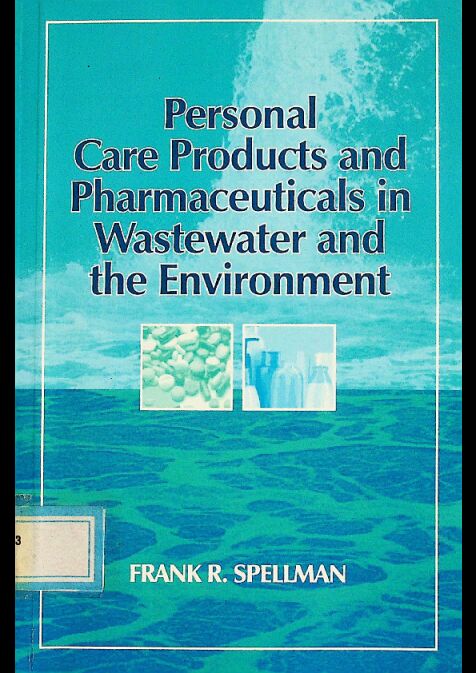
书名:Personal care products and pharmaceuticals in wastewater and the environment
责任者:Frank R. Spellman | Ph.D.
ISBN\ISSN:9781605951232,1605951234
出版时间:2014
出版社:DEStech Publications, Inc.
前言
THOUGH I consider it to be a fair and balanced treatment of a controversial subject, the present volume is probably not going to make powerful vested interests happy, especially those in the chemical, cosmetic and personal care product industries. However, having written and published 83 environmental science, homeland security, and occupational health and safety books, many of them well received by company-based researchers and academicians, I am open to criticism of all kinds from a variety of sources.
This book investigates endocrine-disrupting chemicals (EDCs), pharmaceuticals and personal care products (PPCPs) that may be present in drinking water supplies. It is imperative to note that a major problem with these environmental contaminants (with the exception of certain chemicals such as DDT and several others) is that we do not know what we do not know about them. Determination of their risk is still clouded by uncertainty. A great deal of the data and information we possess, especially on PPCPs, is speculative, in regard to their impact on the environment and human health. In these pages I discuss what we know, what we suspect we know, and/or what we think we know about EDCs and PPCPs. With this disclaimer in mind, it must also be noted that chemicals with the potential to affect the endocrine system have been identified and their effects discussed in the scientific literature.
EDCs and PPCPs are not the only sources or precursors of endocrine disruptors. A fossil fuel connection is also in place. Fossil fuels increase the availability of the basic precursors of hormone-disrupting chemicals. In previous books on renewable energy, hydraulic fracking, and environmental pollution, I point out that extracting, processing, and burning fossil fuels introduce large volumes of harmful chemicals into the environment. An example is benzene, a toxic chemical found in crude oil, natural gas and coal and a key molecular building block for the dispersion of tons of hormone disruptors such as Bisphenol A, triclosan, PCBs, PBDEs, phthalates, etc. These chemicals, and the tens of thousands of compounds synthesized from them, are now present in every environment on earth, including the womb. Thus, many of them are treated in this book.
Besides fossil-fuel-based EDCs, pharmaceuticals and personal care products are also potentially damaging to the human endocrine system. Cosmetics such as tanning lotions and body cleansing products expose users to extremely low concentrations of chemicals that can damage the endocrine system by interfering with the intricate, delicate network of natural chemical interactions critical to healthy development and normal function.
This book aspires to present facts in an accessible way and to avoid the hyperbole surrounding the many chemical compounds discussed. At the same time, in reporting results from the scientific literature, it will at times highlight hypotheses whose evidence is incomplete or still evolving. Such hypotheses will be treated as such and are not to be confused with accepted facts or fully confirmed theory. For instance, it has been argued that EDCs have led to adverse effects in humans and animals, including in some cases, cancer and reduced reproductive function. Such claims will be examined carefully.
What this constant low-dose exposure to endocrine disrupting chemicals and products means in terms of public health is just beginning to be explored by the medical researchers. The potential adverse health effects are also starting to be considered by the general public. This book brings to the fore findings that are, or should be, of concern to all responsible for drinking water safety and threats to it.
查看更多
目录
Preface vi
List of Acronyms and Abbreviations ix
1. Setting the Stage 1
1.1. Introduction 1
1.2. The Endocrine System 2
1.3. What Are Hormones? 3
1.4. Endocrine Organs 5
1.5. Summary 11
1.6. References and Recommended Reading 13
2. Endocrine Disruptors 15
2.1. Introduction 15
2.2. A Brief History of the Development and Use of Chemicals 17
2.3. The 411 on Endocrine Disruptors 19
2.4. Biological Effects 24
2.5. References and Recommended Reading 69
3. PPCPs: (Pharmaceuticals and Personal Care Products) 81
3.1. The 411 on PPCPs 81
3.2. Pharmaceuticals in the Environment 97
3.3. Drug Classes and Environmental Occurrences 138
3.4. Personal Care Products in the Environment 151
3.5. Illicit Drugs in Wastewater 161
3.6. References and Recommended Reading 163
4. Endocrine Disruptors and PPCPs in Drinking Water 173
4.1. Sick Water 173
4.2. EDCs and PPCPs in Drinking Water 177
4.3. References and Recommended Reading 188
5. Analytical Methods 191
5.1. Strategy for Addressing PPCPs in Water 191
5.2. Methods Development 192
5.3. References and Recommended Reading 199
Glossary 201
Index 229
查看更多
馆藏单位
中科院文献情报中心