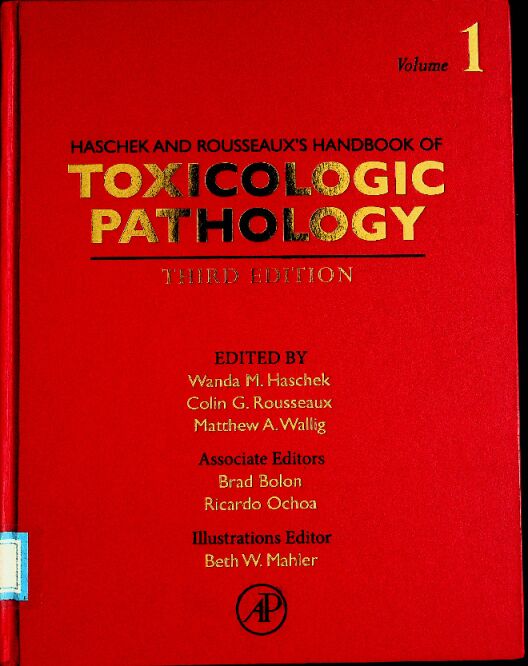
书名:Haschek and Rousseaux s handbook of toxicologic pathology. Volume I
责任者:Wanda M. Haschek | Colin G. Rousseaux | Matthew A. Wallig | Brad Bolon | Ricardo Ochoa ; Beth W. Mahler (illustrations ).
ISBN\ISSN:9780124157637,0124157637,9780124157590,0124157599
出版时间:2013
出版社:Academic Press,
分类号:医药、卫生
版次:Third edition.
前言
Our original goal in assembling the first edition of Haschek and Rousseaux’s Handbook of Toxicologic Pathology was to produce a comprehensive resource for the fundamental knowledge and skills needed to practice in the field of toxicologic pathology. Until its publication in 1991, toxicologic pathology information was primarily available in an ad hoc fashion through journal articles. The success of this initial one-volume effort led to the publication of a second edition of the Handbook in 2002, a two-volume set which many people consider to be the most authoritative reference text in the field. The second edition has seen wide use globally by professionals in industry, government, academia, and consulting. The second edition now is out of print and thus no longer available. In addition, since its release the roles filled by toxicologic pathologists have expanded significantly, and many new scientific advancements and regulatory requirements have taken place in the field.
This third edition of Haschek and Rousseaux’s Handbook of Toxicologic Pathology has been completely revised and extensively expanded to maintain its comprehensive coverage. The breadth of the field has necessitated three full volumes: I – The Practice of Toxicologic Pathology, II – Toxicologic Pathology in Safety Assessment, and III – Systems Toxicologic Pathology. The collective content considers structural, functional and other changes occurring in tissues as a response to the presence of pharmaceuticals, biologics, cell- and tissue-based products, medical devices, and chemicals, including agrochemicals and environmental contaminants. Volume I has been expanded to include more detail and new chapters in the principles, methods, and practice of toxicologic pathology. New chapters address pharmacokinetics, toxicokinetics and pharmacodynamics, biomarkers, quality assurance, and the use of innovative technologies like non-invasive imaging as well as novel animal models such as amphibians, fish, and minipigs in non-clinical toxicology evaluation. Volume II emphasizes non-clinical safety assessment, with chapters covering product discovery and safety assessment, data interpretation, risk assessment and risk management, as well as selected classes of toxic agents. New topics include carcinogenicity assessment and coverage of pathology analysis for toxicant classes like agrochemicals, environmental contaminants, foods and food additives, and nanomaterials. This new material and focus on non-clinical safety assessment will be a major strength of this edition. Volume III considers toxicologic pathology of various systems, and includes updated chapters appearing in the previous editions as well as new offerings on previously uncovered systems. We believe that the breadth of coverage in this 3rd edition of Haschek and Rousseaux’s Handbook of Toxicologic Pathology will continue to justify its current reputation for excellence.
Toxicologic pathology will continue to expand to address the needs of our developing society. This new third edition of the Handbook is written to benefit a large and varied audience including toxicologic pathologists, toxicologists, other biological and medical scientists, regulators, and post-graduate students who face the complex issues associated with the practice and interpretation of toxicologic pathology for risk assessment and risk management. As there are numerous textbooks on toxicology and pathology, the reader is advised to seek further information concerning fundamental concepts of toxicology and pathology from these texts.
We would like to thank the associate editors, Ricardo Ochoa and Brad Bolon, our illustrations editor Beth Mahler, and the authors for their outstanding efforts to bring this book to fruition. In addition, we wish to acknowledge the contributions to this and previous editions of authors who have passed away, including John F. Van Vleet, Adalbert Koestner, Robert W. Leader, Victor J. Ferrans and Charles C. Capen.
查看更多
目录
Preface xxix
About the Editors xxxi
List of Contributors xxxiii
Toxicologic Pathology: An Introduction 1
WANDA M. HASCHEK, COLIN G. ROUSSEAUX, MATTHEW A. WALLIG
VOLUME I PRACTICE OF TOXICOLOGIC PATHOLOGY
PART 1 Principles of Toxicologic Pathology
1. Biochemical and Molecular Basis of Toxicity LOIS D. LEHMAN-MCKEEMAN
1.Introduction 15
2.General Principles of Xenobiotic Disposition 16
2.1. General Properties of Absorption 16
2.2. Routes of Absorption 17
2.3. General Principles of Distribution 20
2.4. Metabolism: Activation and Detoxification
2.5. Elimination of Toxicants 26
3.Interactions of Toxicants with Cellular and Molecular Targets 30
3.1. Covalent Modification 30
3.2. Stress Responses in Toxicity 32
3.3. Altered Gene Expression 33
3.4. Mechanisms of Cell Death 34
4.Protective Mechanisms, Repair Mechanisms and Adaptation 35
4.1. Protective Cellular Constituents 35
4.2. Stress Response Pathways 36
5.Summary and Conclusions 37
Suggested Reading 38
2. Pharmacokinetics and Toxicokinetics KANNAN KRISHNAN, PAUL WHITE
1.Introduction 39
2.Pharmacokinetics: Processes and Determinants 40
2.1. Absorption 40
2.2. Distribution 42
2.3. Metabolism 43
2.4. Excretion 45
3.Pharmacokinetic (Time-Course) Data and Derivation of Dose Metrics 46
4.Pharmacokinetic Models and Computation of Dose Metrics 48
4.1. One-Compartment Model 48
4.2. Physiologically-Based Pharmacokinetic (PBPK) Models 51
4.3. Steady-State Algorithms 53
5.Pharmacokinetics and Its Use in Designing Toxicity Studies 55
6.Pharmacokinetics and Interpretation of Bioassay Outcomes 56
7.Concluding Remarks 58
Suggested Reading 58
3.Principles of Pharmacodynamics and Toxicodynamics DUNCAN C. FERGUSON
1.Introduction: Pharmacodynamics and Toxicodynamics Defined 61
2.Relevance of PD and TD to Toxicological Pathology 62
2.1. Drug/Toxin—Receptor Interactions Lead to Signal Transduction and Effect 63
2.2. Receptor Occupancy Theory: Driven by Mass Action 63
2.3. Characterizing Drug—Receptor Binding 63
3.Mechanisms of Drug Action: General Categories 66
3.1. Physical Interaction 66
3.2. Biological Mechanisms 66
4.Cellular Processes Linking Drug Concentration and Receptor Binding to Cellular Effect 66
5.Characterizing Biological Effects of a Drug or Toxin 67
5.1. Agonists 68
5.2. Antagonists 68
6.Reversible Two-State Model of Receptor Activation 69
7.Selectivity and Safety: Therapeutic VS Toxic Effect or Drugs 69
7.1. Quantal Dose—Effect Curves 71
7.2. Forms of Antagonism at the Tissue or Organism Level 72
7.3. Dynamic Receptor Phenomena Resulting in Altered Efficacy Following Chronic Dosing 72
7.4. Variation in Drug/Toxin Responsiveness 73
7.5. Non-Monotonic Dose—Effect Curves 74
8. Principles of Pharmacokinetic/Pharmacodynamic (PK/PD) Modeling 75 9. Summary 75
Suggested Reading 76
4. Morphologic Manifestations of Toxic Cell Injury MATTHEW A. WALL1G, EVAN B. JANOVITZ
1. Introduction 77
1.1. Key Cellular Components in Cell Injury 77
1.2. Factors Influencing Cellular Injury 78
1.3. Reaction of the Body to Injury 79 1.4. Adaptation 80
2. Reversible Cell Injury 85
2.1. Cell Swelling 86
2.2. Fatty Change 88
3. Irreversible Injury 90
3.1. Necrosis 90
3.2. Apoptosis 95
3.3. Sequelae to Irreversible Cell Injury 98
4. Concluding Comments 104
Acknowledgements 104
Suggested Reading 104
5. Carcinogenesis: Mechanisms and Manifestations DAVID E. MALARKEY, MARK HOENERHOFF, ROBERT R. MARONPOT
1. Introduction 107
1.1. Overview 107
1.2. Background 109
1.3. Initiation, Promotion, and Progression 110
1.4. Preneoplasia 115
1.5. Hypertrophy 116
1.6. Metaplasia and Anaplasia (Atypia) 117
1.7. Benign vs Malignant Neoplasms 117
2. Cancer is a Genetic Disease 117
2.1. Overview 117
2.2. Oncogenes, Tumor Suppressors, Apoptosis and Repair Genes 120 2.3. Cell Proliferation and Apoptosis 124
2.4. Somatic Mutation Theory 125
2.5. Gene Regulation 127
2.6. Cancer Stem Cell Theory 129
2.7. Tumor Regression 133
3. Identifying Carcinogens 134
3.1. Animal Bioassays 134
3.2. Data Evaluation and Interpretation 136
3.3. Genotoxic and Non-Genotoxic Carcinogens 139
3.4. Risk Assessment 140
3.5. Molecular Epidemiology 141
4. Conclusions 143
Acknowledgments 144
Suggested Reading 144
PART 2 Methods in Toxicologic Pathology
6. Basic Approaches in Anatomic Toxicologic Pathology E. TERENCE ADAMS, TORRIE A. CRABBS
1. Introduction 149
2. General Considerations in Study Protocol Development 150
3. In-Life 153
4. Necropsy 155
5. Fixation and Histologic Procedures 159
6. Specialized Histologic Techniques 160
7. Histopathology 161
7.1. Cause of Death 162
7.2. Nomenclature 163
7.3. Severity Grading and Qualifiers 164
8. Artifacts Versus Lesions 165
9. Lesion Interpretation 167
10. Conclusions 171 Suggested Reading 172
7. Special Techniques in Toxicologic Pathology KEVIN S. MCDORMAN, CURTIS CHAN, JENNIFER ROJKO, CHRISTINA M. SATTERWHITE, JAMES P. MORRISON
1. Introduction 175
2. Immunohistochemistry 176
2.1. Introduction 176
2.2. Applications 177
2.3. Technical Considerations 186
2.4. Conclusion 187
3. In Situ Hybridization (ISH) 188
3.1. Introduction 188
3.2. Applications 188
3.3. Technical Considerations 190
3.4. Conclusions 192
4. Flow Cytometry 193
4.1. Introduction 193
4.2. Applications 195
4.3. Limitations 198
5. Laser Microdissection 199
5.1. Introduction 199
5.2. Applications 200
5.3. Technical Considerations 200
5.4. Limitations 201
5.5. Conclusions 202
6. Confocal Microscopy 202
6.1. Introduction 202
6.2. Applications 202
6.3. Technical Considerations 203
6.4. Limitations 203 6.5. Conclusions 203
7. Digital Pathology 203
7.1. Introduction 203
7.2. Applications 205
7.3. Technical Considerations 205
7.4. Limitations 205
Suggested Reading 206
8. Stereological Principles and Sampling Procedures for Toxicologic Pathologists HANS JORGEN G. GUNDERSEN, ROSANNA MIRABILE, DANIELLE BROWN, ROGELY WAITE BOYCE
1. Application of Design-Based Stereology in Toxicologic Pathology 215
1.1. The Scope of this Chapter 217
2. Stereology — Basic Concepts and Sampling Designs 217
2.1. An Overview of Sampling and Simple Statistics 217
2.2. Sampling Probes 219
2.3. Systematic Sampling 222
2.4. Practical Sampling Designs 224
3. The Stereological Estimators of Structural 3D Quantities 243
3.1. Estimation of Total Volume 244
3.2. The Classical Fractionator Estimator of the Total Number of Objects 249
3.3. The Fast Fractionator Estimator of Total Number 253
3.4. The Estimator of the Total Number of Connections in Networks 255
3.5. The Total Surface Area Estimator 257
3.6. The Estimator of Total Length 258
3.7. Other Estimators 260
4. Optimizing the Sampling Procedure in a Given Experiment 263
4.1. The Pilot Experiment 265
Acknowledgment 265
Appendices 265
Appendix 8.1: Technical Procedures and Details 265
Appendix 8.2: Exercises 271
Appendix 8.3: Exercise — Worksheet 274
Appendix 8.4: Exercise — BANANAMETRY (2000, 2001; Stereology Research Laboratory, Aarhus University, Denmark) 277
Suggested Reading 285
9. In Vivo Small Animal Imaging: A Comparison with Gross and Histopathologic Observations in Animal Models HYO-EUN BHANG, NORIKO TSUCHIYA, POLINA SYSA-SHAH, CHRISTOPHER T. WINKELMANN, KATHY GABRIELSON
1. Introduction 288
2. Magnetic Resonance Imaging (MRI) and Magnetic Resonance Microscopy (MRM) 290
2.1. Basic Principles of MRI/MRM 290
2.2. Advantages and Disadvantages 291
2.3. Correlation of MRI or MRM to Gross or Histopathological Lesions 292
3. Computed Tomography (CT) 294
3.1. Basic Principles of CT 294
3.2. Image Information 295
3.3. Experimental Procedures 295
3.4. Advantages and Disadvantages 296
3.5. CT Imaging in Preclinical Toxicology 296
4. Micro-CT Microscopy 298
5. Radionuclide-Based Imaging: PET and SPEDCT 298
5.1. Basic Physics of PET 298
5.2. Basic Physics of SPECT 298
5.3. Comparative Utility of PET and SPECT 299
5.4. Advantages and Disadvantages 299
5.5. Radionuclide-Based Imaging in Preclinical Toxicity Studies 301 C4\6. Optical Imaging 302
6.1. Basic Physics of Bioluminescence Imaging 303
6.2. Basic Physics of Fluorescence Imaging 304
6.3. Advantages and Disadvantages 305
6.4. Optical Imaging in Preclinical Toxicity Studies 306
7. Ultrasound 307
7.1. Basic Physics of Ultrasound 307
7.2. Advantages and Disadvantages 308
7.3. Ultrasound Imaging in Preclinical Toxicity Studies 310
8. Translational Application, Safety Assessment, and Drug Screening with in Vivo or Ex Vivo Imaging 310
Acknowledgments 311
Suggested Reading 311
10. Biomarkers: Discovery, Qualification and Application MYRTLE A. DAVIS, SANDY ELDRIDGE, CALVERT LOUDEN
1. Introduction 317
1.1. Biomarker versus Surrogate 318
1.2. Qualification versus Validation 318
2. Categories of Biomarkers 318
2.1. Patient/Clinical Trial Subject Selection 320
2.2. Pharmacogenomic Biomarkers 321
2.3. Prognostic Biomarkers 322
2.4. Biomarkers of Exposure 322
2.5. Drug Response or Pharmacodynamic (PD) Biomarkers 328
2.6. Predictive Biomarkers 329
2.7. Surrogate Endpoint 331
2.8. Biomarkers of Tissue Injury/Damage 331
2.9. Biomarkers of Altered Organ Function 336
2.10. Mechanistic Biomarkers 339
3. Strategies for Discovery of Biomarkers 341
3.1. Discovery and Application of Panels of Biomarkers 342
4. Methods for Biomarker Measurement and Quantitation 342
4.1. Genomics 344
4.2. Proteomics 344 4.3. Metabolomics 344
4.4. "Histocytomics" 345
4.5. Antibody-Based Detection Systems 345
4.6. Multiplexed Assays 345
4.7. Morphology-Based Methods 345
5. Qualification of Biomarkers: Major Considerations 347
Suggested Reading 348
11. The Application of Toxicogenomics to the Interpretation of Toxicologic Pathology WILLIAM R. FOSTER, DONALD G. ROBERTSON, BRUCE D. CAR
1. Introduction 353
2. Why Toxicogenomics? 354
3. Key Strengths and Weaknesses of Toxicogenomics 355
4. Terminology and Platforms for Toxicogenomics 359
4.1. Transcriptomics 359
4.2. Metabolomics 360
5. Key Issues in Conducting Toxicogenomic Studies 361
5.1. Goals of Toxicogenomic Studies 361
5.2. Study Design 362
5.3. Reporting Toxicogenomic Studies 362
5.4. Analytical Methods 363
5.5. Role of the Toxicologic Pathologist in Improving Toxicogenomic Studies 368
5.6. Analysis Software and Databases 373
5.7. Toxicogenomic Data Generation and Sample Processing Steps 373
6. Examples of Key Toxicogenomic Studies 374
6.1. Studies of Basic Biology and Physiology 374
6.2. Markers of Pharmacologic and Toxic Activity 382
6.3. Other Studies - Clinical Applications and Data Reproducibility 389
7. Directions of Toxicogenomics for the Next Decade 390 Additional Data 391
Suggested Reading 398
12. Genetically Engineered Animals in Product Discovery and Development ELIZABETH J. GALBREATH, CARL A. PINKERT, BRAD BOLON, DANIEL MORTON
1. Fundamentals of Genetically Engineered Animal Models 405
1.1. Methods for Genetic Modification 406
1.2. Nomenclature Conventions 421
1.3. Perspectives on the Value of Genetically Engineered Animals 422 C4\2. Analysis of Genetically Engineered Animal Models 422
2.1. Genotyping 423
2.2. Phenotyping 423
2.3. Large-Scale Phenotyping 424
2.4. Directed Phenotypic Characterization for Product Discovery and Development 425
2.5. Phenotypic Interpretation of Genetically Engineered Animal Models 426
3. Genetically Modified Models for Non-Clinical Safety Assessment 428
3.1. Basic Concepts for Using Engineered Animals in Non-Clinical Safety Assessment 428
3.2. Absorption, Distribution, Metabolism, and Excretion (ADME) 429 3.3. Genotoxicity Testing 432
3.4. Carcinogenicity Assessment 434
3.5. Engineered Immunodeficient Models for Evaluating Human Cell-based Therapies 437
3.6. "Humanized" Animal Models for Non-Clinical Safety Assessment 442 C4\4. Limitations in Using Genetically Modified Animals for Non-Clinical Safety Testing 449
5. Special Considerations in Safety Assessment of Products Derived from Genetically Engineered Animals 449
5.1. Biopharming and Xenotransplantation 449
5.2. Genetically Engineered Animals as Food Products 452
6. Summary 452
Glossary 453
Suggested Reading 454
13. The Use of Minipigs in Non-Clinical Research PETER GLERUP, NANNA GRAND, MIKALA SKYDSGAARD
1. Introduction 461
2. Regulatory Aspects 462
3. Minipig Strains 462
4. Ethics and Animal Welfare 463
5. Animals 463
6. Parameters for Evaluation in Safety Studies Performed in Swine 464 7. Studies 464
7.1. Dermal Toxicity Studies 464
7.2. Dermal Local Tolerance Studies 465
7.3. Oral Toxicity Studies 465
7.4. Intravenous Toxicity Studies 465
7.5. Subcutaneous Studies 467
7.6. Wound-Healing Studies 467
7.7. Embryofetal Toxicity Studies 468
7.8. Juvenile Toxicity Studies 468
8. Other Routes of Dose Administration 469
9. Spontaneous Pathology in the Experimental Gottingen Minipig 469 C5\9.1. Macroscopic Observations 470
9.2. Microscopic Findings 471
10. Neoplasia in Research Swine 475
Suggested Reading 475
14. Alternative Animal Models JEFFREY C. WOLF
1. Introduction 477
2. Utilization of Alternative Animals 481
2.1. Animal Models of Human Diseases 481
2.2. Drug Discovery and Toxicity Screening 485
2.3. Target Animal Safety Studies 487
2.4. Environmental Monitoring and Ecotoxicological Testing 489
3. Alternative Animal Taxa 491
3.1. Invertebrates 491
3.2. Fish 494
3.3. Amphibians and Reptiles 499
3.4. Birds 502
4. Special Considerations 504
4.1. Study Design and Implementation 504
4.2. Subclinical Disease 506
4.3. Interspecies Variability 509
4.4. Results Extrapolation and Risk Assessment 510
4.5. Knowledge Gap 512
5. Conclusions 513
Acknowledgments 514
Suggested Reading 514
15. Pathology and GLPs, Quality Control and Quality Assurance KATHLEEN HE1NZ-TAHENY
1. Introduction 519
2. Good Laboratory Practice 519
2.1. History 519
2.2. Good Laboratory Practice Defined 524
2.3. Fundamentals 524
2.4. FDA GLP General Content 525
3. GLP and Pathology Data 529
3.1. Pathologist Requirements 529
3.2. Histopathology in the GLP Environment 530
4. In the Spirit of GLP 534
5. GLP Criticism 534
5.1. Academic Research 534
5.2. When GLP Guidelines Fail 535
Suggested Reading 536
PART 3 Practice of Toxicologic Pathology
16. Nomenclature DEEPA B. RAO. RONALD A. HERBERT, AMY E BRIX
1. Background and Introduction 539
2. The Need for Standardized Nomenclature 540
3. Components in Nomenclature 540
3.1. Terminology for Non-Neoplastic Lesions 541
3.2. Terminology for Neoplastic Lesions 542
4. Challenges in Standardizing Nomenclature 543
4.1. Training 543
4.2. Peer Review and Multiple Pathologists 544
4.3. Diagnostic Drift 544
4.4. Lesion Complexity 545
5. Suggested Practices 546
6. Harmonization of Nomenclature 547
7. Summary 549
Acknowledgments 549
Suggested Reading 549
17. Peer Review and Pathology Working Groups PETER C. MANN, JERRY F. HARDISTY
1. Introduction 551
2. What are the Qualifications of the Peer Review Pathologist?
552
3. Are Peer Reviews Required? 553
4. How is a Peer Review Conducted? 553
5. Prospective Peer Reviews 554
5.1. Informal Peer Review 554
5.2. Formal Peer Review 555
6. Retrospective Peer Review 558
7. Peer Review Statement 558
8. Documentation of the Peer Review and Data Locking 558
9. Sources of Disagreement in Peer Reviews 559
10. Digital Peer Reviews 561
11. Pathology Working Group 561
Suggested Reading 563
18. Clinical Pathology in Non-Clinical Toxicology Testing GRAHAM S. SMITH, GAIL L WALTER, ROBIN M. WALKER
1. Introduction 565
1.1. Recommended Test Parameters 566
1.2. Kinetics 567
1.3. Controls 567
2. Parameters Commonly Included in General Toxicology Study Protocols 568
2.1. Hematology 568
2.2. Hemostasis 570
2.3. Clinical Chemistry 572
2.4. Urinalysis 577
2.5. Bone Marrow Evaluations 578
2.6. Results Interpretation 579
3. Additional Available Tests 579
3.1. Hormones 579
3.2. Acute Phase Proteins 581
3.3. Microsomal Enzymes 582
4. Novel Biomarkers 584
4.1. Renal Biomarkers 584
4.2. Liver 586
4.3. Heart 587
4.4. Drug-induced Vascular Injury (DIVI) 589
5. Conclusions 590
Suggested Reading 590
19. Pathology Issues in the Design of Toxicology Studies RICARIX3 OCHOA
1. Introduction 595
1.1. Toxicology Studies and Their Utility 595
1.2. Compound Development Landmarks 596
1.3. The Role of the Pathologist in Compound Development 597
2. Discovery Studies 598
2.1. Participation in Discovery Teams 598
2.2. Types of Discovery Studies 599
2.3. Benefits of Discovery Studies 599
2.4. Limitations of Discovery Studies 600
2.5. Study Design 601
3. Regulatory Studies 601
3.1. Length of Studies 602
3.2. General Pathology Considerations for Regulatory Studies 602
3.3. Studies to Support First-in-Human (FIH) Exposure 608
3.4. Acute and Dose-Range Finding Toxicity Studies 608
3.5. Alternative Studies to Support First-in-Human 609
3.6. Subacute/Subchronic/Chronic Toxicity Studies 610
3.7. Carcinogenicity Studies 610
4. Carcinogenicity Studies 613
4.1. Study Design 613
4.2. Clinical Pathology 615
5. Special Studies: Animal Health Products 617
6. Summary and Conclusions 617
Suggested Reading 617
20. Issues in Laboratory Animal Science JEFFREY I. EVERITT, RICK ADLER
1. Introduction 619
2. Recent Trends in Global Research Animal Care and Use 622
3. Regulatory Issues 623
3.1. Overview of Rules and Regulations 623
3.2. Institutional Animal Care and Use Committee 624
4. Euthanasia of Research Animals 625
5. Selection of Animal Models 625
5.1. Overview 625
5.2. Genetic Issues 626
5.3. Issues to Consider When Sourcing Animals 627
5.4. Issues Involving the Use of Historical Pathology Databases 628 5.5. Challenges in the Use of Genetically Modified Rodents 629
6. Animal Health Considerations 629
6.1. Adventitious Agents 629
6.2. Sentinel Monitoring Programs 630
6.3. Microbial Effects on Toxicity 631
7. Housing and Husbandry Issues 632
7.1. Role of Environment in Lesion Production 632
7.2. Study Design Considerations 633
8. The Role of Diet in Toxicology Studies 634
8.1. Introduction 634
8.2. Types of Diets 635
8.3. Contaminant Issues 636
8.4. Dietary Optimization 636
9. 3Rs for the Toxicologic Pathologist 637
10. Description of Animal Studies in Scientific Publications 638
11. Summary 638
Suggested Reading 638
VOLUME II SAFETY ASSESSMENT INCLUDING CURRENT AND EMERGING ISSUES IN TOXICOLOGIC PATHOLOGY Safety Assessment in Toxicologic Pathology: An Introduction COLIN G. ROUSSEAUX, WANDA M. HASCHEK, MATTHEW A. WALLIG
PART 1 Toxicologic Pathology in Product Discovery and Safety Assessment
21. Overview of Drug Development COLIN G. ROUSSEAUX, WILLIAM M. BRACKEN
1. Introduction 647
2. Overview 648
2.1. The Stages of the Product Life Cycle 649
2.2. The Scope of Drug Discovery and Development 650
3. Drug Discovery and Development 653
3.1. Patents and Intellectual Property 654
3.2. Discovery 654
4. Development 657
4.1. Drug Substance and Drug Product Development (Quality) 657
4.2. Development Pharmaceutics — The Active Pharmaceutical Ingredient (API) 657
4.3. Development Pharmaceutics — The Drug Product (DP) 658
4.4. Manufacture of the Finished Dosage Form 659
4.5. Impurities in the Final Drug Product 660
4.6. Specifications and Control Tests on the Finished Product 660
5. Non-Clinical Studies (Safety) 662
6. Efficacy (E) 665
6.1. Animal Efficacy Studies 665
6.2. Short-term Efficacy Studies in Animals 665
6.3. Design Considerations 665
6.4. Risk Mitigation Methods 666 6.5. Dose Escalation 666
7. Clinical Trials 666
7.1. Phase 1 Clinical Trials 667
7.2. Phase 2 Clinical Trials 667
7.3. Phase 3 Clinical Trials 667
7.4. Phase 4 Clinical Trials 668
7.5. Comments 668
7.6. Limitations of Clinical Trials 668
8. Post-Marketing Surveillance 668
8.1. Adverse Drug Events 670
8.2. Adverse Drug Reactions 670
8.3. Current Mechanisms and Tools for Identifying and Quantifying ADRs 670
8.4. USA 673
8.5. Europe 673
8.6. Japan 675
8.7. Canada 675
9. Regulatory Authorities 678
9.1. Overview 678
9.2. Legal Framework 682
10. Summary and Conclusions 684
Suggested Reading 685
22. Overview of the Role of Pathology in Product Discovery and Safety Assessment DOUGLAS REID PA 1 1 IRSON
1. Introduction 687
2. Pathologists' Contributions in Drug Discovery 688
2.1. Pathologists Aid in Drug Candidate Selection 688
3. History of Pharmaceutical Regulatory Oversight in Drug Development 690
3.1. Pathologists are Vital to IND-Enabling Research 690
3.2. Pathologist's Role in Non-Clinical Safety Assessment 691
4. Designing Studies to Assess Human Risk with Typical Drug Candidates 692
5. Development with Biological Drug Candidates 693
6. Unique Requirements for Anticancer Drug Candidates 694
7. Optimal Animal Dose Selection Enhances Clinical Study Design 694 C5\7.1. Animal Dosing Duration Defines Human Study Duration 695
7.2. Vital Role of the Pathologist in Carcinogenicity Assessment 696 7.3. Pathologist's Role in Assessing Potential for DNA Damage 697 7.4. Pathologist's Role in Assessing Developmental and Reproductive Toxicity 697
7.5. Pathologist's Role in Assessing Hazards for Children 698
8. Pathologist's Role in Special Toxicity Studies 698
8.1. Pathologist's Role in Assessing Immunotoxicity 699
8.2. Pathologist's Role in Assessing Phototoxicity 700
8.3. Assessing for Drug Dependency 700
8.4. Pathologist's Importance in Safety Assessment under the Animal Rule 701
8.5. Pathologist's Role in Clinical Safety Reports 701
8.6. Pathologist's Role in Interpreting Metabolic Data 701
Suggested Reading 701
23. Discovery Toxicology and Pathology GLENN H. CANTOR, EVAN B. JANOVITZ
1. Introduction 703
1.1. Discovery Toxicology 703
1.2. Discovery Pathology 705
2. Knowledge Integration and the Spanning of Disciplines 706
3. Pathology Toolbox 709
4. In vitro/in vivo Correlations 713
5. Hypothesis Generation, Experimental Design, and the Role of Investigative Studies 716
6. Target Validation and in vivo Relevance of Target Selectivity 716 7. Discovery Strategy for Biologics 720
8. Communications 721
9. Personality and Behavioral Traits that are Helpful to Succeed in Discovery Pathology and Discovery Toxicology 722
10. Conclusion 723
Suggested Reading 723
24. Pathology in Non-Clinical Drug Safety Assessment ROY L. KERLIN, XIANTANG LI
1. Introduction 725
2. Drug Safety and Efficacy are a Continuum 726
3. The Pathologist's Role in Non-Clinical Safety Assessment 731
4. Pathology in Non-Clinical Safety Assessment of Small Molecules 732 5. Pathology in Non-Clinical Safety Assessment of Biotherapeutics 734 C5\5.1. Proteins 734
5.2. Oligonucleotides 735
5.3. Gene Therapy 736
5.4. Stem Cell Therapy 737
5.5. Vaccines 737
6. Pathology in Non-Clinical Safety Assessment of Novel Formulations 738
6.1. Excipients 738
6.2. Conjugation 739
6.3. Nanotechnology 741
7. Reversibility and Delayed Toxicity 742
8. GLP Regulations and Pathology 744
9. Imaging and its Use in Non-Clinical Safety Assessment 746
10. Novel Scientific Tools in Non-Clinical Safety Assessment 747
11. Future Challenges in Non-Clinical Safety Assessment 748
Suggested Reading 749
25. Biopharmaceuticals WENDY HALPERN, DAVID HUTTO
1. Introduction 751
1.1. Brief History of Biopharmaceuticals 751
1.2. Biopharmaceuticals Currently Approved for Use 753
1.3. General Safety Concerns when Developing Biopharmaceuticals 753 C4\2. Biopharmaceuticals 757
2.1. What Makes Biopharmaceuticals Different From Other Drugs? 757 2.2. Classes of Biopharmaceuticals 758
3. Safety Evaluation Strategies for Biopharmaceuticals 767
3.1. Regulatory Resources 767
3.2. General Toxicity Studies for Biologics 768
3.3. Toxicologic Pathology Findings with Biopharmaceuticals 775
4. Summary and Conclusions 777
Suggested Reading 777
26. Biomedical Materials and Devices MARY ELIZABETH PECQUET GOAD, DALE L. GOAD
1. Introduction 783
2. Definition of Biomaterials and Biomedical Devices 784
2.1. Types of Biomaterials 784
2.2. Uses of Biomaterials 784
3. Biomedical Devices 785
3.1. Soft Tissue Defects and Injury Repair 785
3.2. Bones and Joints 785
3.3. Heart Valves and Vessels 795
3.4. Silicone Implants 796
3.5. Bioengineered Implants and Delivery Systems 798
4. Safety and Toxicology of Biomaterials and Devices 798
4.1. Assessment of Lesions 799
4.2. Carcinogenicity 803
4.3. Regulatory Guidelines 803
5. Conclusion 805
Suggested Reading 805
27. Carcinogenicity Assessment DANIEL MORTON, CARL L. ALDEN, PHILLIP M. BARTHOLOMEW.JOHN M. KREEGER, LAURA DILL MORTON
1.A Brief History of Carcinogenicity Assessment 807
1.1. Food, Drugs, and Cosmetics 808
1.2. Other Chemicals 809
1.3. Relevance of Rodent Findings in Carcinogenicity Hazard Identification Studies for Human Risk 810
1.4. Looking Forward 812
2.Planning, Prerequisite Information, and Timing of
Lifetime Carcinogenicity Studies 814
2.1. Prerequisite Data to Design a Carcinogenicity Study Protocol 814
2.2. Special Protocol Assessment for Carcinogenicity
Studies 817
2.3. Carcinogenicity Study Planning Timeline 817
3.Two-Year Rodent Carcinogenicity Studies 818
3.1. Study Design 818
3.2. Managing High Mortality in 2-Year Carcinogenicity Studies 820
3.3. Pathology Interpretations 822
3.4. Historical Control Data 824
4.Alternative Genetically Modified Mouse Models 824
4.1. The Range-Finding Study 825
4.2. Carcinogenicity Study Design Using Alternative Models 825
4.3. Conduct of Carcinogenicity Studies Using Alternative Models 828
5.Carcinogenicity Assessment of Biotechnology-Derived Therapeutic Proteins 828
6.Carcinogenicity Assessment of Nucleic Acid
Therapies 833
7.Carcinogenicity Assessment of Stem Cell-Derived
Therapies 835
7.1. Safety Concerns for Stem Cell-Derived Therapies 835
7.2. In vivo Assessment of Teratoma Formation 835
8.Summary 836
Suggested Reading 837
PART 2 Safety Assessment and Data Interpretation
28. Preparation of the Pathology Report for a Toxicology Study HUGH E. BLACK, RONALD W. MOCH, JERRY D. FRANTZ
1.Introduction 843
2.Clients for the Pathology Report 844
3.Objective of the Pathology Report 844
4.Developing the Data for the Pathology Report 844
4.1. Study Protocol 844
4.2. Importance of Assessing Correlative Data Before Beginning Microscopic Review of the Tissues 845
4.3. Value of Data from More than One Time Point 845
4.4. Reversibility 845
4.5. Presentation and Interpretation of Organ Weight Data 846
4.6. Presentation and Interpretation of Gross Observations 846
4.7. Presentation and Interpretation of Microscopic Observations 847
5.Text Tables 847
6.Discussion 850
7.Conclusion For The Pathology Report 850
8.Signing the Pathology Report 850
9.Examples to be Avoided in Presenting/Interpreting Data in the Pathology Report 850
10.Methods to Prevent or Resolve Issues 851
11.Peer Review 851
12.Overall Conclusion for the Chapter 851
Suggested Reading 851
29. Interpretation of Clinical Pathology Results in Non-Clinical Toxicology Testing GAIL L WALTER, GRAHAM S. SMITH, ROBIN M. WALKER
1.Introduction 853
2.Hematology Interpretation 854
2.1. Increases in Erythrocytes, Leukocytes, and Platelets 854
2.2. Decreases in Erythrocytes, Leukocytes, and Platelets 856
2.3. Microscopic Evaluation of Blood Smears 859
3.Interpretation of Bone Marrow Cytology 859
4.Coagulation Interpretation 860
5.Clinical Chemistry Interpretation 861
5.1. Indicators of Hepatic Integrity and Function 861
5.2. Indicators of Renal Function 866
5.3. Serum Proteins 867
5.4. Cholesterol, Triglycerides, and Glucose 868
5.5. Electrolytes, Calcium, and Inorganic Phosphate 868
5.6. Indicators of Muscle Injury 869
6.Urinalysis and Urine Chemistry Interpretation 869
7.Microsomal Induction Interpretation 871
7.1. Effects on Serum Chemistry 872
7.2. Effects on Anatomic Pathology 872
7.3. Effects on Toxicokinetics 873
8.Overall Results Interpretation 873
8.1. Integrative Approach 873
8.2. Potential Effects of Factors Unrelated to Test-Article Treatment 874
8.3. Comparator Data and Historical Controls 883
8.4. Statistics 884 8.5. Biological Relevance 885
9. Tying it All Together: Reporting, Terminology and Use of Clinical Terms 885
10. Conclusions 886
Suggested Reading 887
30. Statistical Assessment of Toxicologic Pathology Studies COLIN G. ROUSSEAUX, SHAYNE C GAD
1. Introduction 894
1.1. Observations and Measurements 894
1.2. Type of Data and Statistical Methods 896
2. Prerequisites to Statistical Analysis 897
2.1. Biological Variation 897
2.2. Describing the Data 898
2.3. Biological and Statistical Significance 904
3. Functions of Statistical Analyses 908
3.1. Hypothesis Testing and Probability (P) Values 908
3.2. Multiple Comparisons 908
3.3. Estimating the Size of the Effect 909
4. Experimental Design 909
4.1. Basic Principles of Experimental Design 909
4.2. Detecting Treatment Effects 910
4.3. Censoring 914
4.4. Impacts of Sample Size 914
4.5. Considerations Made Before Designing the Experiment 914
5. Designs Commonly Used in Toxicologic Pathology 916
5.1. Completely Randomized Design 916
5.2. Completely Randomized Block Design 916
5.3. Matched Pairs Design 917
5.4. Latin Square Design 917
5.5. Factorial Design 917
5.6. Nested Design 918
6. Managing the Data 919
6.1. Bias and the Toxicologic Pathologist 919
7. Statistical Methods 920
7.1. Statistical Analysis: General Considerations 922
7.2. Methods for Data Examination and Preparation 931
7.3. Exploratory Data Analysis 936
7.4. Hypothesis Testing of Categorical Data 938
7.5. Hypothesis Testing of Ordinal Data 940
7.6. Hypothesis Testing on Univariate Parameters 944
7.7. Hypothesis Testing on Multivariate Parameters 950
7.8. Modeling 951
7.9. Methods for the Reduction of Dimensionality 960
7.10. Meta-Analysis 966
7.11. Bayesian Inference 967
8. Data Analysis Applications in Toxicologic Pathology 971
8.1. Body and Organ Weights 971
8.2. Clinical Chemistry 973
8.3. Hematology 973
8.4. Incidence of Histopathological Findings 974
8.5. Carcinogenesis 975
9. Assumptions Statistical Tests 976
10. Summary and Conclusions 976
Glossary 982
Suggested Reading 986
31. Risk Assessment STEPHEN K. DURHAM, JAMES A. SWENBERG
1. Introduction 989
2. Classical Risk Assessment 990
3. Contemporary Risk Assessment 992
3.1. a2µ Globulin Nephropathy 993
3.2. Peroxisome Proliferators 994
3.3. Butadiene 994
4. New Strategies and Advanced Technologies for Toxicology 995 Suggested Reading 996
32. Risk Communication for Toxicologic Pathologists JOHN L. VAHLE
1. Introduction 999
2. Understanding the Audience 1000
2.1. Drug Discovery 1000
2.2. Supporting Clinical Development 1000
2.3. Product Approval and Marketing 1001
2.4. Role of the Toxicologic Pathologist 1001
3. General Principles: The Science of Risk Communication 1001
3.1. Challenges and Obstacles to Effective Risk Communication 1002 3.2. The Perception and Acceptance of Risk 1003
3.3. Risk Assessment Basics 1004
4. Role of Animal Data in Risk Communication —Pharmaceutical Safety Assessment 1005
4.1. Risk Information for Clinical Trials 1005
4.2. Risk Information for Approved Therapeutic Agents 1007
5. Putting it All Together 1008
Suggested Reading 1008
33. Risk Management in Non-Clinical Drug Development
RICARDO OCHOA, ROBERT C. SILLS
1.Introduction 1009
2.Definition of Risk 1010
3.How to Evaluate Risk 1011
3.1. Probability 1011
3.2. Severity 1011
3.3. Types of Health Risks in General 1011
3.4. Types of Risk in the Pharmaceutical Industry 1012
3.5. Safety Risk in the Non-Clinical Setting 1013
3.6. Classifying Pharmaceutical Safety Risk to Humans 1013
3.7. Defining Risk in the Context of Non-Clinical Toxicology Studies 1015
3.8. The Objective of Toxicology Studies vs Risk 1015
3.9. What Constitutes a Risk — Is the Risk Real? 1017
3.10. Compound Relationship 1018
3.11. Species Relationship: Is the Finding Relevant to Humans? 1020
4.Managing the Identified Risks 1023
4.1. Risk/Benefit 1023
4.2. The Precautionary Principle 1023
4.3. Decreasing Ambiguity 1023
4.4. Maximum Recommended Starting Dose 1024
5.Summary and Conclusions 1024
Suggested Reading 1025
PART 3 Food and the Environment: Selected Toxic Agents
34. Environmental Toxicologic Pathology and Human Health SUSAN A. ELMORE, GARY A. BOORMAN
1.Introduction 1029
2.History and Principles 1030
3.Examples of Environmental Pollutants 1034
3.1. Workplace Exposure 1034
3.2. General Environmental Contaminants 1035
3.3. Air Pollutants 1036
3.4. Water Pollutants 1039
3.5. Ground and Soil Contamination 1040
4.The Role of Lifestyle and the Environment on Human Health 1041
5.Methods of Toxicity and Carcinogenicity Testing 1041
5.1. The Rodent Bioassay 1041
5.2. Transgenic Mouse Models 1042
6.Current Considerations for Environmental Toxicity and Carcinogenicity Testing 1043
6.1. Mechanism of Action versus Mode of Action 1043
6.2. Human Relevancy 1043
6.3. Alternative Testing Strategies 1043
7.New Directions for Environmental Toxicity and Carcinogenicity Testing 1046
Suggested Reading 1046
35. Food and Toxicologic Pathology: An Overview OLGA M. PULIDO, SANTOKH GILL
1.Introduction 1051
2.General Concepts in Food Toxicology 1052
3.Food Additives 1056
3.1. Food Additive Monosodium Glutamate and Glutamate Receptors 1057
3.2. Food Colors 1058
4.Environmental Contaminants 1059
5.Contaminants Arising or Introduced During Food Processing and Packaging 1060
5.1. Contaminants Arising from Components in the Food during Processing 1060
5.2. Chemicals Entering Food from Packaging or Other Food Contact Materials 1061
6.Natural Toxins 1062
6.1. Marine Biotoxins 1062
6.2. Mycotoxins 1063
6.3. Natural Plant Toxins (Cyanogenic Glycosides on Cassava and other Plants) 1064
6.4. Natural Health Products 1064
7.Compounds That are Intrinsic Constituents of Food, But Which are Harmful to a Susceptible Population 1065
7.1. Food Allergies and Intolerances 1065
7.2. Gluten Toxicity: Wheat Allergy, Celiac Disease, and Related Conditions 1066
8.Molecular Pathology: Biomarkers and Their Applications to Food Toxicology 1072
9.Challenges and Future Developments in Food Safety 1073
Acknowledgments 1073
Suggested Reading 1073
36. Nutritional Toxicologic Pathology MATTHEW A. WALLIG, KEVIN P. KEENAN
1.Introduction 1077
2.Caloric Excess and Obesity 1078
3.Caloric Restriction 1081
4.Macronutrients and Micronutrients 1083
4.1. Macronutrients 1084
4.2. Micronutrients 1090
5.Dietary Contaminants 1118
5.1. Analyses for Contaminants 1118
5.2. Pesticides 1118
5.3. Mycotoxins, Heavy Metals, Phytoestrogens, and Other Contaminants 1118
Suggested Reading 1120
37. Endocrine Disruptors PAUL S. COOKE, LIZ SIMON. NANCY D. DENSLOW
1.Introduction 1123
2.Mechanisms of Endocrine Disruption 1125
3.EDC Effects on Estrogen Signaling 1127
3.1. Bisphenol A 1131
4.EDC Effects on Androgen Signaling 1131
4.1. Phthalates as Endocrine Disruptors 1136
5.EDC Effects on Steroid Hormone Production or on the Hypothalamo-Pituitary-Gonadal Axis 1137
6.EDC Effects on Thyroid Hormone Signaling 1138
7.EDC Effects on Glucocorticoid Signaling 1140
8.EDCS That Have Effects on Adipose Deposition/ Obesity and Diabetes 1140
8.1. BPA Effects on Adipogenesis and Metabolism 1142
8.2. Arsenic and Type 2 Diabetes 1142
8.3. Central Effects of EDCs That May Regulate Adiposity 1142
9.Epigenetic Effects of EDCS 1142
10.How Do We Know If a Chemical is an Environmental Endocrine Disruptor,and What We Do If It is? 1143
10.1. Historical Methodologies 1143
10.2. In Vivo Assays 1144
10.3. In Vitro Assays 1145
11.Future Methodologies 1147
11.1. Microarray Analysis 1147
11.2. Proteomics 1148
12.Integrative Assessment Programs and the Future of Endocrine Disruption Screening 1149
12.1. Fish Embryo Assay 1150
12.2. Biomarkers for Endocrine-Related Disease 1149
13.Regulatory Matters 1150
14.Why is it Difficult to Assess Human Health Effects of EDCS? 1151
Acknowledgments 1154
Suggested Reading 1154
38. Phycotoxins PHILIP F. SOLTER, VAL R. BEASLEY
1.Introduction 1155
2.Okadaic Acid and Dinophysistoxins 1156
3.Saxitoxins 1157
4.Domoic Acid 1159
5.Brevetoxins 1163
6.Ciguatoxins 1166
7.Azaspiracid Toxins 1167
8.Cylindrospermopsin 1170
9.Microcystins and Nodularin 1173
10.Anatoxins 1177
11.Cyclic Imines 1179
12.Lyngbya Majuscula 1180
13.0-Methylamino-L-alanine 1181
14.Concluding Remarks 1182
Suggested Reading 1182
39. Mycotoxins WANDA M. HASCHEK, KENNETH A. VOSS
1.Introduction 1187
2.Aflatoxins 1191
2.1. Source/Occurrence 1191
2.2. Toxicology 1195
2.3. Manifestations of Toxicity in Animals 1198
2.4. Human Risk and Disease 1201
2.5. Diagnosis, Treatment, and Control 1202
3.Ochratoxins 1203
3.1. Source/Occurrence 1203
3.2. Toxicology 1203
3.3. Manifestations of Toxicity in Animals 1205
3.4. Human Risk and Disease 1207
3.5. Diagnosis, Treatment, and Prevention 1208
4.Trichothecene Mycotoxins 1208
4.1. Sources/Occurrence 1208
4.2. Toxicology 1209
4.3. Manifestations of Toxicity in Animals 1212
4.4. Human Risk and Disease 1220
4.5. Diagnosis, Treatment, and Prevention 1221
5.Zearalenone 1222
5.1. Source/Occurrence 1222
5.2. Toxicology 1223
5.3. Manifestation of Toxicity in Animals 1225
5.4. Human Risk and Disease 1227
5.5. Diagnosis, Treatment, and Prevention 1228
6.Fumonisins 1228
6.1. Source/Occurrence 1228
6.2. Toxicology 1229
6.3. Manifestations of Toxicity in Animals 1233
6.4. Human Risk and Disease 1237
6.5. Diagnosis, Treatment, and Prevention 1239
7.Ergot Alkaloids 1239
7.1. Source/Occurrence 1239
7.2. Toxicology 1241
7.3. Manifestations of Toxicity in Animals 1244
7.4. Human Risk and Disease 1247
7.5. Diagnosis, Treatment and Prevention 1248
8.Summary/Conclusion 1249
Suggested Reading 1249
40. Selected Poisonous Plants Affecting Animal and Human Health BRYAN L. STEGELMEIER, REUEL FIELD, KIP E. PANTER, JEFFERY 0. HALL, KEVIN D. WELCH, JAMES A. PFISTER, DALE R. GARDNER, STEPHEN T. LEE, STEVE COLEGATE, T. ZANE DAVIS, BENJAMIN T. GREEN, DANIEL COOK
1. Introduction 1260
2. Selected Hepatotoxic Plants 1260
2.1. Dehydropyrrolizidine Alkaloids 1260
2.2. Saponin-Containing Plants 1264
2.3. Plants Containing Fungal Hepatotoxins 1266
2.4. Alsike Clover 1268
2.5. Lantana 1269
3. Selected Neurotoxic Plants 1270
3.1. Plant-Induced Storage Diseases (Swainsonine/ Calestegine) 1270 3.2. Ryegrass Toxicity 1276
3.3. Delphinium spp. 1279
3.4. Centaurea spp. 1279
3.5. Nitro Toxins 1281
3.6. Hemlocks 1282
3.7. Lupines 1282
3.8. Death Camas 1283
4. Selected Myotoxic Plants 1283
4.1. Cardioactive Glycoside-Containing Plants 1283
4.2. Rayless Goldenrod and White Snakeroot 1285
4.3. Other Myotoxic Plants 1286
5. Selected Teratogenic Plants 1290
5.1. Lupine 1290
5.2. Veratrum californicum 1292
5.3. Poison Hemlock 1293
6. Selected Nephrotoxic Plants 1293
6.1. Oak 1293
6.2. Lily 1294
6.3. Oxalate-Containing Plants 1295
6.4. Amaranthus spp. (Pigweeds) 1298
6.5. Calcinogenic Glycoside-Containing Plants 1298
7. Other Toxic Plants 1300
7.1. Pine Needles 1300
7.2. Cyanogenic Plants 1301
7.3. Nitrate-Accumulating Plants 1303
7.4. Photosensitizing Plants 1304
7.5. Bracken Fern 1307
7.6. Ricinus spp. 1310
8. Additional Resources 1310
Suggested Reading 1311
41. Heavy Metals SHARON M. GWALTNEY-BRANT
1. Introduction 1315
2. Cadmium 1315
3. Mercury 1322
4. Lead 1327
5. Arsenic 1332
5.1. Chemical Forms 1332
5.2. Inorganic Arsenic 1332
5.3. Phenylarsonics 1334
5.4. Arsine 1335
6. Uranium and Plutonium 1335
6.1. Uranium 1335
6.2. Plutonium 1337
7. Thallium 1338
8. Bismuth 1340
9. Antimony 1341
10. Beryllium 1342
Summary and Conclusions 1344
Suggested Reading 1344
42. Agricultural Chemicals RAMESH C. GUPTA, JAMES W. CRISSMAN
1. Introduction 1349
2. Herbicides 1349
2.1. Chlorophenoxy Compounds 1350
2.2. Bipyridyls 1351
2.3. Organophosphorus Compounds 1352
2.4. Ureas and Thioureas 1353
2.5. Triazine Compounds 1354
2.6. Carbamates and Thiocarbamates 1355
3. Fungicides 1356
3.1. Inorganic Fungicides 1356
3.2. Organic Fungicides 1357
3.3. Biofungicides 1359
4. Insecticides 1360
4.1. Organophosphates and Carbamates 1360
4.2. Organochlorines 1362
4.3. Pyrethrins and Pyrethroids 1363
5. Rodenticides 1364
5.1. Anticoagulants 1364
5.2. Metal Phosphides 1365
5.3. Calciferols 1366
5.4. Bromethalin 1367
5.5. Strychnine 1368
5.6. Fluoroacetates 1368
6. Summary 1369
Suggested Reading 1370
43. Nanoparticulates ANN HUBBS, DALE PORTER, ROBERT MERCER, VINCENT CASTRANOVA. LINDA SARGENT, KRISHNAN SRIRAM
1. Background 1373
1.1. Definitions 1373
1.2. Historical Perspective 1374
1.3. Development of Nanotechnology 1375
1.4. Current and Future Nanotechnology Applications 1377
1.5. Human Exposures 1379
2. Experimental Toxicologic Pathology of Nanoparticulates 1380
2.1. Enhanced Toxicity of Nanoscale Particulates 1380
3. Visualizing Nanoparticulates in Tissue 1381
3.1. Factors that Limit the Ability to Identify NPs in Tissue Sections 1381
3.2. Labeled NPs 1384
3.3. High-Resolution FESEM 1384
3.4. Enhanced Darkfield Microscopy 1384
4. Cytopathology 1386
4.1. Cytoplasmic Membrane Damage 1386
4.2. Mitotic Spindle Interactions 1387
4.3. Additional Cytopathologic Interactions 1390
5. Organ and Tissue Targets 1393
5.1. Pulmonary Pathology 1393
5.2. Neurotoxicity/Neuropathology of Nanoparticulates 1394
5.3. Cardiovascular Pathology 1400
5.4. Lymphatic Pathology 1400
6. Human Relevance of Experimental Studies in Animals 1402
7. Future Trends in Nanopathology and Nanotoxicology 1403
8. Conclusions 1403 Acknowledgments 1404
Suggested Reading 1404
44. Radiation and Other Physical Agents ERIC D. LOMBARDINI, MICHELLE E. PACHECO-THOMPSON, MARK A. MELANSON
1. Introduction 1422
1.1. Sources and Occurrence 1423
Part I: Ionizing Radiation 1426
2. Nature And Action of Ionizing Radiation 1426
2.1. Radiation Biophysics 1427
2.2. External Radiation and Internal Emitters 1427
3. Mechanisms of Ionizing Radiation Injury 1431
3.1. Interaction of Ionizing Radiation with Biological Materials 14313.2. Subcellular and Cellular Effects of Ionizing Radiation 1432 3.3. Cell and Tissue Radiosensitivity to Ionizing Radiation 1433
3.4. General Tissue and Organ Effects of Ionizing Radiation 1434
3.5. Molecular Mediators 1436
3.6. Acute Radiation Syndromes and Combined Injury 1437
3.7. Ionizing Radiation Carcinogenesis 1438
4. Response to Injury Induced by Ionizing Radiation 1440
4.1. Vascular and Connective Tissue Effects of Ionizing Radiation 1440 4.2. Hematopoietic and Lymphoid Systems 1442
4.3. Alimentary System 1449 4.4. Nervous System 1453
4.5. Endocrine System 1457
4.6. Special Senses 1459
4.7. Respiratory System 1462
4.8. Musculoskeletal System 1468
4.9. Cardiovascular System 1472
4.10. Urinary System 1475
4.11. Fetal Effects 1479
4.12. Reproductive Tract 1479
4.13. Integumentary System 1480
Part II: Ultraviolet Radiation 1484
5. Nature and Action of Ultraviolet Radiation 1484
6. Mechanisms of Ultraviolet Radiation Injury 1484
7. Response to Injury Induced by Ultraviolet Radiation 1485
7.1. Integument 1485
7.2. Eye 1488
7.3. Immune System 1488
7.4. Ultraviolet Radiation Carcinogenesis 1491
Part III: Hyperthermia 1493 8. Clinical Use of Hyperthermia 1493
9. Mechanisms of Hyperthermia-Induced Injury 1494
10. Response to Injury Induced by Hyperthermia 1494
10.1. Reaction of Specific Organs and Tissue to Hyperthermia 1495
Acknowledgements 1499
Suggested Reading 1499
VOLUME III SYSTEMS TOXICOLOGIC PATHOLOGY Organ-Specific Toxicologic Pathology: an Introductio MATTHEW A. WALLIG, WANDA M. HASCHEK, COLIN G. ROUSSEAUX
45. Liver and Gall Bladder RUSSELL C. CATTLEY, JOHN M. CULLEN
1. Introduction 1509
2. Structure, Function, and Cell Biology 1510
2.1. Liver 1510
2.2. Gall Bladder 1514
3. Evaluation of Liver Toxicity 1514
3.1. Physiological Methods 1515
3.2. Biochemical-Clinical Pathology 1515
3.3. Morphology/Imaging 1517
3.4. Molecular Methods 1520
3.5. In Vitro Methods 1520
3.6. Ex Vivo Methods 1521
3.7. In Vivo Models 1521
4. Response to Injury 1522
4.1. Non-Neoplastic Responses to Toxicant Injury 1522
4.2. Non-Parenchymal Cell Injury 1542
4.3. Hepatic Neoplasia Due to Toxicant Injury 1545
4.4. Gall Bladder 1554
5. Mechanisms of Toxicity in Liver 1556
5.1. Metabolic Activation 1556
5.2. Covalent Binding 1556
5.3. Free Radical Injury 1557
5.4. Glutathione 1557
5.5. Cellular Targets of Hepatotoxicity 1557
5.6. Immunological Mechanisms of Toxic Hepatic Injury 1561
6. Summary 1561
Suggested Reading 1562
46. Cardiac, Vascular, and Skeletal Muscle Systems BRIAN R. BERRIDGE, JOHN F. VAN VLEET, EUGENE HERMAN
1. Introduction 1568
Part I: Heart 1569
2. Structure and Function 1569
2.1. Gross and Microscopic Anatomy 1569
2.2. Physiology and Functional Considerations 1574
2.3. Xenobiotic Exposure 1576
3. Evaluation of Toxicity: Heart 1576
3.1. Physiologic Evaluation of Toxicity 1577
3.2. Morphologic Evaluation of Toxicity 1582
3.3. Background Alterations, Spontaneous and Age-Related Lesions 1584 3.4. Biomarkers 1584
3.5. Biochemical Evaluation of Toxicity 1586
3.6. Use of Animals as Models 1586
4. Response to Injury 1586
4.1. Developmental Cardiotoxicities 1586
4.2. Cardiac Dysfunction as a Manifestation of Toxicity 1587
4.3. Changes in Cardiac Mass as a Response to Toxicity 1589
4.4. Drug-Induced Cardiomyopathies 1590
4.5. Cardiomyocellular Injury 1592
4.6. Endocardium 1608
4.7. Neoplasia 1608
4.8. Valves 1608
4.9. Epicardium 1610
4.10. Pericarditis 1610
5. Mechanisms of Toxicity 1610
5.1. Mechanisms of Functional Alterations 1611
5.2. Mechanisms of Direct Cellular Injury 1612
5.3. Mechanisms of Indirect Injury 1614
5.4. Cardiotoxicity of Cardiac Drugs 1615
5.5. Hypersensitivity Reactions 1615
5.6. Xenobiotic Interactions 1616
5.7. Modifying Factors in Toxicity 1616
Part II: Blood Vessels 1617
6. Structure and Function 1617
6.1. Microscopic Anatomy 1617
6.2. Cellular and Extracellular Components of the Vasculature: Biology and Clinical Relevance 1618
6.3. Physiology and Functional Considerations 1619
7. Evaluation of Toxicity: Vasotoxic Effects 1623
7.1. Physiologic Methods for Testing 1623
7.2. In Vitro Methods for Detecting Vascular Toxicity 1624
7.3. Morphologic Evaluation 1625 7.4. Background Alterations, Spontaneous and Age-Related Lesions 1626 7.5. Use of Animals as Models 1627
7.6. Biomarkers of Vascular Injury 1627
8. Response to Injury 1627
8.1. Atherosclerosis Accelerated by Toxic Agents 1627
8.2. Medial Proliferation 1628
8.3. Intimal Proliferation 1628
8.4. Calcification 1629
8.5. Aneurysms 1629
8.6. Medial Hemorrhagic Necrosis 1630
8.7. Fibrinoid Necrosis 1631
8.8. Microangiopathy 1631
8.9. Immune-Mediated Vascular Inflammation 1631 8.10. Regeneration and Repair 1631
9. Mechanisms of Toxicity 1632
9.1. Vasculotoxic Effects of Xenobiotics 1632
9.2. Vascular Toxicity in Specific Organs 1633
Part III: Skeletal Muscle 1635
10. Structure and Function 1635
10.1. Gross and Microscopic Anatomy 1635
10.2. Cellular Content of Skeletal Muscle: Biology and Clinical Relevance 1635
10.3. Physiology and Functional Considerations 1638
11. Evaluation of Toxicity: Skeletal Muscle 1638
11.1. Methods for Testing 1638
11.2. Morphologic Evaluation 1640
11.3. Background Alterations, Spontaneous and Age-Related Lesions 1642
11.4. Biochemical Evaluation 164211.5. Biomarkers of Skeletal Muscle Injury 1642
11.6. Use of Animals as Models 1646
12. Response to Injury 1646
12.1. Injury, Regeneration, and Repair 1646
12.2. Pathologic Alterations 1647
13. Mechanisms of Toxicity 1652
13.1. Altered Neurogenic Function 1652
13.2. Altered Immunologic Function 1653
13.3. Localized Damage 1653
13.4. Cell Membrane Alterations 1653
13.5. Sarcoplasmic Reticulum Alterations 1654
13.6. Microtubular Alterations 1654
13.7. Myofilament Alterations 1654 13.8. Lysosomal Alterations 1654
13.9. Altered Intracellular Calcium Concentration 1655
13.10. Altered Protein Synthesis 1655 .
13.11. Altered Mitochondrial Function 1655
13.12. Altered Muscle Cell Differentiation 1656
13.13. Statin-induced Myopathy 1656
Part N: Summary 1656 Suggested Reading 1657
47. Kidney KANWAR NASIR M. KHAN, GORDON C. HARD. CARL L ALDEN
1. Introduction 1667
2. Structure, Function, and Cell Biology 1668
2.1. Renal Structure 1670
2.2. Renal Function 1679
2.3. Renal Cell Biology 1685
3. Evaluation of Toxicity 1690
3.1. Physiologic Considerations 1691
3.2. Biochemical and Biomarker Evaluations 1693
3.3. Morphologic Evaluation 1698
3.4. Testing for Renal Carcinogenic Potential 1705
3.5. In Vitro Techniques 1710
3.6. Use of Animal Models 1713
3.7. Use of Genetically Modified Rodent Models 1715
4. Response to Injury 1716
C4.1. Physiologic, Molecular, and Biochemical Response 1716
4.2. Morphologic Response 1718
5. Mechanisms of Toxicity 1724
5.1. Nephrotoxicity Classification 1726
5.2. Mechanisms of Glomerular Toxicity 1726
5.3. Mechanisms of Proximal Tubular Injury 1738
5.4. Other Sites of Renal Injury 1756
5.5. Renal Carcinogenesis 1757
Acknowledgements 1764
Suggested Reading 1764
48. Lower Urinary Tract SAMUEL M. COliEN
1. Introduction 1775
2. Structure, Function, and Cell Biology 1776
2.1. Kidney Pelvis and Papilla 1776
2.2. Ureters 1776
2.3. Urinary Bladder 1776
2.4. Urethra 1777
2.5. Urothelium 1777
3. Evaluation of Toxicity 1779
3.1. Physiologic and Biochemical Evaluation 1780
3.2. Morphologic Evaluation 1780
3.3. Techniques for Evaluation 1780
4. Response to Injury 1783
4.1. Acute Injury 1783
4.2. Chronic Injury 1783
4.3. Carcinogenesis 1784
4.4. Morphologic Lesions 1787
5. Mechanisms of Toxicity 1790 Acknowledgements 1791
Suggested Reading 1791
49. Immune System C. FRIEKE KUPER, CHRISTINE RUEHL-FEHLERT, SUSAN A. ELMORE, GEORGE A. PARKER
1. Introduction 1795
2. Function and Structure 1797
2.1. Function of the Immune System 1797
2.2. Structure and Physiology of Lymphoid Organs and Tissues 1800
2.3. Developmental and Aging Changes 1819
3. Mechanisms and Evaluation of Toxicity 1822
3.1. Mechanism of Toxicity 1822
3.2. Evaluation of Toxicity 1829
4. Response to Injury 1834
4.1. Non-Neoplastic Changes 1834
4.2. Pre-Neoplastic Changes and Neoplasia 1850
4.3. Autoimmune Diseases and Hypersensitivity Reactions 1856 C3\Suggested Reading 1859
50. Hematopoietic System LILA RAMAIAH, DENISE I. BOUNOUS, SUSAN A. ELMORE
1. Introduction 1863
2. Phylogenesis and Ontogenesis 1864
2.1. Phylogeny of the Hematopoietic System 1864
2.2. Ontogenesis of the Hematopoietic System in Mammals 1869
3. Structure, Function, and Cell Biology 1870
3.1. Anatomy of the Bone Marrow 1870
3.2. Hematopoiesis 1872
4. Evaluation of Hematotoxicity 1883
4.1. Morphologic Evaluation of the Bone Marrow 1883
4.2. Cytologic Evaluation of the Bone Marrow 1884
4.3. Flow Cytometry 1886
4.4. In Vitro Techniques 1887
4.5. Animal Models 1888
5. Mechanisms of Toxicity 1888
5.1. Direct Non-Immune Injury to Hematopoietic Cells 1889
5.2. Direct Non-Immune Injury to Circulating Cells 1900
5.3. Immune-Mediated Destruction 1909
5.4. Idiosyncratic Reactions 1912 5.5. Indirect Injury 1912
6. Response of Hematopoietic Tissues to Injury 1915
6.1. Changes in Peripheral Blood Cells 1915
6.2. Changes in Bone Marrow Hematopoietic Cells 1919
6.3. Secondary Hematopoietic Organs 1929
Suggested Reading 1930
51. Respiratory System JACK R. HARKEMA, KRISTEN J. NIKULA, WANDA M. HASCHEK
1. Introduction 1935
2. Structure, Function, and Cell Biology 1936
2.1. Macroscopic and Microscopic Anatomy 1936
2.2. The Nose 1937
2.3. The Pharynx and Larynx 1946
2.4. The Trachea, Bronchi, and Bronchioles 1947
2.5. Gas-Exchange Regions of the Lung 1953
3. Testing for Toxicity 1956
3.1. Methods of Testing 1956
3.2. Background Findings 1959
3.3. Nasopharyngeal and Laryngeal Regions 1960
3.4. Tracheobronchial Airways and Pulmonary Parenchyma 1961
3.5. Quantitative Techniques 1963
3.6. Additional Techniques 1963
3.7. Animal Models 1964
4. Response to Injury 1965
4.1. Factors Affecting Toxic Injury and Host Response 1965
4.2. Patterns of Respiratory Tract Injury to Inhaled Toxicants 1966
4.3. Cell-Specific versus Non-Specific Injury 1966
4.4. Cell Proliferation, Regeneration, and Repair Processes 1967
4.5. Nasopharyngeal and Laryngeal Responses to Injury 1968
4.6. Tracheobronchial and Pulmonary Responses to Injury 1971
4.7. Pulmonary Parenchymal Responses to Injury 1979
5. Mechanisms of Toxicity 1991
5.1. Direct Toxicity 1992
5.2. Metabolic Activation 1993
5.3. Immune-Mediated Toxicity 1995
5.4. Toxicity and Responses to Inhaled Particles 1996
5.5. Toxicity and Responses to Inhaled Fibers 1998
5.6. Xenobiotic Interactions 1999
5.7. Modifying Factors in Toxicity 1999
6. Conclusion 2000
Acknowlegment 2000
Suggested Reading 2000
52. Nervous System BRAD BOLON, MARK T. BUTT, ROBERT H. GARMAN, DAVID C. DORMAN
1. Introduction 2005
1.1. A Brief Overview of Toxicologic Neuropathology 2005
1.2. The Toxicologic Pathologist in the Practice of Neuropathology 2008
2. Anatomy and Function of the Nervous System 2009
2.1. Fundamental Neurobiology 2009
2.2. Correlative Neurobiology 2019
2.3. Comparative Neurobiology 2034
3. Evaluation of Neurotoxicity 2037
3.1. Functional Assessment 2037
3.2. Biochemical and Biomarker Evaluation 2043
3.3. Toxicokinetics 2045
3.4. Morphologic Evaluation 2046
3.5. Special Techniques for Neurotoxicity Assessment 2055
3.6. Model Systems for Neurotoxicity Research 2056
4. Response to Neurotoxic Injury 2059
4.1. Anatomic Lesions 2059
4.2. Functional Alterations 2078
4.3. Physiological Abnormalities 2079 4.4. Neurochemical Changes 2080
4.5. Background Findings and Their Implications 2080
5. Mechanisms of Nervous System Injury 2083
5.1. Aberrant Cell Migration and/or Differentiation 2083
5.2. Altered Intracellular Transport 2083
5.3. Cell Turnover 2084
5.4. Energy Depletion 2084
5.5. Excitotoxicity 2084
5.6. Macromolecular Adducts 2085
5.7. Neurotransmission Disruption 2085
5.8. Oxidative Damage 2086
6. Summary 2087
Suggested Reading 2088
53. Eye LEANDRO TEIXEIRA, RICHARD R. DUBIELZIG
1. Introduction 2096
2. Biological and Anatomic Features Unique to the Mammalian Eye 2096
2.1. Unique and Challenging Characteristics of Ocular Tissues 2096 2.2. Optical Clarity of Ocular Tissues 2096
2.3. Structural Rigidity and Maintenance of Optical Focus 2097
2.4. Immune Privilege and the Eye 2097
2.5. Embryology and Interpretation of Ocular Tissue Changes 2097
3. Toxicological, Clinical, and Pathological Evaluation of the Eye 2103
3.1. Animal Models 2103
3.2. Clinical Ophthalmic Examination 2109
4. Fundamentals of the Morphologic Examination of Ocular Tissues 2110
4.1. Tissue Fixation and Handling 2110
4.2. Trimming the Eye 2112
5 Eyelids 2113
5.1 Structure, Function and Cell Biology 2113
5.2. Evaluation of Toxicity 2113
5.3. Response to Injury 2115
5.4. Mechanism of Toxicity 2115
6. Lacrimal System 2115
6.1. Structure, Function, and Cell Biology 2115
6.2. Evaluation of Toxicity 2116
6.3. Response to Injury 2117
6.4. Mechanism of Toxicity 2117
7. Precorneal Tear Film 2117
7.1. Structure, Function, and Cell Biology 2117
7.2. Evaluation of Toxicity 2118
7.3. Response to Injury 2121
7.4. Mechanisms of Toxicity 2122
8. Cornea and Conjunctiva 2122
8.1. Structure, Function, and Cell Biology 2122
8.2. Evaluation of Toxicity 2126
8.3. Response to Injury 2129
8.4. Mechanisms of Toxicity 2132
9. Uvea and Filtration Apparatus 2135
9.1. Structure, Function, and Cell Biology 2135
9.2. Evaluation of Toxicity 2140
9.3. Response to Injury 2141
9.4. Mechanisms of Toxicity 2143
10. The Lens 2143
10.1. Structure, Function, and Cell Biology 2143
10.2. Evaluation of Toxicity 2145
10.3. Response to Injury 2148
10.4. Mechanism of Toxicity 2149
11. The Vitreous Body 2149
11.1. Structure, Function, and Cell Biology 2149
11.2. Evaluation of Toxicity 2151
11.3. Response to Injury 2151
11.4. Mechanisms of Toxicity 2152
12. Retina and Retinal Pigment Epithelium (Rpe) 2152
12.1. Structure, Function, and Cell Biology 2152
12.2. Evaluation of Toxicity 2157
12.3. Response of the Retina to Injury 2165
12.4. Mechanism of Toxicity 2168
13. Optic Nerve 2172
13.1. Structure, Function, and Cell Biology 2172
13.2. Evaluation of Toxicity 2174
13.3. Response to Injury 2175
13.4. Mechanism of Toxicity 2176
14. Glaucoma 2176
14.1. Evaluation of Toxicity 2176
14.2. Response to Injury 2178
14.3. Mechanism of Toxicity 2178
15. Summary 2179
Glossary 2179
Suggested Reading 2182
54. Ear KENNETH A. SCHAFER, BRAD BOLON
1. Introduction 2187
2. Structure and Function 2188
2.1. Gross Anatomy and Function 2188
2.2. Microscopic Anatomy and Function 2189
3. Evaluation of Otic Toxicity 2196
3.1. External Ear 2196
3.2. Middle Ear 2197
3.3. Inner Ear — Cochlea 2197
3.4. Inner Ear — Vestibular Apparatus 2199
3.5. Test Species Selection 2200
4. Responses to Injury and Mechanisms of Injury 2200
4.1. External Ear 2200
4.2. Middle Ear 2202
4.3. Inner Ear 2206
5. Condusions 2215 Suggested Reading 2215
55. Integument KELLY L. DlEGEL, DIMITRY M. DANILENKO, ZBIGNIEW W. WOJCINSKI
1. Introduction 2219
2. Structure and Function 2220
2.1 The Epidermis 2220
2.2 Melanocytes 2222
2.3 Merkel Cells 2223
2.4 Langerhans Cells and Dermal Dendritic Cells 2223
2.5. The Dermal—Epidermal Junction and Dermis 2224
2.6. The Subcutis 2226
2.7. The Adnexa 2226 2.8. The Minipig in Dermal Toxicity Assessment 2228
2.9. Physiology and Biochemistry of the Integument 2229
2.10. Percutaneous Absorption 2230
2.11. Metabolism and the Integument 2231
3. Evaluation of Toxicity 2232
3.1. Physiologic and Morphologic Safety Evaluation Strategies and Techniques 2232
3.2. Skin Sample Collection Techniques 2235
3.3. Special Techniques 2236
3.4. Three-Dimensional In Vitro Skin Model Systems 2238
4. Response to Injury 2239
4.1. General Mechanisms of Response to Injury 2239
4.2. Specific Cutaneous Morphologic Lesions and Patterns of Injury 2244
4.3. Neoplastic Lesions and Carcinogenesis Models 2248
5. Mechanisms of Toxicity 2253
5.1. Direct Cutaneous Toxicity 2253
5.2. Immune-Mediated Cutaneous Toxicity 2258 5.3. Mechanisms of Toxicity: Photosafety 2261
5.4. Mechanisms of Toxicity: Pigmentation 2264
5.5. Mechanisms of Toxicity: Adnexal Damage 2266
Acknowledgments 2268
Suggested Reading 2268
56. Digestive Tract TIMOTHY A. BERTRAM, JOHN W. LUDLOW, JOYDEEP BASU, SURESliKUMAR MUTHUPALANI
1. Introduction 2277
2. Structure and Function of the Gastrointestinal Tract 2278
2.1. Macroscopic and Microscopic Structure and Function 2278
2.2. Enteric Lymphoid System 2288
2.3. Enteric Nervous System 2290
2.4. Biotransformation 2291
2.5. Enterohepatic Circulation 2295
2.6. Bacterial Metabolism 2296
2.7. Gut Microflora and Microbiology 2297
3. Evaluation of Gastrointestinal Toxicity 2306
3.1. In Vitro Strategies 2306
3.2. In Vivo Strategies 2308
3.3. Molecular Pathology 2309
3.4. Morphological Methods 2314
3.5. Animal Models 2315
3.6. Microfloral Impact on Pharmacologic and Toxicity Studies 2325
4. Response of the Gastrointestinal Tract to Injury 2325
4.1. Pathophysiological Responses 2326
4.2. Inflammatory Response 2328
4.3. Mucosal Response 2328
4.4. Organ-Specific Response 2334
4.5. Regenerative Response 2338
5. Mechanisms of Gastrointestinal Toxicity 2342
5.1. Intestinal Barrier Function 2342
5.2. Intestinal Malabsorption 2344
5.3. Hypoxia 2345
5.4. Mucosal Barrier Damage and Cytotoxicity 2346
5.5. Hypersensitivity 2350
5.6. Acetylcholinesterase Inhibitors 2350
5.7. Microfloral Effects 2351 5.8. Carcinogenicity 2352
Suggested Reading 2357
57. Exocrine Pancreas MATTHEW A. WALLIG, JOHN M. SULLIVAN
1. Introduction 2361
2. Normal Structure and Function 2362
2.1. Gross Anatomy 2362
2.2. Microscopic and Ultrastructural Anatomy 2362
2.3. Physiology 2364
3. Evaluation of toxicity 2366
3.1. General Concepts for Evaluation 2366
3.2. Clinical Chemistry Markers of Pancreatic Toxicity 2367
3.3. Morphologic Evaluation — Correlation of Biomarkers with Exocrine Injury 2369
3.4. In Vitro Models 2371
3.5. Animal Models 2371
4. Responses to Injury 2374
4.1. Autophagy 2374 4.2. Apoptosis and "Edematous" Pancreatitis 2376
4.3. Necrosis and Acute Necrotizing Pancreatitis 2377
4.4. Chronic Pancreatitis 2379 4.5. Proliferative Responses to Injury and Carcinogenesis 2381
4.6. Background or Confounding Changes 2381
5. Mechanisms of Toxicity 2382
5.1. Altered Zymogen Trafficking 2383
5.2. Oxidant Stress 2385
5.3. Ductal Damage and/or Impairment of Outflow (Increased Intraductal Pressure) 2387
5.4. Immune-Mediated 2387
5.5. Idiopathic 2387
5.6. Carcinogenesis 2388
Suggested Reading 2389
58. Endocrine System THOMAS J. ROSOL, RONALD A. DELELLIS, PHILIP W. HARVEY. CATHERINE SUTCLIFFE
1. Introduction 2392
Part I: Adrenal Cortex 2393
2. Structure and Function 2393
2.1. Gross and Microscopic Anatomy 2393
2.2. Ultrastructural Anatomy 2394
2.3. Physiological and Functional Considerations 2395
3. Mechanisms of Toxicity 2399
4. Response to Injury 2402
4.1. Disorders of Hyperfunction and Hypofunction 2402
4.2. Effects during Embryogenesis 2403
4.3. Morphologic Alterations 2403
5. Testing for Toxicity 2413
5.1. Use of Animals as Models 2415 C3\Part II: Adrenal Medulla 2417
6. Structure and Function 2417
6.1. Anatomy 2417
6.2. Biochemistry and Physiology 2417
7. Mechanisms of Toxicity 2418
8. Response to Injury 2419
8.1. Characteristics of Proliferative Lesions 2419
8.2. Occurrence of Proliferative Lesions 2421
9. Testing for Toxicity 2423
9.1. Morphological Evaluation 2423
Part III: Pituitary Gland 2423
10. Structure and Function 2423
10.1. Anatomy 2423
10.2. Functional Cytology 2423
11. Mechanisms of Toxicity 2426
11.1. Induction of Pituitary Tumors 2426
11.2. Etiology and Pathogenesis of Spontaneous Pituitary Adenomas 2428
12. Response to Injury 2428
12.1. Non-Neoplastic Lesions 2428
12.2. Neoplastic Lesions 2428
12.3. Functional Characteristics of Pituitary Adenomas 2430
12.4. Spontaneous Pituitary Adenomas 2431
13. Testing for Toxicity 2432
13.1. Morphologic Evaluation 2432
Part IV: Thyroid C Cells 2432
14. Structure and Function 2432
15. Mechanisms of Toxicity 2432
16. Response to Injury 2433
16.1. Proliferative Lesions of C Cells 2433
16.2. Spontaneous C-Cell Lesions 2435
16.3. Molecular Genetics 2436
Part V: Thyroid Follicular Cells 2436
17. Structure and Function 2436
17.1. Organogenesis 2436
17.2. Thyroid Histology 2437
17.3. Thyroid Hormone Synthesis 2437
17.4. Species Differences in Thyroid Hormone Economy 2437
17.5. Thyroid Hormone Secretion 2439
17.6. Degradation and Metabolism 2441
17.7. Biological Action 2442
18. Mechanisms of Toxicity 2442
18.1. Direct Thyroid Effect 2442
18.2. Effect on Peripheral Metabolism of Thyroic Hormones 2445
18.3. Secondary Mechanisms of Thyroid Oncogenesis 2450
18.4. Initiators of Thyroid Carcinogenesis 2451
19. Response to Injury 2452
19.1. Histopathological Criteria of Proliferative Lesions 2452
19.2. Disorders of Thyroid Function 2453
20. Evaluation of Toxicity 2458
20.1. Thyroid Function Tests 2458
20.2. Morphological and Morphometric Evaluation of Thyroid Follicles 2459
20.3. Hematology 2460
20.4. In Vitro Systems 2460
20.5. Animals as Models 2461
Part VI: Parathyroid Gland 2461
21. Introduction 2461
22. Structure and Function 2462
22.1. Embryology and Macroscopic Anatomy 2462
22.2. Functional Cytology 2462
22.3. Parathyroid Hormone 2464
23. Mechanisms of Toxicity 2467
23.1. Agents Influencing the Development of Proliferative Lesions 2467
23.2. Modification of Parathyroid Function Associated with Metabolic Disorders 2468
24. Response of Parathyroid Chief Cells to Injury 2471
24.1. Parathyroid Cysts 2471
24.2. Proliferative Lesions of Parathyroid Chief Cells 2471
24.3. Multinucleated Syncytial Cells 2473
25. Evaluation of Toxicity 2474
25.1. Morphologic Evaluation 2474
25.2. Assay of Circulating Parathyroid Hormone 2475
Part VII: Endocrine Pancreas 2475
26. Introduction 2475
27. Structure and Function 2476
27.1. Functional Cytology 2476
27.2. Physiological and Functional Considerations 2477
27.3. Islet Cell Regeneration 2477
28. Mechanisms of Toxicity 2478
28.1. Streptozotocin (Streptozocin) and Alloxan 2478
28.2. Zinc 2478
29. Response to Injury 2478
29.1. Islet Inflammation (Insulitis) 2478
29.2. Islet Cell Amyloidosis 2478
29.3. Islet Cell Degeneration and Loss 2479
29.4. Islet Cell Hyperplasia and Neoplasia 2479
30. Evaluation of Toxicity 2481
30.1. Morphologic Evaluation and Immunocytochemistry 2481
30.2. Assay of Circulating Hormones or Chemicals 2481
Part VII: Summary and Conclusions 2481
Acknowledgments 2482
Suggested Reading 2482
59. Male Reproductive System DIANNE M. CREASY, ROBERT E. CHAPIN
1. Introduction 2493
2. Structure, Function, and Cell Biology 2495
2.1. Embryonic Development 2495
2.2. Postnatal Development of the Reproductive Tract 2497
2.3. Structure and Function of the Testis 2501
2.4. Spermatogenesis and the Spermatogenic Cycle 2507
2.5. Structure and Function of the Rete Testis,Efferent Ducts, Epididymis, and Vas Deferens 2513
2.6. Structure and Function of the Accessory Sex Organs 2518
2.7. Hormonal Regulation of Reproductive Function 2519
3. Evaluation of Toxicity 2525
3.1. Physiologic Evaluation 2525
3.2. Biochemical and Biomarker Evaluation 2534
3.3. Morphologic Evaluation 2541
3.4. Special Techniques 2546
4. Response to Injury 2550
4.1. Organ Weight Changes 2550
4.2. Morphologic Changes (Non-Proliferative) 2550
4.3. Morphologic Changes (Proliferative) 2558
4.4. Recovery and Reversibility of Injury 2563
4.5. Immaturity and Peripuberty as Confounding Factors for Identifying Toxicity 2564
4.6. Background Pathology as a Confounding Factor for Identifying Reproductive Toxicity 2568
4.7. Stress and Body Weight Loss as a Confounding Factor for Identifying Reproductive Toxicity 2571
5. Mechanisms of Toxicity 2572
5.1. Molecular and Biochemical 2572
5.2. Morphologic Patterns of Response to Different Types of Injury 2576
5.3. Mechanisms of Developmental Toxicity 2591
Acknowledgments 2594
Suggested Reading 2594
60. Female Reproductive System DANIEL G. RUDMANN, GEORGE L. FOLEY
1. Introduction 2599
2. Structure, Function, and Cell Biology 2602
2.1. The Ovary 2603
2.2. The Histology of the Rat Ovary during Prepubertal and Pubertal Development 2607
2.3. The Histology of the Rat Female Reproductive Tract during the Estrous Cycle 2607
2.4. The Histology of the Dog Female Reproductive Tract during the Estrous Cycle 2610
2.5. The Histology of the Cynomolgus Monkey Female Reproductive Tract during the Menstrual Cycle 2613
2.6. The Minipig in Toxicology Studies 2615
2.7. The Endocrinology of the Estrous Cycle 2615
2.8. Hormonal Events during a Given Reproductive Cycle 2616
2.9. Regulation of Hormonal Secretion 2621
3. Evaluation of Female Reproductive System Toxicity 2624
3.1. Spontaneous Changes in the Female Reproductive system 2632
4. Response to Injury 2632
5. Mechanisms of Toxicity in the Female Reproductive system 2635
5.1. Stress and Negative Energy Balance 2639
5.2. Hyperprolactinemia 2640
5.3. Altered Activity of Sex Steroid Enzymes and Cholesterol Metabolism 2642
5.4. The New Generations of Targeted Cancer Therapies 2642
5.5. Modulation of Central Nervous System Biology 2643
5.6. Toxicity Induced by Constituents of the HPO Axis and Modulators of Nuclear Hormone Receptors 2644
5.7. Toxicity due to Vaginal Irritation 2646
5.8. Carcinogenesis in the Female Reproductive System 2647
Suggested Reading 2659
61. Mammary Gland BARBARA DAVIS, SUZANNE FENTON
1. Introduction 2665
2. Mammary Gland Structure, Function, and Cell Biology 2666
2.1. Mammary Gland Development 2666
2.2. Mammary Gland Development across Species 2668
2.3. Mammary Gland Cell Biology 2673
2.4. Mammary Gland Pathobiology and Cancer 2675
3. Evaluation of Toxicity 2676
3.1. Physiologic Evaluation 2677
3.2. Biochemical and Biomarker Evaluation 2678
3.3. Morphologic Evaluation 2678
3.4. In Vitro Techniques 2680
3.5. Use of Animal Models 2682
4. Response to Injury 2683
4.1. Physiologic Response to Injury 2683
4.2. Molecular and Biochemical Response to Injury 2685
4.3. Morphologic Response to Injury 2685
5. Mechanisms of Toxicity 2689
6. Conclusion 2690
Suggested Reading 2690
Appendix 2692
I. Mammary Gland Whole MountPreparation 2692
II. Fixing and Staining Procedure 2693
62. Embryo and FetusCOLIN G. ROUSSEAUX, BRAD BOLON
1. Introduction 2695
1.1. Overview of Developmental Toxicologic Pathology 2695
1.2. Basic Principles of Developmental Toxicology 2696
1.3. Incidence of Congenital Anomalies 2697
2. Normal Morphologic Development 2698
2.1. Fertilization and Blastocyst Formation 2698
2.2. Implantation 2699
2.3. Gastrulation 2699
2.4. Organogenesis 2701
2.5. Histogenesis and Functional Maturation 2704
3. Developmental Toxicity Testing and Risk Assessment 2705
3.1. Hazard Identification and Dose—Response Analysis 2705
3.2. Dose—Response Evaluation 2715
3.3. Risk Characterization 2716
3.4. Databases for Developmental and Reproductive Toxicants 2716
4. Responses to Injury 2716
4.1. Death 2718
4.2. Malformations 2718
4.3. Intrauterine Growth Retardation 2735
4.4. Perinatal Toxicology 2735
4.5. Endocrine Disruption 2737
4.6. Congenital Neoplasia 2737
5. Principles of Developmental Toxicity 2740
5.1. Critical Phases of Development 2740
5.2. Modifying Factors 2741
6. Mechanisms of Developmental Toxicity 2745
6.1. Excessive Cell Death 2748
6.2. Interference with Programmed Cell Death (Apoptosis) 2749
6.3. Reduced Cell Proliferation 2750
6.4. Failed Cellular Interactions 2750
6.5. Impeded Morphogenetic Movements 27
6.6. Reduced Biosynthesis of Essential Components 2751
6.7. Mechanical Disruption 2752
6.8. Altered Intracellular pH 2752
7. Conclusions 2753
Glossary 2753
Suggested Reading 2757
63. Bone and Joints DIANE GUNSON, KATHRYN E. GROPP, AURORE VARELA
1. Introduction 2761
1.1. Choice of Species and Skeletal Sites 2762
2. Structure, Function, and Cell Biology of Bone and Cartilage 2763
2.1. Structure of Bones and Joints 2763
2.2. Formation of Bone 2767
2.3. Composition of Matrix Collagens and Mineral 2770
2.4. Bone Matrix Kinetics 2770
2.5. Molecular Regulation of Bone and Cartilage Development 2771
2.6. Regulation of Bone Maintenance 2776
2.7. Regulation of Bone Cell Function 2775
3. Evaluation of Toxicity 2781
3.1. Physiologic Endpoints: Biochemical and Biomarker Evaluation 2781
3.2. Conventional Evaluation of the Skeleton: Deis Considerations and Methods 2785
3.3. Special Techniques for Examining the Skeleton 2790
3.4. Animal Models 2798
3.5. Study Design Considerations 2799
4. Responses to Injury 2805
4.1. Common Responses of Fractured Bone 2805
4.2. Common Toxicant-Induced Responses in Bone 2805
4.3. Background Bone Lesions 2816
4.4. Joints 2817
5. Mechanisms of Toxicity 2825
5.1. Bone Toxicity 2825
5.2. Joint Toxicity 2845
6. Summary 2850
Glossary 2850
Suggested Reading 2851
Index 2859
查看更多
馆藏单位
中科院文献情报中心