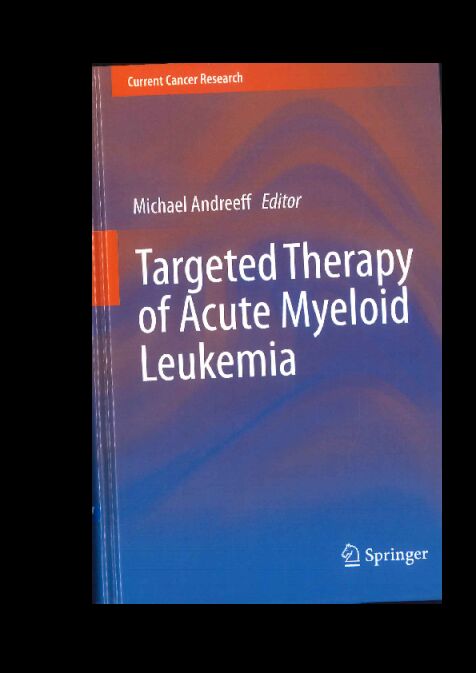
书名:Targeted therapy of acute myeloid leukemia
ISBN\ISSN:1493913921,9781493913923,9781493913930
前言
No other hematopoietic malignancy has attracted the degree of attention and investigative passion as what is still termed "leukemia." The condition was first described by John Hughes Benett in October 1845 and by Rudolf Virchow in November 1845 as the "white blood" disease, following earlier reports by Alfred Velpeau (1827) and others. Virchow coined the term "Leukaemie" in 1847. This was only shortly after Henri Dutrochet had discovered that "the cell is the fundamental element of organization," thus formulating the underlying tenet of cell theory (1824), and Theodor Schwann and Matthias Jakob Schleiden had proposed (in 1839) that cells were the basic units of life. Thus, the discovery of leukemia was closely linked, personally and historically, to the most revolutionary new concepts of modern biology and medicine. Ten years later, Virchow, plagiarizing earlier work of Robert Remak, declared that cells originate from pre-existing cells by cell division and founded the field of cellular pathology. He also distinguished between splenic and lymphatic leukemias, which was of great value for the subsequent sub- classification of what was initially thought to be a uniform entity.A\Although cytogenetic and molecular analyses have dissected leukemias into an ever expanding universe of distinct maladies, the clinical designation of acute myeloid leukemia (AML) has so far survived further dissection, perhaps because of its life-threatening acuity. The immediate clinical challange to the physician is to establish the correct diagnosis and to cope with complications that can engage all medical subspecialties, ranging from blood-product replacement to the treatment of septic shock and renal failure. In the center of the evolving drama is the individual patient, who, with no antecedent warning has to suddenly face his own mortality.A\In the early 1900s, Paul Ehrlich started developing drugs to treat infectious diseases and developed the first "chemotherapy." About 100 years later we are still following the paradigm that he established.A\The modern era of chemotherapy evolved with the observation that the accidental exposure of humans to sulfur mustards resulted in the depletion of bone marrows and lymph nodes. Goodman and Gillman at Yale, following experiments in animals, initiated treatment of patients with non-Hodgkin's lymphoma with nitrogen mustard. The first responses were observed in 1943 and stimulated the development of alkylating agents after the war. Farber treated children with leukemia with folate antagonists (methotrexate) and Hitchings and Elion developed inhibitors of adenine metabolism (thiopurines) and observed major, although short-lived responses. Charles Heidelberger introduced 5-fluorouracil, the first "targeted" anticancer therapy. L-asparaginase is another example and once the double-helical structure of DNA was discovered, DNA-targeted agents such as cytosine arabinoside and daunomycin were successfully developed.A\These chemotherapies were brought into clinical practice over the past 50 years and were based on evolving insights into the chemistry and biochemistry of the leukemic cell. Then as now, therapeutic strategies are attempting to exploit evolving scientific insights into metabolic and molecular abnormalities of the leukemia cell; therefore most therapies were "targeted" from their inception.A\Subsequent steps in the development of targeted therapies were based on the discovery of tumor-associated antigens and monoclonal antibodies, on the plethora of newly identified mutations, evolving insights into the mechanisms of epigenetic gene regulation and the functions of oncogenic kinases. Much effort is now being focused on kinase inhibitors, following the spectacular success of the bcr-abltyrosine kinase inhibitor Gleevec in Philadelphia-chromosome positive chronic myeloid and acute lymphoblastic leukemias.A\What we are facing today is an exponential gain in our knowledge of the cell and molecular biology, immunology and epigenetic gene regulation of leukemias, which is fortunately matched by the zeal of laboratory and clinical investigators to translate scientific insights into clinical success. In addition, numerous treatment options have evolved and are being explored in clinical investigations even without clear identification and understanding of their targets. This approach is fueled by the notion that leukemia cells have an uncanny ability to evade highly specific targeted therapies and that less specific, multipotent "dirty" drugs may be more effective. Both approaches may have merits and are likely to contribute to the development of our therapeutic arsenal for the next decades.A\Finally, it is becoming increasingly clear that many of the classical therapies are causing genetic damage in surviving cells that actually contribute to relapse. Hence, the development of nongenotoxic agents is paramount, such as BH3-mimetics and MDM2 inhibitors, that activate apoptosis pathways, presumably without causing DNA damage.A\Targeted therapy also needs to define its cellular, not just molecular target. The con ept of a highly drug resistant leukemia stem cell that contributes to relapse is now being accepted, but needs more attention by drug developers and clinicians alike It has also become increasingly clear that the leukemia microenvironment is a partner of equal importance to leukemia cell-intrinsic resistance mechanisms for the survival, expansion and relapse of leukemia stem cells, leading to clinical relapse. Early attempts are under way to address both sides of this "Yin-Yang" equation, which is dramatically put in focus by the recent discovery that molecular changes in the microenvironment can cause, and not just support, leukemia development.A\In this book it is attempted to summarize and interpret targeted AML therapies by pairing chapters describing the basic molecular biology of major targets with clinical results of targeted therapies, thus rendering the translational and clinical researcher a useful tool to apply recent research data available to him in a more specific way. The exponential growth in knowledge exceeds the ability of any researcher to be up-to-date and we do hope that this collection of 43 chapters from the leading experts in their fields will make a difference in how we approach the evergrowing complexity of AML-directed therapeutics. Topics and targets are evolving with further elucidation of the underlying basic science, as the tools at our disposal.A\The introductory chapters present updated contemporary classification systems of myeloid leukemias, their genetic defects and the proteomic alterations characteristic of AML. The basic mechanisms of apoptosis disregulation described in these chapters include the roles of BC1-2, IAP and p53 families of proteins and exemplify the concept of pairing basic science with evolving therapeutics such as BH3 and SMAC mimetics and MDM2 inhibitors that can reactivate p53 signaling.A\Tyrosine kinase controlled cell signaling pathways have been elucidated in a large number of investigations following the spectacular success of Gleevec and its successors in the treatment of chronic myeloid leukemias. The book then transitions into a discussion of PIM, FLT3, NPM1, Ras/Raf/MAPK, PI3K/AKT/mTOR and aurora kinase functions and therapeutic targeting—a field which is rapidly developing as exemplified by the recent successes reported for 1DH2 inhibitors but could not be included here.A\Epigenetic modulators of acetylation and methylation are being covered and discussed along with epigenetic therapies which have already yielded significant therapeutic impact but will only increase with improved specificities and more precise definition of their targets. Although the underlying mechanisms of action are well studied, much work still needs to be done until we will have the ability to selectively affect the epigenetic regulation of specific genes.A\PML-RARa and orphan nuclear receptors such as norl and nur77 have provided fascinating targets in leukemias, as is best exemplified in the improvement of the survival rates of patients with acute promyelocytic leukemias from 30 to 90% in just a few years, following the introduction of ATRA and arsenic trioxide. Nur77 may provide another target which is universally dysregulated in AML, not just in APL.A\Rapid advances in tumor immunology led to the development of monoclonal antibodies that resulted in impressive response rates, alone or in combination with immunotoxins, in chronic and acute lymphocytic leukemias. These achievements have been more modest in AMLs, but recent advances in leukemic stem cell biology may make antibodies the most effective tools in the elimination of AML stem cells.A\The leukemia microenvironment has graduated from supportive bystander to therapeutic target with the discovery that changes in bone marrow stroma cells, such as deletions of DICER which regulates microRNAs, results in the development of AMLs. First attempts to disrupt leukemia/stroma interactions by blockade of CXCR4 and VLA-4 signaling are yielding successes, but this field is clearly in more need of development. The recent identification of pronounced hypoxia in AML bone marrows makes hypoxia and hypoxia-induced genes novel targets in leukemia therapy.A\MicroRNAs are also becoming attractive targets, as their complex regulatory control of many pathways of vital importance for leukemia proliferation and survival is being better understood.A\All genetic and epigenetic alterations in leukemias finally result in metabolic alterations. Cancer metabolism, a field founded originally by Otto Warburg, has recently evolved in unexpected ways and will become of critical importance for the eradication of leukemias. Glycolysis, oxidative phosphorylation and fatty acid oxidation are at the center of leukemia metabolomics. The above mentioned development of IDH2 mutation inhibitors and their initial activity in patients whose AML cells carry this mutation provide an impressive example on how molecular genetics can be linked to epigenetic and metabolic functions and then be applied to the small subset of patients who may benefit.A\The development of specific imrnunotherapies employing NK, and T-cells is making its own way in the therapy of AML. CAR T-cell have yielded dramatic and sustained responses in certain leukemias and it is hoped that these concepts can be carried over into the treatment of AMLs. Hematopoietic transplantation has been refined and improved after half a century of unrelenting efforts and may be complemented by strategies utilizing mesenchymal stem cells as well.A\All contributing authors hope that this book will serve as a useful guideline and provide inspiration and support to all scientists working in a field with high challenges but also great potential and importance for our collective future.A\I wish to thank all authors for their thoughtful and insightful contributions. Special thanks go to Ms. Beate Buske-Kosel for her persistence, diligence and patience, without which this book would not have been possible. Michael Andreeff
查看更多
目录
1 Genetics and Classification of Acute Myeloid Leukemia 1
2 The Use of "Omics" to Guide the Selection of Targeted Therapy 27
Part I Apoptosis
3 Roles of Apoptosis-Regulating Bcl-2 Family Genes in AML 47
4 Bcl-2 Family: Translational Aspects 67
5 IAP Family of Proteins as Therapeutic Targets for Acute Myeloid Leukemia 95
6 TP53 Mutations in Acute Myeloid Leukemia 123
7 Targeting p53 Tumor Suppressor for AML Therapy 135
8 AML-Selective Apoptosis Induction by Rationally Designed Death Ligand Fusion Proteins 151
Part II Signaling
9 PIM Kinases in AML 177
10 Development of Midostaurin as a Tyrosine Kinase Inhibitor 201
11 FLT3 in AML 215
12 FLT3-ITD. Clinical (Sorafenib/AC220) 233
13 Nuclcophosmin(NPM1) 251
14 Raf/MEK/ERK Signaling 275
15 The Role of Translational Medicine in Optimization of Therapies Targeting the RAS-MAP Kinase Pathway 307
16 Clinical Use of Farnesyltransferase Inhibitors 325
17 The PI3K-AKT-mTOR Signaling Network in AML 335
18 Targeting the PI3 Kinase-mTOR Signaling Pathway in AML 363
19 Aurora Kinases 371
20 The Clinical Development of Aurora Kinase Inhibitors in Acute Myeloid Leukemia 391
Part III Epigenetics
21 AML: Deacetylases 411
22 Methylation in AML: Clinical Applications 441
Part IV Nuclear Receptors
23 PML/RARA as the Master Driver of APL Pathogenesis and Therapy Response 461
24 Arsenic Trioxide in Untreated APL 477
25 Targeting PML-RARa with Retinoids 489
26 NR4A Orphan Receptors as Drug Targets 509
Part V Cell Surface Receptors
27 Antibody-Based Therapeutics Targeting CD33, CD45, and CD66 531
Part VI Stem Cells
28 New Heterogeneity of the Leukemic Stem Cells 559
29 Targeting Leukemia Stem Cells 573
Part VII Microenvironment
30 Regulation of Hematopoiesis by CXCL12/CXCR4 Signaling 593
31 CXCR4/CXCL12 as a Therapeutic Target 607
32 VLA-4: A Cell's Consequential Encounter 617
33 VLA-4 Function and Prognosis in Acute Myeloid Leukemia 627
34 VLA4 in Acute Lymphoblastic Leukemia 637
Part VIII Hypoxia
35 The Leukemic Bone Marrow Microenvironment: Targeting Hypoxia with Hypoxia-Activated Prodrugs 657
Part IX Micro-RNAs
36 MicroRNAs as Therapeutic Targets 683
37 Clinical Implications of MicroRNAs in AML 699
Part X Metabolism
38 Inhibition of Glycolysis as a Therapeutic Strategy in Acute Myeloid Leukemias 709
39 Molecular and Biochemical Basis for the Reprogramming of Intermediary Metabolism in Leukemia Cells 725
Part XI Cell Therapy
40 NK-Cell Immunotherapy for AML 737
41 Allogeneic and Autologous T-cell Strategies to Enhance Targeting of Acute Myeloid Leukemias 757
42 Indications for Hematopoietic Transplantation for AML 777
43 Mesenchymal Stem/Stromal Cell-Targeted Therapies for Solid Tumors and Hematological Malignancies 799
Index 821
查看PDF
查看更多
馆藏单位
中国医科院医学信息研究所