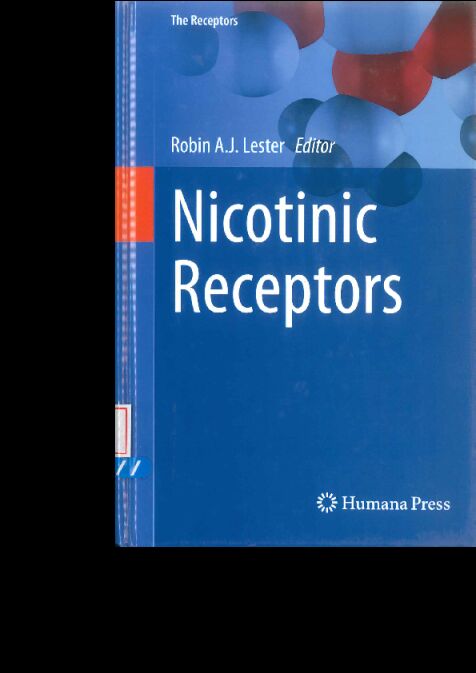
书名:Nicotinic receptors
出版时间:2014
出版社:Humana Press
前言
Not so long ago, there was nothing known about receptors, neurotransmitters, and synapses. This was all to change, beginning around the middle of the nineteenth century, with the investigations of Claude Bernard into the mechanisms underlying drug-induced muscle paralysis, which together with a desire to understand auto-nomic transmission has led to fundamental insights into synaptic function (reflected by Nobel Prizes awarded in Physiology and Medicine), much of it derived from the cholinergic-nicotinic system. About a hundred years ago, several scientists, in particular the anatomists, Santiago Ramon Y Cajal and Camillo Golgi (1906), together with the physiologists, Charles Sherrington and Edgar Adrian (1932), convinced the scientific community that the basic building blocks of the nervous system were individual neurons that communicated with each other via synapses. Soon after, Henry Dale and Otto Loewi (1936) provided clarity in the "soups and sparks" communication conundrum by identifying acetylcholine as one of the first synaptic neurotransmitters. Next, Julius Axelrod, Ulf von Euler, and Bernard Katz (1970) demonstrated that neurotransmitters were stored in vesicles in the presyn-aptic terminal, and that chemical transmission was initiated by the influx of calcium ions. While these pioneering studies spurred the field forwards, the postsynaptic nicotinic acetylcholine receptor remained elusive, and it was not until the last quarter of the twentieth century, when Erwin Neher and Bert Sakmann (1991) had sufficiently refined existing techniques, were researchers able to observe the activation of single-nicotinic receptors by the neurotransmitter acetylcholine. By the end of the twentieth century, it had been firmly established that reliable neuromuscular synaptic transmission occurred as a result of the random combination of presynaptically released acetylcholine molecules with postsynaptic nicotinic acetylcholine receptors. We now know more about this receptor than any other and are starting to see how the binding of transmitter/drug initiates the structural twists and turns that open, close, and desensitize the channel. A comprehensive understanding of how nicotinic receptors function, at the molecular level, seems at last to be just over the horizon.
I view nicotinic receptors as one of the heroes of a multi-plot adventure story. By demystifying the spiritual usage of the drug nicotine, we have defined synaptic transmission, from its beginnings at the neuromuscular junction to its seemingly more cryptic deployment in the central nervous system. In doing so we have made major inroads into understanding how cholinergic-nicotinic circuitry contributes to fundamental aspects of sensation and movement, in addition to more complex brain states and behaviors including motivation and reward, learning and memory, and our nebulous conception of consciousness. Along the way we have had to dig deeper into the genetic basis that controls the expression and distribution of this family of receptors, their regulatory importance during development, and their interactions with other neurotransmitter systems, in particular dopamine and serotonin. In turn we have gained valuable insights into mechanisms of neurologic and psychiatric disease, and as a consequence, potential drug intervention strategies are emerging. Moreover, the discrete localization of receptor subtypes throughout the nervous system makes them particularly attractive drug targets if we want to restrict and tweak their activity within specific brain regions.
While nicotinic receptors are the locks under discussion in this book, nicotine remains one of the major keys used to access brain function. As such, addiction to nicotine must be a central theme, not only due to its societal impact, affecting more than 20% of the world's population, but also because it ties together genes, proteins, synapses, circuitry, and behavior, and continues to provide much motivation to understand nicotinic receptors and the brain. Recently by delving into the flip side of reward, and gaining an understanding of the mechanisms of aversion and withdrawal, we have unmasked additional regions of the brain that contribute to the devastation produced, not only by nicotine, but possibly by all drugs of abuse. Nicotine is a somewhat unique drug, a double-edged sword, neither an upper nor a downer, in some ways a mood stabilizer, which not only helps to explain why it is so addictive through self-medication, but also provides an explanation for the involvement of nicotinic receptors in so many psychological states, and as a consequence so many psychiatric disorders. Nicotine addiction, through gene linkage studies that correlate smoking behavior with specific DNA mutations, has more recently reopened the debate into nature versus nurture, and thus presents us with opportunities for tackling this disease on multiple levels.
It is true that good science is inspired and moved forward by rigorous and honest competition, but efficient progress requires the unselfish sharing of ideas and collaborative research. The nicotinic receptor "family" has provided me a relative late arrival to the field, a nurturing environment, in which to develop my own ideas about the role of these receptors in the brain. I feel honored to have been asked to assemble this collection of chapters, which I hope as a compilation reflects the breadth of the field, not only as it stands now, but also its growth towards the future. It is obviously an impossible task to invite everyone to contribute to this volume, although one thing is clear: none of these chapters would have been possible without substantial research from all who work on nicotinic receptors. My personal bias will be apparent in the selection of topics, which I have organized around a synaptic theme, but which I hope successfully brings together genes, molecules, and circuitry in order to explain behavior and disease.
I have tried to include all parts of the nicotinic receptor story in the book. Birmingham, AL, USA Robin A.J. Lester
查看更多
目录
1 On the Discovery of the Nicotinic Acetylcholine Receptor Channel 1
Richard Martindale and Robin A.J. Lester
2 Molecular Structure, Gating, and Regulation 17
Steen E. Pedersen
3 Molecular Underpinnings of Neuronal Nicotinic Acetylcholine Receptor Expression 39
Michael D. Scofield and Paul D. Gardner
4 Presynaptic Nicotinic Acetylcholine Receptors: Subtypes and Functions 61
Michael J. Marks, Sharon R. Grady, Tristan D. McCluie-Begley, Heidi C. O'Neill, and Cristian A. Zambrano
5 Functional Distribution and Regulation of Neuronal Nicotinic ACh Receptors in the Mammalian Brain 93
Jerrel L. Yakel
6 Nicotinic Signaling in Development 115
Catarina C. Femandes, Adrian F. Lozada, and Darwin K. Berg
7 Presynaptic Nicotinic Acetylcholine Receptors and the Modulation of Circuit Excitability 137
Chongbo Zhong, Gretchen Y. Lopez-Hernandez, David A. Talmage, and Lorna W. Role
8 Autonomic Nervous System Transmission 169
Peter B. Sargent
9 Nicotinic Receptors in the Spinal Cord 185
Boris Lamotte d'Incamps and Philippe Ascher
10 Slow Synaptic Transmission in the Central Nervous System 201
A. Rory McQuiston
11 The Effects of Nicotine on Learning and Memory 217
Thomas J. Gould
12 Nicotinic Receptors as Targets for Novel Analgesics and Anti-inflammatory Drugs 239
M. Imad Damaj, Kelen Freitas, Deniz Bagdas, and Pamela Flood
13 Nicotinic Acetylcholine Receptors and the Roles of the Alpha7 Subunit 255
Michael Paolini, Mariella De Biasi, and John A. Dani
14 Role of Central Serotonin Receptors in Nicotine Addiction 279
Massimo Pierucci, Stephanie Chambers, Lucy Partridge, Philippe De Deurwaerdere, and Giuseppe Di Giovanni
15 Neuronal Nicotinic Acetylcholine Receptors in Reward and Addiction 307
Linzy M. Hendrickson and Andrew R. Tapper
16 Genetic Contributions of the α5 Nicotinic Receptor Subunit to Smoking Behavior 327
Laura J. Bierut and Jerry A. Stitzel
17 Smoking-Related Genes and Functional Consequences 341
Ines Ibanez-Tallon and Jessica L. Abies
18 Nicotinic Acetylcholine Receptors Along the Habenulo-Interpeduncular Pathway: Roles in Nicotine Withdrawal and Other Aversive Aspects 363
Dang Q. Dao, Ramiro Salas, and Mariella De Biasi
19 Nicotinic Acetylcholine Receptors in Alzheimer's and Parkinson's Disease 383
Kelly T. Dineley
20 Nicotinic Receptors and Mental Illness 417
Sherry Leonard
21 Current and Future Trends in Drug Discovery and Development Related to Nicotinic Receptors 435
Stephen P. Arneric and Emanuele Sher
查看PDF
查看更多
馆藏单位
中国医科院医学信息研究所