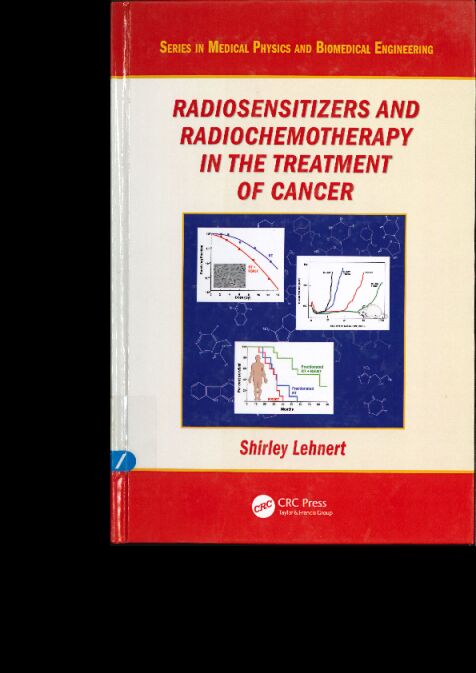
书名:Radiosensitizers and radiochemotherapy in the treatment of cancer
ISBN\ISSN:1439829020,9781439829028
出版时间:2015
出版社:CRC Press Taylor & Francis Group,
前言
MY original intention in writing this book was to catalog and describe the mechanism of action for the entities that have been characterized as radiosensitizers. The understanding of the action of ionizing radiation at the level of molecular biology has led to the development of the so-called molecular or targeted radiosensitizers. A book dealing with radiosensitization now has to deal with a vastly increased volume of information covering everything from molecular oxygen and high Z elements to monoclonal antibodies and complex phytochemicals.
Daunting as this prospect may be, it gets worse because it is impossible to ignore the fact that the development of radiosensitizing drugs and procedures almost always takes place in the context of their medical application, providing the motivation and usually the funding for the research and development. This necessitates the second part of the book title Radiochemotherapy in the Treatment of Cancer; radiosensitization cannot simply be considered the austere context of molecular biology and radiation chemistry, even though the basic scientist might wish it could be so. In fact, although there are many gaps in knowledge, the combination of radiation and chemotherapy has become the standard of care for most patients with solid tumors, on the basis of well-documented improvements in locoregional disease control and survival.
Radiosensitization or, in the best case scenario, synergy between the two modalities can usually only be reliably demonstrated using preclini-cal models, and clinical trials evaluating drug combinations are often stimulated by claims that the agents are synergistic in preclinical models. The term synergy is not well understood, and there is confusion about the evidence required to conclude that there is synergy between antitu-mor agents. Of greater importance when evaluating the potential clinical utility from combining agents is the concept of therapeutic index (or therapeutic ratio). This term refers to the relative toxicity of a treatment of the tumor as compared with its toxicity for critical normal tissues. Improvement in therapeutic index may occur from drugs demonstrating synergy or additivity, but only if the augmented effect of the combination is greater against the tumor than against the critical normal tissues. The link between preclinical research and clinical application is often fragile, and overuse, misuse, or willful misunderstanding of the term synergy (or radiosensitization when radiation is involved) can lead to poorly designed clinical studies. In some cases, there seems to be a disconnect between claims made on the basis of preclinical data and the clinical applicability of a certain treatment, which may be based on a misunderstanding of the terms synergy or supra-additivity and also involves a substantial element of wishful thinking.
Where it is appropriate, I have tried, to the best of my ability and using the information available in the literature, to describe the clinical application of the drug or biological agent combined with radiation. There are certain well-established drug-radiation protocols of proven clinical benefit for which this is not difficult. With respect to others being investigated in different levels of clinical trials, I am not in a position to comment on how successful the given treatment might be, and any statements to that effect are direct quotes from the authors of the reports. Similarly, terms such as radiosensitization and synergy, when they are used, either apply to a clear experimental demonstration or, again, are direct quotes. In all other cases, I have tried to avoid using these terms when they are not directly supported.
The inclusion of data from clinical trials in this book is not intended to present an up-to-date and comprehensive picture of the current clinical activity but simply to summarize historical development based on the results of trials that have been published and to give an impression of the focus and extent of current interest usually on the basis of information obtained from the invaluable website http://www.clinicaltrials.gov. Of necessity, this can give only an incomplete and fragmented picture; nevertheless, I hope it will be useful as an overview for researchers and clinicians.
查看更多
目录
Series Preface, xxiii
Preface, xxvii
Acknowledgments, xxix
Author, xxxi
Chapter 1 Radiosensitization and Chemoradiation 1
1.1 A BRIEF HISTORY OF CHEMORADIATION 1
1.2 DEFINITIONS OF RADIOSENSITIZATION 1
1.2.1 Combining Two Agents Together: What Is Meant by Additivity or Synergy? 3
1.2.1.1 The Isobologram 4
1.2.1.2 Median Effect Principle 5
1.2.2 Drugs and Radiation 6
1.2.3 Mechanisms of Benefit from Radiation-Drug Therapy 7
1.2.3.1 Cytotoxic Enhancement 7
1.2.3.2 Targeted Radiosensitizers 10
1.2.3.3 Biological Cooperation 12
1.2.3.4 Temporal Modulation 13
1.2.3.5 Spatial Cooperation 14
1.2.3.6 Normal Tissue Protection 14
1.2.4 Quantification of the Chemotherapy and Radiation Interaction: The Therapeutic Ratio 15
1.2.5 Is Radiochemotherapy Preferable to Dose Escalation? 16
1.2.6 The Relationship between Preclinical Studies and Clinical Trials 18
1.3 WHAT THIS BOOK IS ABOUT 20
1.4 SUMMARY 20
REFERENCES 21
Chapter 2 Radiosensitization by Oxygen and Nitric Oxide 23
2.1 RADIOSENSITIZATION BY OXYGEN: THE OXYGEN FIXATION HYPOTHESIS 23
2.1.1 Significance of the Oxygen Effect in the Treatment of Cancer: Hypoxic Cells in Solid Tumors 25
2.1.2 Methods for Modification of Hypoxic Radioresistance 26
2.1.2.1 Increasing the Availability of Oxygen 26
2.1.2.2 Hypoxic Radiosensitizers 29
2.1.2.3 Hypoxic Cytotoxins 37
2.1.2.4 Clinical Trials with Hypoxic Cytotoxins 43
2.2 NITRIC OXIDE: A VERSATILE SMALL MOLECULE 46
2.2.1 Metabolism of Nitric Oxide 46
2.2.2 Mechanisms of Radiosensitization by Nitric Oxide 47
2.2.2.1 Direct Radiosensitization by NO 48
2.2.2.2 Indirect Radiosensitization: Increased NO-Mediated Tumor Oxygenation 51
2.2.3 NO-Based Radiosensitization Strategies 53
2.2.3.1 Hypoxia-Activated NO Donors 54
2.2.3.2 Indirect Activation of Endogenous NOS 54
2.3 SUMMARY 55
REFERENCES 57
Chapter 3 Radioenhancement by Targeting Cellular Redox Pathways and/or by Incorporation of High-Z Materials into the Target 63
3.1 INTRODUCTION 63
3.2 DOSE ENHANCEMENT BY COMPOUNDS WITH HIGH ATOMIC NUMBER 63
3.2.1 Mechanism of Dose Absorption 64
3.2.2 Radiosensitization by Contrast Media 66
3.2.2.1 Iodine 66
3.2.2.2 Gadolinium 67
3.2.2.3 Gold 68
3.3 TARGETING CELLULAR REDOX PATHWAYS 73
3.3.1 The Cellular Antioxidant System 73
3.3.2 Radiosensitization by Targeting the Thioredoxin System 74
3.3.2.1 Trnx System Inhibitors 75
3.3.2.2 Motexafin Texaphyrin 76
3.3.2.3 Gold-Containing Compounds 81
3.4 RADIOSENSITIZATION BY TARGETING THE GSH/GSSG SYSTEM 81
3.4.1 Functions of GSH 82
3.4.2 GSH Biosynthesis 82
3.4.3 Targeting GSH as a Therapeutic Strategy 84
3.4.3.1 Agents That Oxidize or Derivatize GSH 84
3.4.3.2 Inhibition of GSH Biosynthesis 84
3.4.3.3 Inhibition of Glutathione Reductase 85
3.5 SUMMARY 87
REFERENCES 89
Chapter 4 Radiosensitization by Halogenated Pyrimidines 93
4.1 HALOGENATED PYRIMIDINES 93
4.1.1 Pharmacology 95
4.2 MECHANISMS OF RADIOSENSITIZATION 95
4.2.1 The Role of DNA Repair Pathways 96
4.2.1.1 Base Excision Repair 96
4.2.1.2 Role of BER in Radiosensitization by TdR Analogues 97
4.2.1.3 Mismatch Repair 99
4.2.1.4 Role of MMR in Radiosensitization by TdR Analogues 102
4.2.2 Cell Cycle Regulation and Cell Death Signaling in Cells Irradiated after Pretreatment with TdR Analogues 104
4.2.3 Structure of DNA as a Factor in Radiosensitization by ThdR Analogues 104
4.2.4 Optimizing Access of the TdR Analogue Radiosensitizer to the Tumor Cell 106
4.2.4.1 Pharmacological Stratagems for Drug Delivery 106
4.2.4.2 Manipulation of Nucleotide Metabolism: To Promote TdR Analogue Uptake 108
4.2.4.3 IpDR, a Novel Oral Radiosensitizer 110
4.3 CLINICAL RESULTS 111
4.4 SUMMARY 113
REFERENCES 114
Chapter 5 Radiosensitization by Antimetabolites 119
5.1 ANTIMETABOLITES 119
5.2 ANTIMETABOLITES: MODE OF ACTION 120
5.3 INHIBITORS OF THYMIDYLATE SYNTHASE: 5-FU AND FDURD 121
5.3.1 Cytotoxicity Resulting from TS Inhibition 122
5.3.2 Radiosensitization due to TS Inhibition 125
5.3.3 FU as a Radiosensitizer: Clinical Application 126
5.4 INHIBITORS OF RIBONUCLEOTIDE REDUCTASE 128
5.4.1 Mechanism of Cytotoxicity 128
5.4.2 Radiochemotherapy with RR Inhibitors 129
5.5 DNA POLYMERASE INHIBITORS/SUBSTRATES 129
5.5.1 Fludarabine 129
5.5.1.1 Cytotoxicity 129
5.5.1.2 Radiosensitization 130
5.5.1.3 Clinical Application 131
5.5.2 Gemcitabine 131
5.5.2.1 Cytotoxicity 131
5.5.2.2 Radiosensitization 132
5.5.2.3 Clinical Response to Radio chemotherapy with Gemcitabine 133
5.5.2.4 Combining Gemcitabine with Targeted Molecular Radiosensitizers 135
5.6 NEW GENERATION ANTIMETABOLITES 137
5.6.1 Pemetrexed 137
5.6.1.1 Clinical Applications of Pemetrexed 138
5.6.2 Ganciclovir 139
5.7 SUMMARY 139
REFERENCES 141
Chapter 6 Radiosensitization by Platinum Drugs and Alkylating Agents 145
6.1 THE PLATINUM DRUGS 145
6.1.1 Cytotoxicity of Cisplatin 145
6.1.2 Cisplatin Resistance 148
6.1.2.1 Resistance Mediated through Insufficient Cisplatin Binding to DNA 149
6.1.2.2 Resistance Mediated after DNA Binding 149
6.1.3 Strategies to Improve the Performance of Platinum Drugs 151
6.1.3.1 Improved Platin Drugs 151
6.1.3.2 Combined Treatment with Targeted Molecular Drugs 152
6.1.4 Radiosensitization by Cisplatin 152
6.1.4.1 Preclinical Studies 152
6.1.4.2 Mechanism of Radiosensitization by Cisplatinum 153
6.1.5 Radiochemotherapy with Platinum Drugs 156
6.1.5.1 Cisplatin 156
6.1.5.2 Carboplatin 156
6.1.5.3 Oxaliplatin 156
6.1.5.4 Multiagent-Based Radiochemotherapy 158
6.2 ALKYLATING AGENTS 161
6.2.1 Temozolomide 161
6.2.1.1 Cytotoxicity of Temozolomide 163
6.2.1.2 Radiosensitization by TMZ: Preclinical Studies 165
6.2.1.3 Clinical Application of TMZ with Concomitant Radiation 166
6.3 SUMMARY 168
REFERENCES 170
Chapter 7 Topoisomerase Inhibitors and Microtubule-Targeting Agents 175
7.1 RADIOSENSITIZATION BY DRUGS TARGETING DNA TOPOLOGY AND THE MITOTIC SPINDLE 175
7.2 TOPOISOMERASES 175
7.2.1 Type I Topoisomerases 176
7.2.2 Cytotoxicity of Drugs Targeting Topoisomerase 1 176
7.2.2.1 Drugs Targeting Topoisomerase 1 178
7.2.3 Mechanism of Radiosensitization by TOP1 Inhibitors 179
7.2.4 TOP1 Inhibitors in Radiochemotherapy 182
7.2.4.1 Clinical Trials of Chemoradiation with Camptothecin Derivatives 183
7.2.5 Topoisomerase II 184
7.2.6 Inhibitors of Topoisomerase II 184
7.2.6.1 Epipodophyllotoxins: Etoposide 185
7.2.6.2 Anthracyclines 187
7.2.7 Radiosensitization by Inhibitors of Topoisomerase II 187
7.2.7.1 Etoposides 187
7.2.7.2 Diverse Modes of Radiosensitization by Topo II Inhibitors 189
7.2.8 Topoisomerase II Inhibitors in Concurrent Radiochemotherapy 190
7.3 RADIOSENSITIZATION BY TARGETING MICROTUBULES 190
7.3.1 Microtubule-Targeted Drugs 191
7.3.2 Microtubule-Stabilizing Drugs: Cytotoxic Effects 191
7.3.3 Radiosensitization by Microtubule-Stabilizing Drugs 194
7.3.3.1 In Vitro Studies 194
7.3.3.2 In Vivo Studies 195
7.3.4 Clinical Application of Taxanes and Radiation 197
7.3.5 Microtubule-Stabilizing Agents: The Vinca Alkaloids 199
7.3.5.1 Cytotoxicity 199
7.3.5.2 Radiosensitization by the Vinca Alkaloids: Preclinical Studies 201
7.3.5.3 Clinical Studies 202
7.4 SUMMARY 203
REFERENCES 205
Chapter 8 Targeting the DNA Damage Response: ATM, p53, Checkpoints, and the Proteasome 211
8.1 THE DNA DAMAGE RESPONSE 211
8.2 ATM KINASE 213
8.2.1 Inhibitors of ATM Kinase with Chemosensitizing and Radiosensitizing Capability 213
8.3 p53 IN THE DNA DAMAGE RESPONSE 216
8.3.1 p53 Function 216
8.3.2 Radiosensitization by p53 Manipulation 218
8.3.2.1 Gene Therapy to Deliver Wild-Type p53 219
8.3.2.2 Elimination of Mutant p53 220
8.3.3 Small Molecules Targeting the p53 Pathway 221
8.3.3.1 Restoration of Wild-Type Function to Mutant p53 221
8.3.3.2 Targeting Mutant p53 to Kill: Synthetic Lethality for p53 Mutation 225
8.3.3.3 Modulation of p53 Level by Targeting p53 Regulators 226
8.3.3.4 Activation of Other p53 Family Members: p63 and p73 229
8.3.4 Inhibitors of Wild-Type p53: Blocking Wild-Type p53 Activity to Prevent Damage to Normal Tissues during Cancer Treatment 230
8.4 TARGETING CELL CYCLE CHECKPOINT PROTEINS: CHK1 AND CHK2 230
8.4.1 Cell Cycle Control 231
8.4.1.1 CHK1: Role in G2/M and S Phase Checkpoints 232
8.4.1.2 CHK2: The G1 Checkpoint 233
8.4.2 Small-Molecule Inhibitors of Checkpoint Kinases 233
8.4.2.1 Checkpoint Inhibitors and Ionizing Radiation 234
8.4.3 Clinical Trials of Checkpoint Kinase Inhibitors 239
8.5 PROTEIN DEGRADATION BY THE UBIQUITIN-PROTEASOME SYSTEM 240
8.5.1 Proteasome Structure and Function 241
8.5.2 Mechanisms of Proteasome Inhibition 242
8.5.2.1 Targeting the 20S Proteasome 242
8.5.2.2 Targeting the 19S Regulatory Particle 244
8.5.2.3 Targeting the Delivery System Connecting the Ubiquitin System to the Proteasome 244
8.5.2.4 Targeting the Ubiquitin System 245
8.5.3 Effects of Radiation Combined with Proteasome Inhibitors 245
8.5.3.1 Mechanisms of Radiosensitization by Proteasome Inhibitors 245
8.5.3.2 Experimental Findings 246
8.5.4 Clinical Application of Proteasome Inhibitors 247
8.5.5 Natural Compounds with Proteasome-Inhibitory Effects in Clinical Trials 249
8.5.6 Cancer-Initiating Cells Are Characterized by Low Proteasomal Activity 249
8.6 SUMMARY 250
REFERENCES 251
Chapter 9 Radiosensitization by Inhibition of DNA Repair 257
9.1 OVERVIEW OF DNA REPAIR IN MAMMALIAN CELLS 257
9.2 DNA DOUBLE-STRAND BREAK REPAIR: NONHOMOLOGOUS END-JOINING 258
9.2.1 Targeting NHEJ for Radiosensitization 259
9.2.1.1 Targeting DNA-PK 260
9.3 DNA DOUBLE-STRAND BREAK REPAIR BY HOMOLOGOUS RECOMBINATION 263
9.3.1 Associated Gene Families 264
9.3.1.1 BRCA1 264
9.3.1.2 BRCA2 264
9.3.1.3 Fanconi (FANC) Genes 266
9.3.2 Targeting HR in Cancer Treatment 266
9.3.2.1 Non-Drug Approaches 266
9.3.2.2 Drugs Targeting HR 267
9.3.3 Clinical Relevance of Radiosensitization by DNA Repair Inhibition 270
9.4 RADIOSENSITIZATION BY INHIBITORS OF POLY(ADP-RIBOSE) POLYMERASE 271
9.4.1 Poly(ADP-Ribose) Polymerase 271
9.4.2 The Role of PARP in DNA Repair 273
9.4.2.1 SSB Repair and BER 273
9.4.2.2 Homologous Recombination 275
9.4.2.3 Defects in Other DNA Repair Pathways 275
9.4.2.4 Synthetic Lethality: Inhibition of PARP and Defects in DNA Repair 276
9.4.3 Inhibitors of PARP 276
9.4.3.1 Radiosensitization by PARP Inhibitors 277
9.4.3.2 Clinical Trials of PARP Inhibitors Combined with Radiotherapy 283
9.5 INHIBITORS OF HISTONE DEACETYLASE: TARGETING CHROMATIN MODIFICATION BY EPIGENETIC REGULATION OF GENE EXPRESSION 284
9.5.1 Structure and Biology of HDACs 285
9.5.2 Action of HDACs: Acetylation of Histone and Nonhistone Proteins 286
9.5.2.1 Histones 286
9.5.2.2 Histone Modification and DNA Repair 286
9.5.2.3 Nonhistone Proteins 287
9.5.2.4 HDACs in Cancer 289
9.5.2.5 HDACs in Normal Cells 290
9.5.3 HDAC Inhibitors 290
9.5.3.1 Cytotoxicity of HDACIs 292
9.5.3.2 Radiosensitization by HDACIs 294
9.5.3.3 Experimental Studies of Radiosensitization by HDACIs Cell Lines 295
9.5.3.4 Clinical Studies 301
9.6 SUMMARY 301
REFERENCES 303
Chapter 10 Targeting Growth Factor Receptors for Radiosensitization 313
10.1 EPIDERMAL GROWTH FACTOR FAMILY RECEPTORS 313
10.1.1 Receptor Activation by Ionizing Radiation 314
10.1.2 Overexpression Receptor RTKs on Cancer Cells 317
10.1.3 Mechanisms of Radiosensitization by EGFR Inhibition 318
10.1.3.1 Direct Inactivation of Tumor Cells 318
10.1.3.2 Cellular Radiosensitization through Modified Signal Transduction 318
10.1.3.3 Inhibition of DNA Repair 319
10.1.3.4 Cell Cycle Effects 321
10.1.3.5 Inhibition of Proliferation and Repopulation 321
10.1.3.6 Effects on the Tumor Microenvironment 321
10.1.3.7 Prognostic Parameters for the Antitumor Effects of EGFR Inhibitors Alone or in Combination with Radiation 322
10.1.3.8 Effects on Normal Tissue 323
10.1.4 EGFR Inhibitors: mAbs and RTKIs 323
10.1.4.1 Monoclonal Antibodies 324
10.1.4.2 Small-Molecule TKIs 324
10.1.5 Preclinical Studies of Radiosensitization by EGFR Inhibitors 328
10.1.5.1 mAb Inhibitors 328
10.1.5.2 Small-Molecule RTKIs 329
10.1.5.3 Preclinical Findings of the Effects of EGFR Inhibitors in Normal Cells 331
10.1.6 Clinical Applications of EGFR Inhibitors 331
10.1.6.1 Targeting the EGFR Receptor with mAbs 332
10.1.6.2 Small-Molecule RTKIs 336
10.2 ErbB2 (HER2) 341
10.2.1 Basic and Preclinical Studies 341
10.2.2 Blockading ErbB2: Trastuzumab 342
10.2.2.1 Radiosensitization by Trastuzumab 342
10.2.2.2 Clinical Studies with Trastuzumab and Radiotherapy 343
10.3 INSULIN-LIKE GROWTH FACTOR 1 RECEPTOR 345
10.3.1 Basic and Preclinical Studies 345
10.3.2 Cytotoxicity Effects and Radiosensitization by IGF Blockade 346
10.3.3 Clinical Effect of Blockading IGFR 347
10.4 SUMMARY 347
REFERENCES 348
Chapter 11 Targeting Signaling Molecules for Radiosensitization 355
11.1 Ras 355
11.1.1 Function of Ras 355
11.1.2 Downstream Signaling from Ras 356
11.1.3 Ras and Radioresistance 357
11.1.3.1 Which Downstream Pathway Mediates Radioresistance? 358
11.1.4Inhibitors of Ras 359
11.1.4.1 Radiosensitization of Tumor Cell Lines by Inhibition of Ras 359
11.1.4.2 Evaluation of Ras Inhibitors in Preclinical Models 360
11.1.4.3 Clinical Trials with Ras Inhibitors 360
11.2 CYTOPLASMIC SIGNALING DOWNSTREAM FROM Ras 363
11.2.1 The PI3K-Akt-mTOR Pathway 364
11.2.2 Activation of the PI3K Pathway in Cancer 365
11.2.3 Inhibitors of the PI3K-Akt-mTOR Pathway 366
11.2.3.1 Targeting PI3K 367
11.2.3.2 Targetinf Akt 367
11.2.3.3 Targeting mTOR 367
11.2..4 The PI3K Pathway and Radiation Response 368
11.2.4.1 Tumor Cell Apoptosis 368
11.2.4.2 Destruction of the Tumor Vasculature by Radiation-Induced Apoptosis 368
11.2.4.3 DNA Double-Strand Break Repair 369
11.2.4.4 Hypoxia: Inhibition of Hypoxia-Inducible Factor la Induction and Normalization of Tumor Vasculature 369
11.2.5 Evaluation of PI3K-AkT-mT0R Inhibitors in Preclinical Models 373
11.2.6Clinical Applications of Inhibitors of the PI3K-Akt-mTOR Pathway 373
11.3 TARGETING Hsp90 374
11.3.1 Involvement of Hsp90 with Regulatory Proteins 374
11.3.2 Inhibitors of Hsp90 374
11.3.3 Targeting Cancer Cells with Hsp90 Inhibitors 375
11.3.4 Radiosensitization by Hsp90 Inhibitors 375
11.3.4.1 Specific Mechanisms of Radiosensitization 376
11.3.5 Preclinical Studies 377
11.3.6 Clinical Results 377
11.4 SUMMARY 379
REFERENCES 380
Chapter 12 Radiosensitization by Targeting the Tumor Microenvironment 385
12.1 THE TUMOR MICROENVIRONMENT 385
12.2 TUMOR VASCULATURE AND ANGIOGENESIS 385
12.2.1 The Tumor Vasculature 386
12.3 TUMOR CHARACTERISTICS EXPLOITABLE FOR RADIOSENSITIZATION: HYPOXIA 386
12.3.1 Chronic Hypoxia 386
12.3.2 Acute Hypoxia 387
12.3.3 Hypoxia-Induced Factor 1 387
12.4 VASCULAR TARGETED THERAPIES 387
12.4.1 Antiangiogenic Agents 388
12.4.1.1 Endogenous Angiostatic Agents 389
12.4.1.2 Antibodies Targeting VEGF and VEGFR 389
12.4.1.3 Small-Molecule Tyrosine Kinase Inhibitors 390
12.4.1.4 Other Agents 391
12.4.2 Vascular Targeted Therapies: Mode of Action 392
12.4.2.1 Vascular Normalization 392
12.4.2.2 Sequence of Radiation Therapy and Antiangiogenic Therapy 392
12.4.2.3 The Role of Endothelial Cells 394
12.4.3 Clinical Trials of Combined Radiation and Antiangiogenic Agents 394
12.5 ANTIVASCULAR THERAPY 397
12.5.1 Antivascular Agents 397
12.5.1.1 Biological or Ligand-Directed VDAs 399
12.5.1.2 Small-Molecule VDAs 399
12.5.2 Combined Treatment: Radiation and VDAs 399
12.5.3 Clinical Application of VDAs 400
12.6 TARGETING HIF-1 401
12.6.1 Regulation of HIF-1 Activity 401
12.6.2 Regulation of Radioresistance by HIF-1 403
12.6.3 Targeting HIF-1 403
12.6.4 Radioenhancement by HIF Inhibitors 405
12.6.5 Small-Molecule Compounds with Clinical Potential Reported to Inhibit HIF-1 405
12.7 SUMMARY 409
REFERENCES 410
Chapter 13 Phytochemicals: Chemopreventive, Radiosensitizing, Radioprotective 415
13.1 MECHANISM OF INTERACTION BETWEEN PHYTOCHEMICALS AND PROTEINS 415
13.1.1 Direct Interaction of Curcumin with Target Protein Molecules 417
13.1.2 Indirect Effects of Curcumin on Biological Systems 418
13.2 INTRACELLULAR SYSTEMS AND CONSTITUENT PROTEINS DIRECTLY TARGETED BY CURCUMIN AND OTHER RADIOSENSITIZ1NG PHYTOCHEMICALS 421
13.2.1 Regulation of Oxidative Stress 421
13.2.1.1 Thioredoxin Reductase 1 and the Regulation of ROS 421
13.2.1.2 Trx-TrxR-NADPH System 421
13.2.1.3 Interaction of TxnRdl with Curcumin 422
13.2.1.4 Preclinical Experimental Demonstration of the Importance of TxrRdl Knockdown by Curcumin in Radiosensitization 423
13.2.1.5 Indirect Targeting TrxRdl with Implications for Radiation Response 425
13.2.1.6 Other Direct Targets of Curcumin with Potential Involvement in Radiosensitization 425
13.3 TARGETING PROINFLAMMATORY SIGNALING PATHWAYS FOR TUMOR RADIOSENSITIZATION 427
13.3.1 NF-kB 428
13.3.1.1 Signaling through NF-kB 428
13.3.1.2 Inhibition of the NF~kB Signaling Cascade 428
13.3.1.3 Radiosensitization by Direct or Indirect Inhibition of the NF-kB Cascade: Preclinical Studies 431
13.3.2 STATs 433
13.3.3 CUX-2 434
13.4 PHYTOCHEMICALS THAT HAVE BEEN SHOWN TO ACT AS RADIOSENSITIZERS 434
13.4.1 Curcumin 435
13.4.2 Genistein and Soy Isoflavones 435
13.4.3 Parthenolide 436
13.4.4 Resveratrol 437
13.4.5 Plumbagin 438
13.4.6 Withaferin A 439
13.4.7 Caffeic Acid Phenethyl Ester 440
13.4.8 Ellagic Acid 440
13.4.9 (-)-Gossypol 441
13.5 RADIOPROTECTION BY PHYTOCHEMICALS: TARGETING THE PROINFLAMMATORY RESPONSE TO REDUCE THE SIDE EFFECTS OF RADIATION 442
13.6 CLINICAL APPLICATIONS OF PHYTOCHEMICALS 444
13.6.1 Methods Proposed to Improve Phytochemical Availability 445
13.6.1.1 Adjuvants 445
13.6.1.2 Delivery Systems 446
13.6.1.3 Derivatives and Analogues 447
13.6.2 Clinical Trials Involving Curcumin 447
13.7 SUMMARY 447
REFERENCES 449
Chapter 14 Delivery Methods for Radioenhancing Drugs 455
14.1 DELIVERY OF RADIOSENSITIZING DRUGS 455
14.1.1 Nanopartides 455
14.1.2 Gold Nanoparticles 456
14.1.2.1 Coated Gold Nanoparticles 457
14.1.3 Polymeric Nanoparticles 458
14.2 INTRATUMORAL SUSTAINED DRUG RELEASE DEVICES 459
14.2.1 Polymeric Slow-Release Systems 459
14.2.2 Biodegradable Polymeric Systems 460
14.2.2.1 Cisplatinum 460
14.2.2.2 5-Flurouracil 461
14.2.2.3 Nitroimidazole Hypoxic Sensitizers 461
14.2.2.4 Tirapazamine 462
14.2.2.5 Radiosensitization by BrdUrd 462
14.2.2.6 Intratumoral Sustained Drug Release Combined with Low Dose Rate Radiation 463
14.3 SUMMARY 464
REFERENCES 465
INDEX, 469
查看PDF
查看更多
馆藏单位
中国医科院医学信息研究所