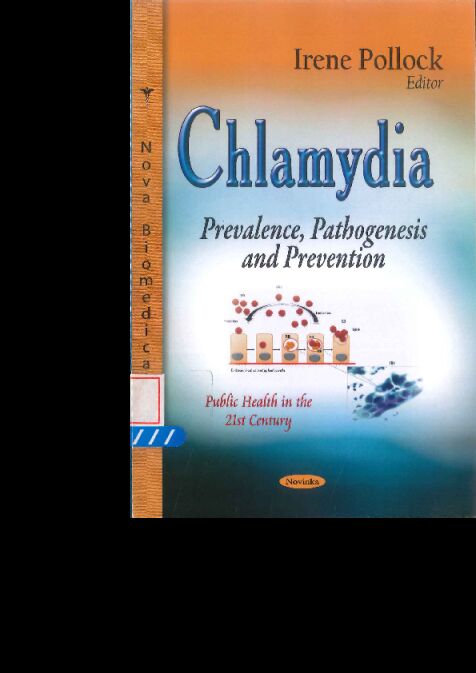
书名:Chlamydia
ISBN\ISSN:9781634630092,1634630092
出版时间:2014
出版社:Nova Biomedical,
前言
Sexually transmitted infections (STIs) are a heterogeneous group of communicable diseases, whose only common element is sharing of sexual route as a mechanism of acquisition. With nearly 450 million cases detected annually, STIs represent a priority health problem worldwide, because of the impact they have on the physical and mental health of people who suffer, as the complications and consequences that can result and their relation to increased transmissibility of human immunodeficiency virus (HIV) infection. Clinical manifestations, in most cases, involve the genital area and mucous but sometimes, cause systemic affectation. Infection due to Chlamydia trachomatis is already the most frequent STI of global health significance. Its epidemiological interest has increased markedly in recent years because the majority of infections run an asymptomatic course which can lead to serious complications, especially in young women. This book discusses the prevalence, pathogenesis and the prevention of chlamydia.
Chapter 1 - C. trachomatis infection is the leading cause of STIs worldwide. In a high percentage of people, most of the infections run asymptomatic course. Due to this asymptomatic state, those subjects will probably not be treated, may serve as an important source of transmission and are at risk for late complications. In this chapter the authors determine the prevalence of urogenital and anorectal C. trachomatis genotypes in a group of patients attended to at different Units from a Hospital in Northern Spain. And, the authors compare whether these genotypes are associated with a symptomatic or an asymptomatic course of infection. Characterization of Chlamydia trachomatis genotypes in 315 (56.09%) of the 562 positive urogenital and rectal swabs, collected from 7251 women and men, coming from different Units, was performed by sequencing of ompA gene amplicons and phylogenetic tree analysis. In the author's patient series, the prevalence of infection by C. trachotnatis ranges from 4.10% to 13.20% depending on the population group analyzed. The most common genotype was E (40.60 %) followed by G (23.82 %), D (19.80 %), F (8.39 %), J (5.37 %), K (1.00 %), L2b (0.67 %) and L2 (0.33%). Association was observed between genotype E and asymptomatic infection and genotype F and symptomatic infection. The detection of the first three confirmed cases of LGV in the author's patients could indicate an actual increase of this infection in their region and demonstrate the existence of reservoirs. The findings of this study support the need for establishing programs for control of the onward transmission of Chlamydia trachomatis infection.
Chapter 2 - As the most common reported bacterial sexually transmitted infection (STI) in developed countries, Chlamydia trachomatis is the focus of concerted public health control efforts based on screening and treatment. Annually, it is estimated 106 million new cases of C. trachomatis in adults (15-19 years) with a probable 100 million people infected at any one time. Chlamydia is still more important in developing countries, where control programs are virtually absent.
C. trachomatis is an obligate intracellular bacterium, which normally infects the endocervical columnar epithelium of women and urethra of men. At the mucosal site intense inflammation response results in mucopurulent endocervical discharge, hypertrophic cervical ectopy and friability in women. The largest burden of C. trachomatis disease in women is the spread along the epithelial surface through the endometrium to the fallopian tubes to cause pelvic inflammatory disease (PID), infertility, ectopic pregnancy (EP) and chronic pelvic pain (CPP). In men, C. trachomatis is the most commonly reported STI and the leading cause of non-gonococcal urethritis and post-gonococcal urethritis. Following the upper genital tract ascension C. trachomatis may cause epididymitis and proctitis. Risk factors include co-infection with other(s) STIs, and sexual risk behaviours, such as young age of sexual intercourse, multiple sexual partners and failure in condom use.
Because a high proportion of infected individuals have few or no symptoms, the prevalence and incidence of reported chlamydial infections is likely a gross global under-estimate and that screening of asymptomatic individuals would detect even more infections. Several public health strategies can be proposed: (i) Educational-based behaviour change promotion (e.g., increasing condom use, reducing partner numbers, sexual health discussion and awareness about C. trachomatis infection); (ii) increased screening and/or routine testing, treatment (azithromycin single dose) and contact tracing/partner notification; (iii) the development of new biomedical prevention or therapeutic technologies (e.g., vaccines). Advances in diagnostic techniques and methods of specimen collection make easier the detection, treatment and prevention of these infections. Here the authors present a state-of-the-art review concerning C. trachomatis epidemiology, pathogenesis, interaction with other STIs and prevention strategies.
Chapter 3 - Sexually transmitted Chlamydia trachomatis infection is of widespread public health concern because of its prevalence and potentially devastating reproductive consequences, including pelvic inflammatory disease (PID), infertility, and ectopic pregnancy. With more than 90 million new cases occurring annually, C. trachomatis is the most common cause of bacterial sexually transmitted disease worldwide. Chlamydial infections are characterized by multifocality and polymorphism changes. Abundant in vitro data suggests that the inflammatory response to Chlamydiae is initiated and sustained by actively infected host cells including epithelial cells and resident macrophages. Activation of adaptive immune responses consequendy leads to accumulation of effector T and B cells at the site of Chlamydia infection and plays critical roles in controlling the infection. Asymptomatic infections spread among sexual partners that lead to long-term complications. One infection does not give immunity and does not prevent further recurrences. Uptake of chlamydia screening is currently suboptimal, and expansion of screening among young, sexually active women remains a priority. To reduce transmission and repeat infections, implementation of efficient strategies to treat partners of infected women is also essential. Elucidating the immunobiology of infection with Chlamydia spp. is essential for developing a vaccine. Developing a vaccine against C. trachomatis remains a challenge.
Chapter 4 - Background: Sexually transmitted rectal infections with Chlamydia (CT) are increasing in the general population and in particular in men who have sex with men (MSM) and women. General guidelines include testing of genital and extragenital sites but national statistics only include results from genital site testing. Few studies have described extragenital infections in MSM and women, in particular pharyngeal infections in MSM and rectal infections in women who engage in anal intercourse.
The objective of this study is to determine the rates of pharyngeal CT infections in MSM and rectal CT infections in individuals presenting at the Miami Dade Health Department (MDHD) STD clinic.
Methods: Testing for rectal Chlamydia in women who reported ano-receptive intercourse at the Miami Dade Health Department (MDHD) Sexually Transmitted Diseases (STD) clinic that was implemented in May 2007. Routine screening for pharyngeal CT infections in MSM was implemented in the same clinic in October 2011 using APTIMA Combo 2 Assay®. Validation studies were performed in the Florida Department of Health Laboratories prior to implementation of these tests. The study consisted of a retrospective review of medical records of women tested for rectal CT from May 2007 to August 2008 and retrospective review of medical records of individuals tested for pharyngeal CT from October 2011 to March 2012. Results from urine and rectal CT testing done at the same time from the same individuals were also reviewed.
Results: A total of 475 MSM underwent pharyngeal CT testing and 97 women underwent rectal testing during the study period. Prevalence of pharyngeal CT in MSM was 2.7% and rectal CT in women was 17.5%. Among the MSM with CT pharyngeal infection, 3 (30%) had a positive CT rectal test and 1 (7.7%) a positive urine test. Among the women with CT rectal infection, 16 (94%) had a positive CT urine test.
Conclusion: The prevalence of pharyngeal CT infections in MSM and rectal CT infections in women at the MDHD STD clinic is higher than what has been previously reported in other centers. The discrepancy between pharyngeal, rectal and urine tests emphasizes the importance of extragenital testing. Implementing extragenital testing in high risk populations should be a priority for STI and HIV prevention campaigns.
查看更多
目录
Preface vii
Chapter 1 Urogenital and Anorectal Chlamydia trachomatis Genotypes: Prevalence at Different Units from a Diagnostic Referral Hospital in Spain 1
P. Mejuto, Ph.D, P. Suarez-Leiva, PhD., J. A. Boga, Ph.D. andF. Vazquez, M.D., Ph.D.
Chapter 2 Chlamydia Silent Epidemic Disease: From Research Evidence to Prevention 31
J. Silva, F. Cerqueira and R. Medeiros
Chapter 3 Immunity, Immunopathology, and Human Vaccine Development against Sexually Transmitted Chlamydia Trachomatis 59
Janaina Cristiana de Oliveira Crispim, Mdrcia Edilaine Lopes Consolaro, Paula Renata Machado and Ana Kaiherine da Silveira Goncalves
Chapter 4 Extra Genital Chlamydial Infections in Men Who Have Sex with Men and Women 85
Jose G. Castro and Maria Luisa Alcaide
Index 101
查看PDF
查看更多
馆藏单位
中国医科院医学信息研究所