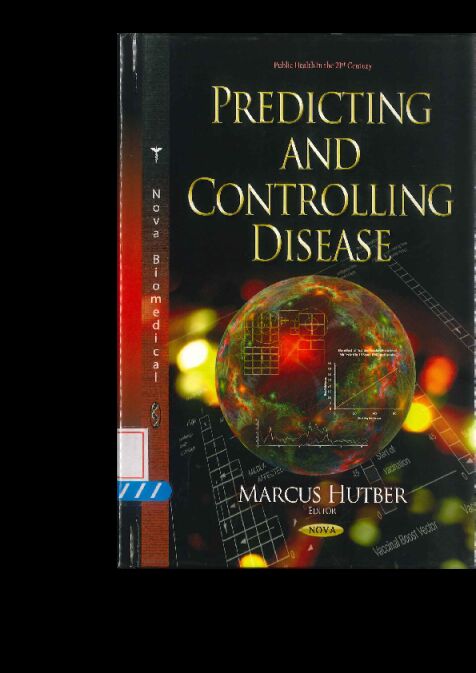
书名:Predicting and controlling disease
出版时间:2015
出版社:Nova Science Publishers, Inc.,
前言
This book has primarily been aimed at epidemiologists working with empirical data for both human and veterinary diseases. The final paragraph of this preface is probably the most important paragraph of the book, and if epidemiologists or healthcare or veterinary administrators are converted to the concept outlined in the last paragraph, then the book will have served a useful purpose: twenty-five years of epidemiological research have culminated in the concept described in the paragraph.
Historically, mathematics was introduced to epidemiology in the 1980s to provide a methodology for forecasting epidemic outcomes or scenarios. Those outcomes or scenarios were seen as an accurate way of predicting the future in terms of disease epidemiology, and were gradually accepted by administrators as a reliable tool for controlling infectious diseases. Whilst the idea was excellent in theory, there was subsequently a string of prominent and public failures of these mathematical models to predict and control disease. The failures of mathematical models culminated in the mistakes of the 2001 UK foot-and-mouth disease epidemic where 83% of the individuals slaughtered were disease-free and thus were culled unnecessarily. The culling had been highlighted by modellers as a necessary measure for disease control, but at the precise moment that prominent modellers had made the call for extensive animal slaughter, the disease was later shown to have been held under control.
Consequently, epidemiologists within the veterinary industry differed from mathematical modellers in their approach to subsequent disease control for the future. Whilst the modellers preferred an approach that implemented extensive control (to thin the susceptible population and to minimise the level of infectious individuals), veterinary epidemiologists preferred a more targeted approach: veterinarians deemed that excessive overkill of livestock was unnecessary and in 2001 the English populace agreed with them. These differences are discussed in this book since they have generated a series of debates within the literature. Ultimately, veterinary epidemiologists became suspicious of algorithms that were occultly concealed within 'black box' mathematical jargon, whilst mathematical modellers began to view the veterinary epidemiologists as laggards in terms of cutting-edge science. This book examines both the methodologies of conventional maths modelling and the essential epidemiology that enables biomaths models to be formulated. Some of the important concepts are deliberately repeated and re-explained. New methodologies are introduced (APRISM, vector-transition, economic equations, spatial model components, etc.) and these demonstrate that first generation mathematical modelling is continually adapting or evolving as more diseases are modelled with disparate characteristics. The failing of first generation models to accurately predict disease prevalence (or the duration of epidemics or their traceable course) is correlated with the level of estimates that are required for various model components. The number of model components (or factors) that are estimated is positively correlated with the degree of inaccuracy exhibited in simulated epidemic scenarios. First generation maths models all share the same problem with multiply estimated biological factors [such as R0, or incubation period, or infectious period, or effective contact rate, etc.]. Multiple estimates will cumulatively compound the overall level of model inaccuracy.
This book introduces second generation epidemiological modelling. Second generation modelling uses directly measurable biofactors that do not require estimates for their quantitative values. Biomodels encompass multiple model factors that would otherwise have to be estimated, and as such biofactors are directly correlated with disease prevalence and epidemic duration. This correlation enables biomodels to accurately predict the future course of an epidemic before it unfolds, whilst concurrently directing healthcare administrators where to target manpower and financial resources for optimal disease control. Whereas first generation modelling remains a useful tool for pedagogical or teaching purposes, second generation modelling [in the form of biomodels] allows healthcare administrators to cope with the demands of immediate and rapid disease control during periods of disease epidemics. Biomodels should be developed for important infectious diseases during periods of epidemiological 'peacetime', when manpower and resources are not held at a premium.
Few non-fictional books are read cover-to-cover. To accommodate the selective reader, some of the most important concepts in this volume [such as biofactors, biomodels, subclinical disease and predictive accuracy] are repeated within relevant chapters.
National and regional disease contingency planning should incorporate biomodels as useful tools when planning future disease control measures.
查看更多
目录
Prefack vii
Glossary xi
SECTION A PREDICTING DISEASE SPREAD 1
Chapter 1 Predicting the Future with Epidemiological Models 3
Chapter 2 Second Generation Modelling 51
SECTION B BIOFACTORS AND BIOMODELS 107
Chapter 3 Directly Measurable Factors -Subclinical Disease 109
Chapter 4 A Disease Template 119
SECTION C DISEASE CONTROL 145
Chapter 5 Future Models 147
Index 169
查看PDF
查看更多
馆藏单位
中国医科院医学信息研究所