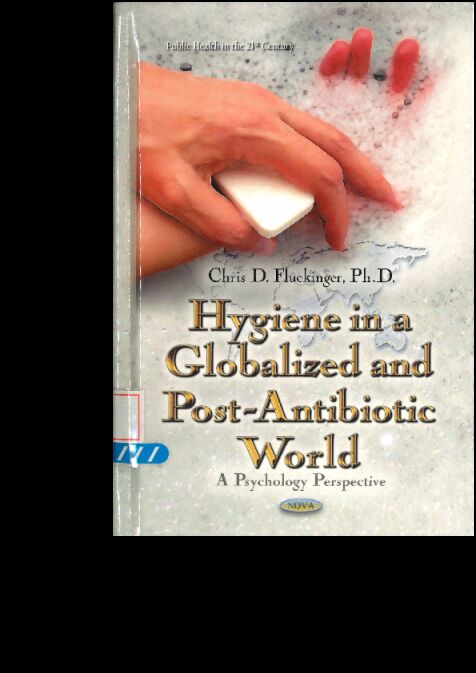
书名:Hygiene in a globalized and post-antibiotic world
ISBN\ISSN:9781633215658,1633215652
出版时间:2015
出版社:Nova Science Publishers, Inc.,
前言
Before setting out on this endeavor, I want to provide a bit of insight into why the chapters are structured as you see them. Although I'll spare you my full teaching philosophy, it is important to know that continually thinking about teaching and improving my approach to the task is a part of my professional identity, and I believe that some of what I have learned can clearly be applied to scholarly work as well. I imagine that my students might see some of these tactics playing out if they happen to read this book.
First, a key aspect of being an effective educator is to walk a fine line between sharing, showing, and growing your professional competency and keeping things interesting—dare I say even entertaining?—as much as possible. One way to do this involves opening myself up to my audience. Throughout this book, I will share personal experiences that illustrate how I see certain points playing out in "real life". As I tell my students, if you can't clearly apply a concept in some way to your life (or those you know), it is not clear if you really understand the concept. This is my attempt to practice what I preach.
Second, I enjoy reading, writing and research. When conducting primary research, typically the technical elements are given priority, while the stylistic components are secondary. While there will be some heavy research synthesis and statistical exploration at times, the discussion is allowed to "breathe", be it through extended discussion of examples/applications or in-depth examination of individual studies. Further, I am excited to be able to offer my opinion about certain aspects of a given piece of research, or perhaps provide some of the background for how it was completed or the challenges that researchers faced. Original studies published as journal articles are packed with crucial information for the dissemination of knowledge, and they are indeed powerful tools, but the backstory, which you might only be able to get from attending a conference, symposium, or brown-bag luncheon, is often just as interesting as the key take-home points of the study. In short, I believe it is perfectly acceptable to be a fan of research, and I hope my enthusiasm for it seeps through a bit more than in other outlets.
Finally, I like to organize my class lectures around certain running items (e.g., "Today's Interesting Thing" and the "Study of the Day"). Even though the content changes from week to week, students have a general idea of what kinds of features are going to be presented at various points in the lecture. This also has the added benefit of allowing students to quickly access the material they want to find after the lecture is complete. Extending that logic to this project, I wanted to have a series of running features that can be found in each chapter. To provide a bit of insight into how each can fit into the general themes and goals of this book, I will expand on the rationale behind each of these running items.
Fast facts. The fast facts are not intended as scare tactics or fodder for potential panic attacks, particularly for the germophobes out there! Instead, I like to use interesting facts as a way to get the ball rolling, whether the forum is in the classroom, in scholarly literature or casual conversation. In other words, it will be difficult to dive into the technical aspects of hygiene psychology unless we are properly supplied with examples to which the concepts can be applied. As you might imagine regarding the concept of hygiene, many of these examples may be disgusting, frightening, shocking, or any combination of the three!
A central theme of this book is that in the absence of knowledge, there is no potential for change and/or improvement. This is of course obvious from an objective perspective, but I have found that unlike in many personal health domains—such as diet, exercise, sleep and mental health, to name a few—in which people generally want to continue the dialogue and increase their breadth of knowledge across the lifespan, folks often just don't want to hear about the potential microscopic dangers surrounding them, much less change their daily routines—even if only in very simple ways—to mitigate their risk of infection, sickness, fatigue and general unhappiness. Once you've read and digested a fast fact, however, chances are it will be buried somewhere in your long term memory—absent brain injury or abnormal decay—for decades, and it will be semantically related to some of the other material presented in the chapter, making the conceptual material more accessible in the future.
Introduction. Because hygiene can involve many different fields and span numerous hygiene domains, it is possible for some of the key theoretical and practical concepts within a chapter to get overshadowed by the finer details and caveats particular to specific domains of hygiene. To make the intent of the chapter as clear as possible—and to mitigate some of the potential muddling due to the scope of the topic—I have included a summary introductory section, typically limited to a few paragraphs. It is my hope that these prepare the reader for what is to come in a particular chapter, as well as provide an understanding for why a given part of a journey starts where it does.
My personal experience. Building from some of the discussion regarding my teaching beliefs, it is important to relate some of the conceptual material to clear examples. Often this may appear easy until the time comes for strong conceptual linkages to be made. In fact, even though some of the examples may be a bit playful or appear to be a bit of a stretch in their application to the intended concept, the process is at the very least beneficial for me to fine-tune my thinking about a given theory or construct. These examples also give the reader some insight into my knowledge of, and experience with, the practical application of a number of motivational and dispositional variables that can provide background into understanding the propositions and applications made throughout the book.
Illustrative original hand hygiene findings. As will be described in detail in Chapter 1, I was involved in a study with a couple of colleagues investigating the general topic of hand hygiene. This study represented my first genuine foray into this area of research, at least from a scholarly perspective. After publishing a couple of interesting findings as a brief report in the American Journal of Infection Control, I began to dig around in the dataset a few years later and increasingly began to believe that there were a number of interesting findings still hiding in there. The main problem was that the initial study was published as a brief report, which left very little room for additional discussion or presentation of findings not clearly related to the focal point of the study. Since I believe that there are additional interesting findings—some more of the "that's interesting", tidbit variety, and some more clearly relevant for potential future scholarly replication and/or extension—I have included at least one additional analysis from the original dataset in each chapter. I recommend readers view these as interesting starting points for discussion and application of the concepts presented in the chapter, as opposed to being the product of the standard intensive peer review process characteristic of mid- and top-tier academic journals. The original research findings represent a bridge between primary conceptual points in a given chapter and research I have directly been involved with that can illustrate the chapter concepts. Finally, note that I only include the key information for a given analysis in the chapters, but complete descriptive statistics (e.g., means, standard deviations, and reliability indices, where available) and correlations between variables appearing in the book can be found in the index.
Illustrative quantitative study. In order to triangulate coverage of key conceptual points in the chapter, I also want to include a discussion and application of some notable studies in the psychological literature that can clearly relate to one or more of the primary topics discussed. A major criterion I used in selecting these studies is that they typically must not be of the same direct line of research discussed in the text. Instead, I want to encourage synthesis of research where possible in somewhat divergent streams of inquiry, which can help the reader both to make new semantic connections between concepts and provide a new lens through which to view those connections. Some of these are also features in my "Study of the Week" running items in class lectures, which I have chosen because I happen to find them particularly interesting and applicable across a wide variety of psychological applications.
Illustrative case study. Although quantitative research is particularly useful in large-scale policy and intervention design applications, it can sometimes be a bit technical in addressing some of the personal or small-scale implications of a given topic. This is particularly true with regard to many aspects of hygiene issues, as what is clearly supported quantitatively—for example, a meta-analysis showing the reduction in community acquired respiratory infections in the college dormitory population after introduction of various types of hand hygiene awareness programs—can be difficult to apply when trying to convince individuals to change their behavior. On the other hand, case studies provide the background and context. In other words, case studies can make for really good stories. We are more likely to remember stories that are interesting or clearly can be related to situations or people we know. Numbers and risk factors are much less likely to be remembered, unless of course they happen to fit semantically with key aspects of the story. Case studies also can function as more effective sparks for discussion than their quantitative counterparts, and I made a point of including at least one case study to feature in each chapter.
Perhaps the best way to view the structure of this book is as a news magazine. Instead of each chapter representing a successive act in a traditional play or movie, each chapter in this book represents a new episode or issue, with running items and consistent features. What you have here may be considered the first season, and hopefully there will be demand for additional seasons in the future!
查看更多
目录
Preface ix
Chapter 1 Beginnings of Hygiene Psychology 1
Fast Facts 1
Introduction 2
Why Hygiene Psychology? 3
Relevant Personal Experience 8
Domains of Hygiene Psychology 9
My Hygiene Psychology Origins 13
Illustrative Original Hand Hygiene Research Findings 16
Illustrative Quantitative Study: Risk Perceptions and Health Behavior 18
Illustrative Case Study: Marketing Hand Hygiene in Hospitals 20
Chapter 2 Acquisition, Representation, and Application of Hygiene Knowledge 23
Fast Facts 23
Introduction 24
Parsing Knowledge and Behavior 24
Relevant Personal Experience 30
Illustrative Original Hand Hygiene Research Findings 31
Illustrative Quantitative Study: Falling Back, Springing Forward, and Sleep Hygiene 35
Illustrative Case Study: Barriers to Hygiene in Aboriginal Australian Communities 37
Chapter 3 The Interactive Model of Hygiene 41
Fast Facts 41
Introduction 42
Integrating the Person and the Situation 43
Interactive Model of Hygiene 47
Sources of Hygiene Cues 49
Moving from Sources of Hygiene Cues to the Hierarchy of Activated Cognitive and Affective Structures 50
Hierarchy of Activated Cognitive and Affective Structures 51
Observed Hygiene Constructs 56
Relevant Personal Experience 56
Illustrative Original Hand Hygiene Research Findings 59
Illustrative Quantitative Study: Ego Depletion and Self-Regulation 62
Illustrative Case Study: Differences in Cleaning Procedures in Two Italian Hospitals 65
Chapter 4 Key Individual Differences and Hygiene Applications 67
Fast Facts 67
Introduction 68
Dispositions/Values 69
Personality 72
Achievement Goals 73
Action Plans 75
Relevant Personal Experience 77
Illustrative Original Hand Hygiene Research Findings 79
Illustrative Quantitative Study: Validity and Utility of Employment Selection Methods 82
Illustrative Case Study: Cost Effectiveness of Hygiene Promotion in Burkina Faso 84
Chapter 5 Contextual Influences on Hygiene 87
Fast Facts 87
Introduction 88
Illustrative Original Hand Hygiene Research Findings 90
Illustrative Quantitative Study: Meta-Analysis of Diarrhea Reduction Interventions 93
Illustrative Case Study: Addressing Hygiene Issues in Hotel Operations in Mauritius 94
Conclusion 95
References 99
Beginnings of Hygiene Psychology 99
Acquisition, Representation and Application of Hygiene Knowledge 101
The Interactive Model of Hygiene 101
Key Individual Differences and Hygiene Applications 105
Contextual Influences on Hygiene 106
Author's Contact Information 107
Index 109
查看PDF
查看更多
馆藏单位
中国医科院医学信息研究所