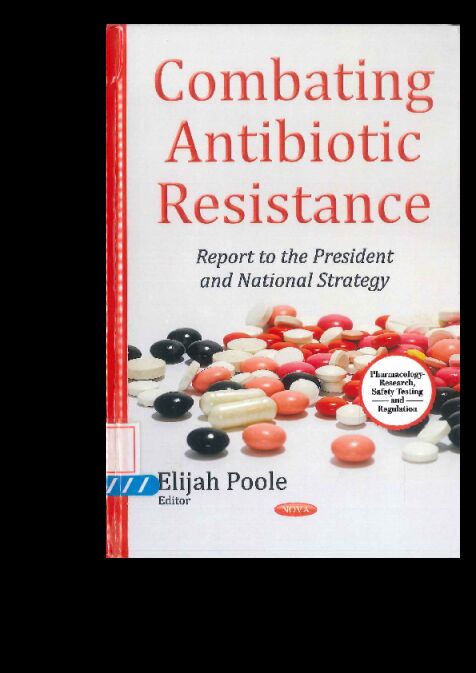
书名:Combating antibiotic resistance
ISBN\ISSN:9781634634328,1634634322
出版时间:2015
出版社:Nova Biomedical,
前言
For an American in the 21st century, it is hard to imagine the world before antibiotics. At the beginning of the 20th century, as many as nine women out of every 1,000 who gave birth died, 40 percent from sepsis. In some cities as many as 30 percent of children died before their first birthday. One of every nine people who developed a serious skin infection died, even from something as simple as a scrape or an insect bite. Pneumonia killed 30 percent of those who contracted it; meningitis killed 70 percent. Ear infections caused deafness; sore throats were not infrequently followed by rheumatic fever and heart failure. Surgical procedures were associated with high morbidity and mortality due to infection. This picture changed dramatically with three major developments: improvements in public health, vaccines, and antibiotics. Over the course of the 20th century, deaths from infectious diseases declined markedly and contributed to a substantial increase in life expectancy. Antibiotics, in particular, have saved millions of lives. This book discusses combating antibiotic resistance and provides reports to the presidents and national strategies.
Chapter 1 - Bacteria and other microbes evolve in response to their environment and inevitably develop mechanisms to resist being killed by antibiotics. For many decades, the problem was manageable as the growth of resistance was slow and the pharmaceutical industry continued to create new antibiotics. Over the past decade, however, this brewing problem has become a crisis. The evolution of antibiotic resistance is now occurring at an alarming rate and is outpacing the development of new countermeasures capable of thwarting infections in humans. This situation threatens patient care, economic growth, public health, agriculture, economic security, and national security.
Developed in consultation with a working group of experts in antibiotic resistance, this report identifies areas that require urgent attention and offers practical recommendations to the Federal government for strengthening the Nation's ability to combat the rise in antibiotic-resistant bacteria.
Chapter 2 - The discovery of antibiotics in the early 20th century fundamentally transformed human and veterinary medicine. Antibiotics now save millions of lives each year. The rise of antibiotic-resistant bacterial strains, however, represents a serious threat to public health and the economy. The Centers for Disease Control and Prevention (CDC) estimates that annually, at least two million illnesses and 23,000 deaths are caused by antibiotic-resistant bacteria in the United States alone. If the effectiveness of antibiotics (drugs that kill or inhibit the growth of bacteria) is lost, we will no longer be able to reliably and rapidly treat bacterial infections, including bacterial pneumonias, foodbome illnesses, and health care associated infections. As more strains of bacteria become resistant to an ever-larger number of antibiotics, our drug choices have become increasingly limited and more expensive and, in some cases, nonexistent.
The National Strategy for Combating Antibiotic Resistant Bacteria identifies priorities and coordinates investments: to prevent, detect, and control outbreaks of resistant pathogens recognized by CDC as urgent or serious threats; to ensure continued availability of effective therapies for the treatment of bacterial infections; and to detect and control newly resistant bacteria that emerge in humans or animals.
查看更多
目录
Preface vii
Chapter 1 Report to the President on Combating Antibiotic Resistance 1
Chapter 2 National Strategy for Combating Antibiotic-Resistant Bacteria 83
Index 123
查看PDF
查看更多
馆藏单位
中国医科院医学信息研究所