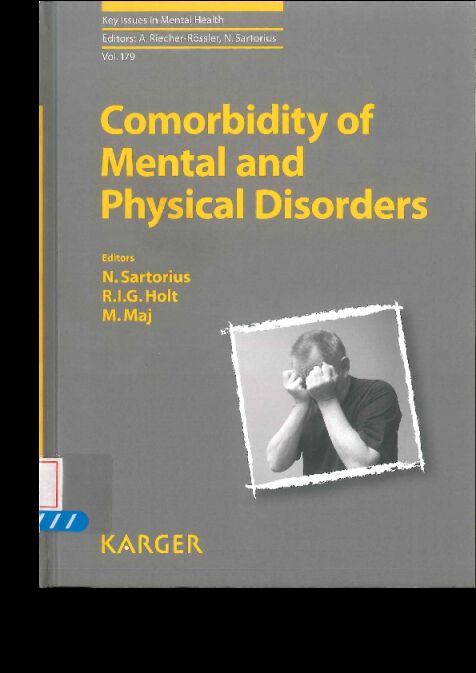
书名:Comorbidity of mental and physical disorders
责任者:Norman Sartorius | Richard I.G. Holt | Mario Maj.
前言
There is little doubt about the fact that comorbid ity - the simultaneous presence of two or more diseases - is a major challenge for health services. The prevalence of comorbidity has increased rapidly and continues to grow for several reasons, mainly the increase in life expectancy following successes in medicine and socioeconomic development. However, also playing a role are environmental factors (such as air pollution), changes in lifestyle, rapid urbanization and medical factors including iatrogenic disease and the fragmentation of medical services which often result in the late recognition of comorbid diseases and the consequent failure to treat them.
An area of particular neglect is the comorbidity between mental and physical disorders. One of the main reasons for this development is the long-standing separation of psychiatry from other branches of medicine. The geographic separation of mental health institutions from the hospitals and departments dealing with other physical diseases is a material expression of the perception that psychiatric disorders are not diseases like others, and a consequence of this perception is the growing distance and separation between psychiatry and the rest of medicine. In practice, this has led to many psychiatrists failing to recognize the presence of physical illness in their patients and being reluctant to provide treatment for the physical disorder when a diagnosis is made. The same is true for specialists in other branches of medicine who pay insufficient attention to the presence and treatment of mental disorders in their patients.
The neglect of comorbidity of mental and physical illness is also linked to the fact that its prevalence has been, for a long time, severely underestimated. This was due in part to the lack of recognition described above; however, it also reflects the fact that the stigma of mental illness makes patients reluctant to speak about their mental health problems to nonpsychiatric physicians. Comorbidity of mental and physical illnesses often leads to a tacit collusion with patients and healthcare professionals agreeing to deal with the physical illness as if the mental disorder did not exist. The fact that people with mental illness are often poor and less well educated may have also contributed to lesser utilization of health ser vices that might have recorded the number and frequency of comorbidity of mental and physical illness.
The scant attention given; to the comorbidity of mental and physical disorders is of major public health concern. The simultaneous presence of mental and physical diseases worsens the prognosis of both types of disorders and increases the personal and social cost of dealing with them. Complications of the comorbid diseases become more probable and their treatment is more complex. What is particularly worrisome is that comorbidity of mental and physical disorders is becoming more frequent at a time when medicine is becoming increasingly fragmented into super-specialties and when the numbers of general practitioners who can follow the rapid development of knowledge in the many disciplines of medicine is diminishing.
The reasons for the high prevalence of mental and physical illness are only partially clear. To an extent this may occur because some people with mental illness do not pay sufficient attention to their bodies and do not follow elementary rules of healthy lifestyle, hygiene and disease prevention. That many people with mental illness live in conditions of poverty and deprivation where they may be exposed to the considerable dangers of violence and abuse might also be a part of the explanation. People with mental illness often abuse alcohol and other drugs which expose them to the health consequences of substance misuse such as hepatitis and HIV infections. Although these reasons are important, they do not explain all of the excess comorbidity. A number of biological changes seen in mental illness may also predispose to physical ill health, including enhanced inflammation or endocrine dysfunction, but genetic factors are also important. We are still lacking longitudinal studies of comorbidity that could offer insights into the mechanisms. The recent findings on the effects of early childhood abuse on the prevalence of cardiovascular diseases and on the prevalence of depression are good examples of the gains that might result from long-term and life-perspective studies.
Our main goal for this book was to assemble and present material that will help in efforts to raise awareness of the magnitude and nefarious consequences of comorbidity of mental and physical illnesses while stimulating relevant research as well as the application of knowledge that is already available. We invited leading experts in the field of comorbidity to participate in the production of this volume. We have tried to exemplify issues that arise in three main areas of concern. The first of these are the public health aspects of comorbidity focusing on the ways in which comorbidity can be conceptualized, on the cost that comorbidity presents to society and on the interaction of comorbidity with factors stemming from the context of socioeconomic development. In the second group of chapters we assembled reviews of evidence that illustrate the two main approaches to the understanding of evidence about comorbidity. For the first approach, the chapters look at specific issues that arise in relation to comorbidity of mental disorders with disease groups of major public health importance, such as cardiovascular illness, cancer and infectious diseases. For the second approach we examined physical comorbidity in relation to a range of mental and behavioral disorders, including substance abuse, eating disorders and anxiety. The message imbedded in this way of presenting evidence - using one of the two approaches - is that both are necessary: taking a position of looking at comorbidity from only one side may hide important issues and clues. The last group of chapters includes contributions that deal with the elements of the response to the problems arising from comorbidity - the organization of health services (especially the role of the general practitioners), the training of different categories of health personnel and the multisectoral engagement necessary to prevent comorbidity. Norman Sartorius, Geneva Richard I.G. Holt, Southampton Mario Maj, Naples
查看更多
目录
Foreword vii
Preface xi
Background
Conceptual Perspectives on the Co-Occurrence of Mental and Physical Disease: Diabetes and Depression as a Model 1
Public Health Perspectives on the Co-Occurrence of Non-Communicable Diseases and Common Mental Disorders 15
Counting All the Costs: The Economic Impact of Comorbidity 23
Difficulties Facing the Provision of Care for Multimorbidity in Low-Income Countries 33
Comorbidity of Mental and Physical Illness: A Selective Review
Depression, Diabetes and Dementia 42
Cardiovascular Disease and Severe Mental Illness 54
Multiple Comorbidities in People with Eating Disorders 66
Anxiety and Related Disorders and Physical Illness 81
Cancer and Mental Illness 88
Infectious Diseases and Mental Health 99
Physical Diseases and Addictive Disorders: Associations and Implications 114
Management of Comorbidity of Mental and Physical Illness
The Role of General Practitioners and Family Physicians in the Management of Multimorbidity 129
Training Physicians at Undergraduate and Postgraduate Levels about Comorbidity 137
The Dialogue on Diabetes and Depression African Nursing Training Programme: A Collaborative Training Initiative to Improve the Recognition and Management of Diabetes and Depression in Sub-Saharan Africa 148
The Challenge of Developing Person-Centred Services to Manage Comorbid Mental and Physical Illness 157
Prevention of Comorbid Mental and Physical Disorders 165
Concluding Remarks
Conclusions and Outlook 178
Author Index 182
Subject Index 183
查看PDF
查看更多
馆藏单位
中国医科院医学信息研究所