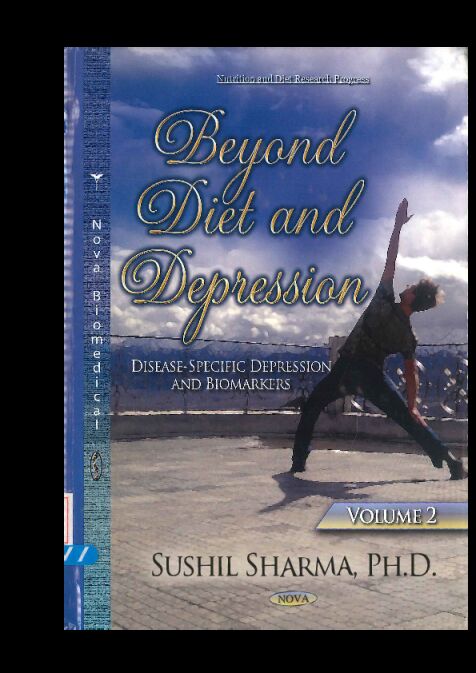
书名:Beyond diet and depression. vol. 2, Disease-specific depression and biomarkers.
ISBN\ISSN:9781634632744,9781634634229
出版时间:2015
出版社:Nova Biomedical,
前言
Depression is the leading cause of poor quality of life, serious complications in chronic disease patients, deleterious effects on family members, drug abuse, early morbidity and mortality, and global health problem particularly among adolescents, young female adults, and aging population. In addition to general public, depression has directly or indirectly impacted the performance and productivity of religious and political leaders, celebrities, film stars, stage performers, and Nobel Laureates. The literature is full of these examples to highlight that depression is a very common and complex neuropsychiatric disorder. The incidence of depression is 8% among men, 16% among women, and 3% Americans suffer from the seasonal affective disorder (SAD) with severe symptoms of depression during winter (Conti, 2008). The annual cost of depression is $43.7 billion in addition to workplace costs of over $34 billion per year in direct and indirect costs in the US. The country spends >$150 billion annually on direct medical costs. Moreover suicide, as a consequence of untreated depression, is the 11~th leading cause of 30,000 deaths each year. Over 15% of depressed people commit suicide every year and its rate is six times higher among men 85 and over. People suffering from stroke or who have cardiovascular disease (CVD), obesity, diabetes, hypothyroidism, cancer, Parkinson's disease (PD), and/or HIV/AIDS are at increased risk for depression. Annual prevalence estimates of depression for these patients range from 10-65%. Depressed victims are five times more likely to abuse drugs. The rates of undetected depression among drug and alcohol abusers are as high as 30% in the US. In 2001, a federal government survey reported that adults who used illicit drugs were twice as likely to report depression. It is expected that owing to co-morbidity of substance abuse and depressive disorders; jails and emergency departments will be over occupied. Moreover depression adversely affects the outcome of chronic diseases. Depressed CVD patients exhibit increased mortality following heart attack compared to normal subjects with heart disease. Depression interferes with the ability to follow medication and proper dietary regimens and is associated with increased risk of osteoporosis in women. The personal and societal costs of depression include mortalities, serious complications in chronic disease patients, increased health care costs for employers, family burden, and substance abuse. Major depressive disorder (MDD) is associated with more sick leaves and higher incidence of short-term disability than other chronic diseases, with significant loss of productivity. Moreover, children of mothers who suffer from chronic depression are more likely to have behavioral problems at school. Indeed, the increasing costs and the poor quality of life make everyone concerned about depression and its deleterious consequences (Greenberg et al., 2003).
Although the role of diet in the prevention of CVDs, neurodegenerative diseases, and cancer has been extensively investigated for the last >50 years, the relationship between diet and depression is relatively new venture and has emerged within last 5-10 years. Emerging evidence indicates that pro-depressive changes induced by stress can be reversed by diet, exercise, and antidepressants. The increased prevalence of depressive and neurodegenerative diseases combined with the lack of effective pharmaceutical treatments associated with deleterious side effects, has necessitated dire need for the development of effective therapies through selective and safer dietary interventions. Considering that these disorders are multifactorial in origin, treatments developed to interfere at different mechanism(s) may be more effective than the traditional single-targeted pharmacological approach. Several studies suggest that depression shares some common characteristics with the metabolic syndrome (MetS), obesity, and CVD. Particularly, anxiety and depression contribute to morbidity in aging subjects and may be associated with poor unhealthy diet intake.
It is well established that hippocampal atrophy occurs in MDDs. The author discovered that hippocampal Charnoly body (CB) formation can induce depression as a consequence of malnutrition, drug abuse, and neurotoxic stress whereas nutritional rehabilitation and antioxidants including zinc metallothioneins (MTs) alleviate depression by preventing CB formation and by serving as free radical scavengers in the neurons and adipocytes (Sharma et al., 2013a; Sharma and Ebadi, 2014a). CB formation occurs in the most vulnerable cells as a consequence of compromised mitochondrial bioenergetics in response to nutritional stress and/or environmental toxic insult (Sharma and Ebadi, 2014b). These electron-dense pleomorphic, multilemallar, ultrastructures are formed in response to free radical over production as a result of mitochondrial degeneration and can be eliminated by nutritional rehabilitation or by antioxidants such as coenzyme Q_10, flavonoids, polyphenols, lycopene, qurestine, reseveratrol, glutathione, and MTs. We established that MTs provide ubiquinone (Coenzyme Q_10)-mediated neuroprotection. Furthermore Coenzyme Q_10 and Vitamin E provide synergistic neuroprotection in progressive neurodegenerative disorders including Parkinson's disease (PD), Alzheimer's disease (AD), and drug addiction, bidirectionally-linked with MDD (Ebadi et al., 2001; Sharma and Ebadi, 2003; Ebadi and Sharma, 2003; Sharma et al., 2004; Ebadi and Sharma, 2006; Sharma et al., 2006; Ebadi et al., 2007; Sharma and Ebadi, 2008; Sharma and Ebadi, 2011a, Sharma and Ebadi, 2011b; Sharma et al., 2013a; Sharma et al., 2013b). Accumulation of CB at the junction of axon hillock may impair axoplasmic transport of various ions, enzymes, neurotropic factors, and mitochondria at the synaptic terminals to induce impaired hippocampal and hypothalamic neurotransmission in MDDs and other chronic diseases, collectively known as neurodegenerative α-synucleinopathies. Now we know that charnolophagy is the most efficient mechanism of intracellular detoxification during acute phase, whereas CB sequestration during chronic phase may result in MDDs, progressive inflammation, and neurodegeneration (Sharma et al., 2014). Hence specific CB antagonists and charnolophagy agonists may be developed for the effective and personalized clinical management of neurodegenerative diseases including MDDs (Sharma, 2014).
Recently Flemmer (2013) emphasized the importance of eating healthy diet for a better quality of mood. Neurobehavioral disorders influence diet and food consumption, but there are limited studies as yet available in this direction. Depression, "unrepaired emotional short-circuiting" goes beyond feeling blue, and can cause deleterious health consequences than all the foods and toxins. Increases in striatal brain-derived neurotropic factor (BDNF) and cyclic AMP response element binding (CREB) activities are involved in depressive behavior and reward, and these signaling molecules mediate the effects of high-fat feeding and diet-induced obesity (DIO) to promote negative emotional states and depression-like symptoms. Although the evidence is limited, diet can potentially influence the risk of depression. Particularly adolescence is a transitional phase that is associated with increased risk for two major health conditions - obesity and mental health problems. Relationships have been found between lack of physical exercise, sedentary behavior, poor quality of diet, obesity or overweight and depression in adolescence. Generally screen-based sedentary behavior has been linked to depression and other health problems in the modern society. In addition, nutritional risk and depression is common among old subjects living in private households in USA and Canada. Improper nutrition may be a risk factor for unipolar depression. Although inflammation is now considered as a mechanism leading to depression, the association between inflammatory dietary pattern and the risk of depression is yet to be established. Indeed stress and frustration as well as depression may be caused by inadequate food intake, and as a consequence, by iron deficiency similar to human anorexia. Hence promoting healthy-eating will have significant impact on our quality of life. Particularly prospective cohorts to explore the association between diet and depression risk are needed. A few studies have demonstrated an inverse relationship between adherence to a Mediterranean diet and the risk of depression. There is now evidence that n-3 PUFAs may contribute to the disease including control of serotonergic and dopaminergic function, modulation of BDNF in the hippocampus, regulation of the hypothalamic-pituitary-adrenal axis (HPA), and effects on neuroinflammation. In addition, regular exercise has an antidepressant effect.
Although omega-3 fatty acids, iron, folate, s-adenosyl-L-methionine, cobalamin (Vitamin B_12), pyridoxine (Vitamin B_6), riboflavin, vitamin D, and calcium have been tried to prevent depression, there is limited evidence that Selenium, docosahexanoic acid (DHA) or eicosapentanoic acid (EPA) could prevent depression. DHA has been shown to promote hippocampal neurogenesis, whereas hippocampal atrophy has been noticed in MDD patients. There is currently no evidence to suggest any other dietary supplement for the prevention and/or treatment of depression. Metabolic syndrome (MetS) is characterized by obesity, insulin resistance, hypertension, dyslipidemia, diabetes mellitus, and depression. Several studies of single nutrients on depression have revealed inconsistent results, and have been unsuccessful to consider the complex interactions between different nutrients in the diet. A significant number of studies are now investigating the association of overall dietary patterns and depression. These studies have demonstrated that daily intake of nutrients, containing amino acids, can effectively reduce depressive symptoms, because they are converted into neurotransmitters that alleviate depression and other mental illnesses. One of these essential amino acids is the tryptophan which is the precursor for the synthesis of serotonin, and melatonin primarily involved in mood and sleep regulation (Wurtman, 1995; Wurtman and Wurtman, 1995; Jacobson et al., 2012; Wurtman, 2013; Shabbir et al., 2013; Lang and Borgwardt., 2013). Vitamin B6 in the form of pyridoxal phosphate serves as a coenzyme for decarboxylases involved in the synthesis of various neurotransmitters including 5-HT, dopamine, GAB A, and marine (Dakshinamurti et al., 1990). These neurotransmitters are decreased in the CNS during severe depression and epilepsy. Hence vitamin B_6 is important for alleviating various symptoms of depression (Dakshinamurti et al,, 2003).
As depression and sleep disturbance are most common among cocaine and methamphetamine (METH) addicts, we studied the direct effect of these drugs of abuse on cultured human dopaminergic (SK-N-SH) cell lines in vitro and MTs gene manipulated mice in vivo. Although cocaine was less toxic compared to METH, both these drugs induced significant inhibition in the mitochondria] ubiquinone-NADH oxidoreductase (complex-1) inhibition, a rate limiting enzyme complex for oxidative phosphorylation and ATP synthesis, and reduction in tyrosine hydroxylase activity. Cocaine and METH-induced toxicity was attenuated by coenzyme Q_10 and zinc. Subsequently we established that zinc provides neuroprotection from METH-neurotoxicity and inhibits α-synuclein aggregation through MTs induction (Klongpanichapak et al., 2006; Ajjimornporn et al., 2005 Ajjimaporn et al., 2007; Ajjimaporn et al., 2008). Furthermore, METH-induced apoptosis and autophagy were significantly inhibited by Melatonin in glioma cell lines in culture (Nopparat et al., 2010; Jumnongprakhon et al., 2013), suggesting the antioxidant, anti-inflammatory, and anti-apoptotic effects of zinc, MTs, and Melatonin. In addition, Melatonin has well-established role as a chronopharmacological agent to regulate sleep-wake cycle. Recent studies have shown that Melatonin and its agonist Ramelteon can alleviate symptoms of metabolic syndrome (MetS) by binding with MT1 and MT2 receptors, whereas the antagonist, Luzindole has an opposite effect (Nishiyama and Hirai, 2014). Depressive symptoms are associated with obesity, poor diet, and physical inactivity. Supplements containing high doses of B vitamins may be beneficial in improving mood. Nutrition could play a pivotal role in the onset and/or progression of depression, since the intake of carbohydrates with a high glycemic index (GI) or diets with a high glycemic load (GL) may increase the insulin-induced brain serotonin secretion. Environmental and pharmacological interventions, including antidepressant drugs, exercise, and diet, can block or even reverse the molecular changes induced by stress, providing a direct link between these factors and susceptibility to MDD. The serotonergic system and the hypothalamo-pituitary-adrenal (HPA) axis are involved in the regulation of emotions. Particularly, spontaneous and/or environmentally-mediated modulations early in development may develop depressive-and anxiety-related phenotypes. Inflammatory dietary pattern {including high fat diet) is associated with an increased risk of depression and chronic inflammation may underlie the association between diet and depression. Adherence to a diet consisting of vegetables, fruits, whole grains, fish, and legumes (Soy bean) may protect against the development of depressive symptoms particularly in older age. It is now known that carriers of leptin gene mutations can normalize their body weight after daily s.c leptin administration, whereas mutations in the melanocortin 4 receptor gene (MC4R) represent the monogenic cause of human obesity and difficult to treat with the currently available clinical interventions with the exception of bariatric surgery, which requires cooperation from various medical disciplines including rigorous management of depression (Muller et al., 2014). However, the management of monogenic obesities still remains a challenge. Currently there is no evidence-based psychological or pharmacological treatment for self-injury (including suicide) observed among MDD victims. The prevalence of type 2 diabetes and depression are also increasing globally, but evidence linking these diseases to diet is scanty.
In a recent study conducted in Japan, high intakes of vegetables, fruit, mushrooms, and soy products-was inversely associated with depressive symptoms suggesting that diet has a significant impact on the development of type 2 diabetes and depression (Nanri, 2013). Dietary components may affect brain function and influence behavior by enhancing the synthesis of neurotransmitters. However optimum micronutrient intake, doses, and active ingredients are still an open questions relevant to diet and depression. Although individual nutrients have been investigated in relation to risk of depression, little is known about the overall influence of diet on depression. It is now realized that a combination of both pharmacological as well as nonpharmacological interventions will have synergistic effect in alleviating devastating symptoms of MDD. Although the exact etiopathogenesis of MDD remains poorly understood, influence of neurotransmitter processes, immuno-inflammatory pathways, HPA axis disturbances, oxidative stress and antioxidant defence systems, mitochondrial disturbances, and neurodegeneration are linked to depression. Recent evidence suggests that diet can modify biological factors related to development of depression. However, the exact association between diet quality and depression remains poorly understood. Although inflammation is considered as a mechanism leading to depression, the exact link between inflammatory dietary pattern and depression risk is yet to be established.
The primary objective of introducing Volume-2 of this book is to provide knowledge about recent advances in depression research and its successful treatment by simple, economical, and easily accessible dietary interventions. It is now realized that antidepressants may attenuate the effects of diet and exercise programs. Dietary components may affect brain function and influence behavior by augmenting the synthesis of neurotransmitters. Although primary emphasis has been laid on dietary interventions the book goes beyond to highlight several other emerging biomarkers and novel therapeutic strategies when conventional treatment employing: psychotherapy, dietary interventions, and/or pharmacological approaches become unsuccessful for the clinical management of chronic depression with the exception of controversial electroconvulsive therapy particularly in those MDD patients with suicidal ideation. In addition to acupuncture, numerous traditional Chinese and Indian Herbal preparations such as Saint John's Wort, Curcumin, and Honey have antidepressant effects about which limited scientific knowledge is available as yet. Particularly, this book describes the therapeutic potential of novel mitochondrially-targeted antioxidants as CB antagonists and/or charnolophagy agonists as a basic molecular mechanism of intracellular detoxification for the effective clinical management of depression. A further basic research is needed in this direction. The book begins with basic introductory history and clinical symptoms of depression, and ends by highlighting recently-discovered disease specific clinical, omics (proteomic: phosphoglycerate mutase 1: PGAM1; three important blood and salivary biomarkers representing (i) inflammation, (ii) glucocorticoid receptor functionality, and (iii) neuroplasticity), lipidomic, metabolomics, glycomic, and genomic) biomarkers for early differential diagnosis and clinical management of depression. The last chapter is devoted to highlight these novel biomarkers for the differential diagnosis and effective personalized treatment of depression.
It is now known that depression is the major complaint of patients suffering from chronic illness, pain, and CVDs, neurodegenerative diseases, and cancer. In general, post-operative, acute ischemic stroke (AIS), Alzheimer's disease (AD), Parkinson's disease (PD), and hypothyroid patients experience severe depression. It is proposed that increased oxidative stress or defective anti-oxidant defenses are involved in the etiopathogenesis of depression. The author discovered that bone marrow derived mononuclear cells (MNCs) provide neuroprotection by preferential chemotaxis at the site of cell injury in AIS and are exponentially eliminated as a function of time. MNCs provide neuroprotection through paracrine release of anti-inflammatory cytokine, IL-10, by inducing PI3/AKT signaling involved in the mitochondrial protection and cell survival (Brenneman et al., 2010; Sharma et al., 2010; Yang et al., 2011). In fact IL-10 inhibits CB-mediated pro-inflammatory apoptosis and hence neurodegeneration in AIS by binding to its receptor on the cortical and hippocampal neurons. The author discovered IL-10 receptors on the cortical neurons for the first time to elucidate the basic molecular mechanism of IP3/AKT signaling in MNCs-mediated neuroprotection in AIS (Sharma et al., 2011). Furthermore, MTs are translocated in the mitochondria to scavenge free radicals during oxidative and nitrative stress and in the nucleus to induce zinc-mediated transcriptional regulation of genes involved in growth, proliferation, and differentiation. While metallothionein transgenic (MT_trans) mice were lean, agile, and active, the Metallothioneins double gene knock out (MT_dko) mice were lethargic and moderately obese. MT_trans mice could still walk with their stiff lags and erect tail following 7 days of 1-methyl, 4-phenyl, 1,2,3,6 trtrahydropyridine (MPTP), a mitochondrial ubiquinone NADH oxidoreductase (complex-1) inhibitor, whereas MT_dko mice were completely immobilized, suggesting the therapeutic potential of MTs in PD and depression (Sharma and Ebadi, 2014c). Hence we proposed that MT_tans fetal stem cells from the mesencephalic region may be transplanted in the nigrostrial regions of PD patients to provide neuroprotection and alleviate depression. The homozygous weaver (wv/wv) mice exhibited progressive hippocampal atrophy as noticed in MDDs and down-regulation of MTs, which were represented by neurobehavioral excitation and anxiety in these genotypes. We developed a colony of MTs over-expressing weaver (wv/wv-MTs) mice by cross-breeding the MT_trans male mice with MT_dko female mice as homozygous wv/wv male mice were sterile. The progeny was phenotyped by tail DNA PCR analysis. These genotypes did not exhibit progressive hippocampal neurodegeneration and hippocampal CB formation was completely prevented. This was confirmed by performing microPET neuroimaging with ~18FdG and ~18F-DOPA to confirm the brain regional mitochondrial bioenergetics and dopaminergic neurotransmission respectively. This was also confirmed in vitro by estimating the complex-1 activity and tyrosine hydroxylase activity in these genotypes. All these findings further confirmed that MTs inhibit CB formation by augmenting the mitochondrial ubiquinone NADH oxidoreductase (Complex-1; a rate limiting enzyme complex for the oxidative phosphorylation) and by serving as potent free radical scavengers. Thus physiological and/or pharmacological interventions to induce MTs in stem cell therapy will have significance in the effective clinical management of chronic and progressive neurodegenerative disorders such as PD, AD, drug addiction, and MDDs in aging (Sharma and Ebadi, 2014c).
It is important to mention here that during acute phase, specific effort is required to prevent CB formation and enhance charnolophagy as a mechanism of intracellular detoxification to alleviate symptoms of depression. This can be accomplished by proper dietary interventions and by avoiding substance abuse. However during chronic phase, CB sequestration due to cholesterol and calcium crystallization may induce apoptosis and cell damage due to cytochrome C release from the degenerating mitochondria in the neurons and adipocytes. In addition, stress-induced HPA activation is involved in cortisol and norepinephrine (NE) release to induce pro-inflammatory cytokines and microglial activation. The glucocorticoid receptors are localized in the hippocampal neurons which render this region highly susceptible to excessive cortisol release during stress triggering low-grade inflammation and depression due to enhanced glutamate release. Cortisol-mediated microglial activation releases free radicals, ROS, and kyneurine which can trigger hippocampal neuronal apoptosis, early morbidity, and mortality in chronic depression as a consequence of microglial activation and persistent stress as elegantly described in this book.
It is now well established that depression is the most common complaint of hypothyroidism, chronic inflammatory diseases, neurodegenerative diseases, traumatic brain injury, CVDs, drug addiction, post-traumatic stress disorder, systemic lupus erythromatosus (SLE), fibromyalgia, rheumatoid arthritis, hypothyroidism, eating disorders, cancer, AIDs, and aging. MDD is a widespread and debilitating mental disorder and there are no specific biomarkers for the differential diagnosis and treatment of this disorder at this moment. This book provides updated knowledge regarding specific biomarkers and dietary interventions for the effective clinical management of MDD because multiple drug trials are often unsuccessful in this complex disorder. Moreover polypharmacy has several deleterious adverse effects in these patients. Hence non-pharmacological approaches by dietary manipulation may provide better treatment options along with or without conventional antidepressant medication.
To improve the 'personalized-medicine' for the treatment of depression, there is a need to identify biomarkers that, assesse before initiating treatment, predict future response to antidepressants as well as biomarkers that are targeted by antidepressants and change during the treatment. Recently several biomarkers have been developed for the clinical diagnosis, prognosis, and effective treatment of depression with limited success. These can be arbitrarily divided as (i) authenticate biomarkers (ii), putative biomarkers, and (iii) potential biomarkers; and based on the literature evidence, classified as clinical, biochemical, biophysical, physiological, chronobiological, pharmacological, and imaging biomarkers. Particularly rapid eye movement (REM) sleep disturbance in depressed chronic diseases sufferers differs depending upon the severity of illness and may require specific interventions depending on the nature of sleep disturbance. In-vivo (MRI: impaired cortico-limbic circuitry) and in-vitro (specific and nonspecific), central (CSF secretogranin II; cytokines and chemokines), and peripheral (platelet counts, whole blood poly unsaturated fatty acids (n-3 PUFA), serum and salivary brain-derived neurotrophic factor (BNDF), epidermal growth factor (FGF), chromogranin-A, tumor necrosis factor alpha (TNFα), plasma β-endorphines, urine and plasma cortisol, and folate, lowered serum amyloid-β1-42 autoantibodies, and urinary metabolite-(malonate, formate, N-methylnicotinamide, m-hydroxyphenylacetate, and alanine) have emerged as promising biomarkers for the early diagnosis and effective personalized management of depression. These biomarkers have been described in detail in this book.
Future research particularly in the omics biotechnology and nanotechnology will certainly provide more precise information regarding disease-specific biomarkers and novel therapeutic strategies employing dietary and other novel therapeutic interventions for the effective clinical management of depression. Recently curcumin, honey, reservratrol, sirtuines, rutins, catchsin, and lycopene, have emerged as potent antidepressant, however curcumin has reduced bioavailability in the CNS. Innovative nanotechnological approaches are on its way to enhance the delivery of not only curcumin but also numerous other antioxidants, anti-inflammatory, and antiapoptotic agents from herbal origin and membrane penetrating peptides to alleviate pain, MDDs, CVDs, cancer, and numerous other progressive neurodegenerative disorders. It is envisaged that this book will be a valuable source of basic information to general public interested in knowing more about the preventive and therapeutic aspects of various healthy diets in depression. More specifically researchers, scientists, medical students, doctors, nurses, and other health care providers including dieticians will find this book valuable for selecting disease-specific quality foods for their patients to facilitate speedy recovery and better productivity in their social and professional life.
查看更多
目录
Preface vii
Acknowledgment xvii
About the Author xix
About This Book xxi
List of Abbreviations xxv
Part I. Diet and Depression 1
Chapter 1 Diet and Depression (Recent Update-I) 3
Chapter 2 Diet and Depression (Recent Update-II) 77
Chapter 3 Diet and Depression (Recent Update-III) 91
Chapter 4 Diet and Depression (Recent Update-IV) 99
Chapter 5 Diet and Depression (Recent Update-V) . 149
Chapter 6 Diet and Depression (Recent Update-VI) 175
Part II. Disease-Specific Depression 191
Chapter 7 Disease-Specific Depression (Recent Update-I) 193
Chapter 8 Disease-Specific Depression and Diet (Recent Update-II) 207
Chapter 9 Disease-Specific Depression and Diet (Recent Update-III) 213
Chapter 10 Disease-Specific Depression and Diet (Recent Update-IV) 241
Part III. Biomarkers in Depression 247
Chapter 11 Biomarkers in Depression (A Recent Update) 249
Index 339
查看PDF
查看更多
馆藏单位
中国医科院医学信息研究所