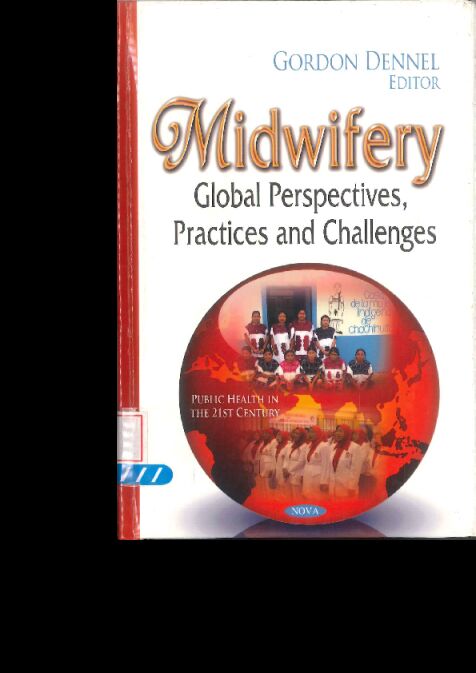
书名:Midwifery
出版时间:2015
出版社:Nova Science Publishers, Inc.,
前言
The role of traditional midwives varies across cultures and at different times and even today these traditional practitioners attend the majority of deliveries in rural areas in developing countries. According to WHO, each year 45 million births occur at home without skilled health personnel. Skilled attendants assist in more than 99% of births in more developed countries, versus 62% in developing countries. In many rural and periurban communities, the perinatal care that traditional midwives offer is generally profoundly rooted in the local culture and collectively valuated as the result of hand-on experience. There is little doubt that traditional midwives play an important role when it comes to cultural competence, empathy and psychosocial support at birth with important benefits for the mother and the new-born baby. This book discusses global perspectives, practices and challenges involved in midwifery.A\Chapter 1 - Public health programs in Latin America are encouraging the participation of traditional midwives in trainings programs on birth, delivery practices and risks reduction. Although the existing literature focuses on the health outcomes of training of traditional midwives, there is a paucity of research analyzing the perceptions and the acceptance of such training programs by traditional midwives.A\What is the perception of midwives who have been trained vis-a-vis these training programs? Are these training programs an effective way to reduce the marginalization of traditional midwifery and to enhance stronger forms of collaboration between traditional medicinal systems and biomedicine? Or on the contrary are they a way to reinforce the dominance and dependence of traditional midwives towards biomedicine?A\This chapter analyzes the way in which training programs in Ecuador and Mexico have transformed the role of traditional midwives and their perceptions of traditional midwifery identity and practices in their process of negotiation between traditional medicine and biomedicine.A\Chapter 2 - Midwives are a key profession in the care of women during the childbearing process, and research results indicate that they can have a major effect upon their wellbeing and health as well as upon their attitude to future births and to their new born child. Women's need for caring in the childbearing process and the great importance of the caring midwife has been established by listening, through research, to women who have given birth. The detrimental effects of uncaring has also been demonstrated in the same way. What is caring then? What is uncaring? How can we recognize and avoid uncaring? More importantly, how can we teach caring and how can we help midwifery students to avoid being perceived as uncaring? Finally, how should midwifery education be organized in order to educate caring midwives? These are the basic questions the authors will try to answer in this discussion paper. The authors conclude that during revision of midwifery education programmes the focus should always be on how all the different aspects of the complicated project of educating a "good midwife" be included in the curriculum and that the importance of caring will not be left out.A\Chapter 3 — Stress urinary incontinence (SUI), the complaint of involuntary loss of urine on effort, physical exertion, sneezing or coughing, is the most common type of urinary incontinence (UI) in pregnant women. The prevalence of SUI during pregnancy is reported by approximately 18.6% to 75% of all pregnant women. It is well known that SUI is related to reduced muscle strength, as well as the supportive and sphincteric function of the pelvic floor such as the pelvic floor muscles (PFM), connective tissue and fascia. Pregnancy is one of the main risk factors for the development of SUI. The physiological changes during pregnancy may lead to reduced strength of supportive and sphincteric function of the PFM.A\SUI in pregnant women can be prevented and improved by intensive pelvic floor muscle exercise (PFME). Pregnant women who regularly and correctly perform PFME will have hypertrophy of muscle fibers with strengthening of the PFM and periurethral muscles leading to improvement of the sphincteric function efficiency and decreased urine leakage. However, some physicians suggest that intensive exercise by a therapist cannot be implemented into clinical practice. It is likely that the success of randomized controlled trials reported in the many research cannot be repeated in a 'real clinical situation'.A\Most pregnant women tend to consider SUI a common discomfort of pregnancy. Although they are often inconvenienced and troubled by SUI symptoms, they are reluctant to seek help from health professionals. The majority of pregnant women are not provided with information on SUI. During pregnancy, 55% percent of women receive some form of instruction in PFME. This means that not all pregnant women receive instruction about SUI and PFME during pregnancy. Moreover, the information is provided by a variety of health professionals and no single profession appears to undertake the responsibility of providing this service. Thus, it is suggested that midwives may not have a direct responsibility to provide this knowledge to pregnant women despite the fact that nurses or midwives are health professionals most closely involved with most pregnant women. Thus, to be effective in the prevention and treatment SUI during pregnancy by PFME, there is a need for the service to be reorganized to ensure that all pregnant women receive high- quality instruction during pregnancy. Midwives should assess the SUI symptoms in pregnant women and provide instruction about SUI and PFME during pregnancy in addition to emphasizing the need for regular and correct PFME. These midwives need to be regularly updated with new information and encouraged to communicate with one another in the ongoing antenatal and postpartum care of women. Thus, midwives need to be actively involved in educating and demonstrating to pregnant women about SUI during pregnancy and how to perform PFME while encouraging the women to adhere to recommended PFME regimens. The purpose of this chapter is to discuss knowledge about SUI and PFME during pregnancy. This information can be useful for midwives and healthcare professionals when informing and counseling pregnant women in SUI prevention during pregnancy.
查看更多
目录
Preface vii
Chapter 1 Training of Traditional Mid wives in Ecuador and Mexico: Promoting Inclusiveness or Cultural Marginalization of Traditional Medicine? 1
Chapter 2 How Can We Teach Midwifery Students to Become Caring Midwives? 15
Chapter 3 Prevention and Treatment of Stress Urinary Incontinence during Pregnancy: Global Perspective, Research to Practice 29
Index 115
查看PDF
查看更多
馆藏单位
中国医科院医学信息研究所