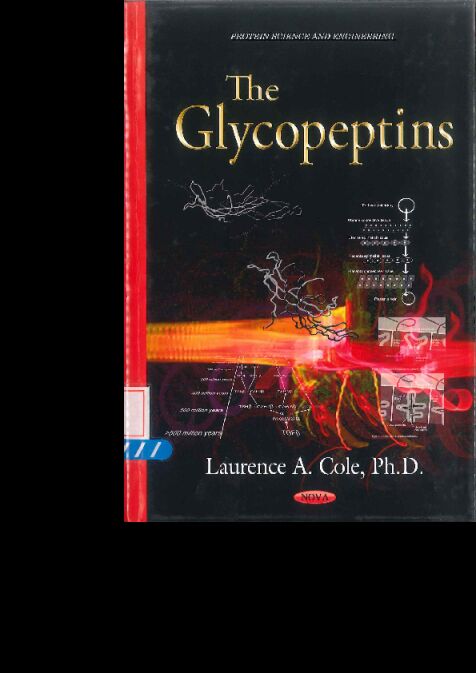
书名:The glycopeptins
ISBN\ISSN:9781633218338,1633218333
出版时间:2015
出版社:Nova Science,
前言
The concept of Glycopeptins all started off as part of a bug hunt. It started off with the observation of that 70 recent obstetrics and gynecology and reproductive biology books, all only cite hCG as just a promoter of corpus luteal progesterone, a 1920s finding, and ignore the hundreds of more recent findings. Confirmed and double confirmed science shows that hCG is a molecule with at least 12 important functions in pregnancy. That hCG is not one molecule but a group of five independent substances. These are hCG, hyperglycosylated hCG, sulfated hCG, hyperglycosylated hCG free p-subunit and fetal hCG. Each being structurally slightly different, and each having separate biological functions. If a single principal function had to be attributed to the hCG group of molecules, it was surely constructing and running placental hemochorial placentation, the process whereby a mother feeds a fetus. And this process has nothing to do with the female gonad or ovary.
How 70 major obstetrics and gynecology books and reproductive books all claimed that hCG's sole job was promoting ovarian corpus luteal progesterone production was misinformation, it was a sin. The hCG group of molecules has many critical functions in the placenta, fetus, uterus, gonads and in human cancer cells. Here these 70 books were, wrongly teaching medical students, medical residents, and graduate students, very out of date garbage. What compounded this garbage was the name human chorionic gonadotropin. Chorionic Gonadotropin meaning placenta gonad hormone or placenta gonad promoter. Clearly, gonad stimulation, or promotion of ovarian progesterone production was not the principal function of this hormone.
Research now shows, confirms and proves the principal function of hCG is hemochorial placentation [1,2]. Firstly, as discussed in Chapter 2 of this book, hCG β-subunit first evolved from LH β-subunit (they both share a common α-subunit) in lower simian primates [3,4]. Up until that time, all prior primates used inefficient epitheliochorial placentation to feed their fetuses. Because of the inefficiencies associated with epitheliochorial placentation fetal feeding all had small brains. With the evolution of CG in lower simian primates came about hemochorial placentation [3,4]. Two independent variants of CG evolved together, the hormone CG as produced by fused placental syncytiotrophoblast cells, and the autocrine hyperglycosylated hCG, as produced by placental cytotrophoblast cells or the root cells. No other placental promoters evolved at that time. CG and hyperglycosylated CG were both essential for, and together created and maintained hemochorial placentation [5].
Hyperglycosylated hCG promotes placental implantation, trophoblast growth and formation of villous trophoblast tissue [1,6-7]. hCG promotes the fusing and differentiation of villous trophoblast tissue [1,8]. hCG also promotes the growth of uterine spiral arteries, to connect up with the growing villous trophoblast tissue [9-11]. In addition, hCG promotes the formation of the umbilical circulation to connect the villous trophoblast tissue with the fetus. All told, hyperglycosylated hCG and hCG create hemochorial placentation and maintain it during pregnancy.
First the name problems start with human chorionic gonadotropin, then it extends to gonadotropins or gonad hormones or gonad nourishers as a group of reproductive molecules. This group comprises luteinizing hormone (LH), follicle stimulating hormone (FSH) and hCG. This group name must be corrected because hCG is surely not primarily a gonad stimulator as suggested by this name. During the last 14 years it has been demonstrated that there are five independent molecules that contain the hCG α- and β-subunit peptides, and not just one. These are hCG the hormone made by syncytiotrophoblast cells [12], hyperglycosylated hCG, the autocrine, made by cytotrophoblast cells [6,9,12,13], hyperglycosylated hCG free β-subunit, the autocrine, made by most human cancers [14,15], sulfated hCG, a hormone, made by pituitary gonadotrope cells [16,17], and fetal hCG, the hormone, made by fetal liver and kidney [18,19]. This not only damns the validity the name gonadotropins, but also condemns the correctness of calling this large group of molecules (LH, FSH. hCG, hyperglycosylated hCG, hyperglycosylated hCG free β-subunit, fetal hCG, thyroid stimulating hormone (TSH)) the glycoprotein hormones. They are a clear mixture of hormones and autocrines.
No choice was seen but to give this group of genetically related molecules sharing a common α-subunit a new and more appropriate name. The name glycopeptins was contrived, to cover all 8 inter-related molecules. Glycopeptins means "glycosylated peptides" and nothing else, no hormone or autocrine is implied, no gonad or other sites. Here we start this re-naming process by calling this group the glycopeptins. The name glycotropins was considered, but tropin means hormone or nourisher (Mirriam Webster's Dictionary). Maybe, slowly in the future, hCG can be renamed human chorionic glycopeptin, losing that gonadotropin error. This book focuses for the first time on all 8 interrelated molecules, on their evolution together, their structures, their detection, their biological functions, and their receptors.
查看更多
目录
Preface vii
Introduction xi
Chapter 1 The Glycopeptins, an Important Group of Molecules 1
Chapter 2 The Evolution of Glycopeptins 7
Chapter 3 Follicle Stimulating Hormone (FSH) Overview 23
Chapter 4 Thyroid Stimulating Hormone (TSH) Overview 35
Chapter 5 Luteinizing Hormone (LH) Overview 43
Chapter 6 Human Chorionic Gonadotropin (hCG) 51
Chapter 7 Hyperglycosylated hCG 61
Chapter 8 Sulfated hCG Overview 69
Chapter 9 Hyperglycosylated Free P-Subunit Overview 73
Chapter 10 Fetal hCG Overview 79
Chapter 11 GnRH, TRF Feedback Cycle Overview 83
Chapter 12 The USA hCG Reference Service 87
Chapter 13 hCG Assay 97
Chapter 14 Proportion Hyperglycosylated hCG, a New Pregnancy Test 117
Chapter 15 hCG and Hyperglycosylated hCG a New Test for Gestational Age 131
Chapter 16 Hyperglycosylated hCG as a Marker of Gestational Trophoblastic Disease 137
Chapter 17 Cancer 161
Chapter 18 Illicit and Troublesome Applications for hCG 171
Chapter 19 Choricarcinoma and Hyperglycosylated hCG 179
Chapter 20 FSH, FSH Receptor and Cancer 187
Chapter 21 Familial hCG Syndrome 191
Chapter 22 Quiescent Gestational Trophoblastic Disease 195
Chapter 23 hCG, Hyperglycosylated hCG Three-dimensional Structure? 205
Chapter 24 Glycopeptins, the Future 211
Author Contact Information 213
Index 215
查看PDF
查看更多
馆藏单位
中国医科院医学信息研究所