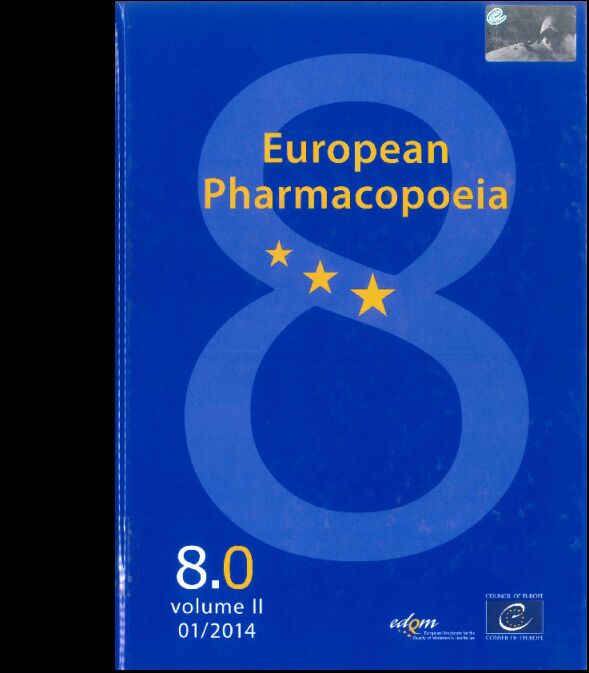
书名:European pharmacopoeia. v. 2
出版时间:2013
出版社:Council Of Europe :,European Directorate for the Quality of Medicines and Healthcare,
前言
The European Pharmacopoeia was inaugurated in 1964 through the Convention on the Elaboration of a European Pharmacopoeia under the auspices of the Council of Europe. The 8~th Edition will be published just before the 50~lh Anniversary of the European Pharmacopoeia. The work of the European Pharmacopoeia has gone through a remarkable development since the first difficult years to its current strong position. The 3-year cycle of publication with thrice-yearly supplements has proven to be an efficient way to publish and update the results of the work of the European Pharmacopoeia Commission and its Expert Groups and Working Parties almost in real-time.
The monographs of the Pharmacopoeia, both specific and general, together with other texts made mandatory by virtue of reference to them in monographs, are applicable throughout the 37 member states, and the European Union, which is also a signatory party to the European Pharmacopoeia Convention. This means that in addition to applicability in all its member states, the European Pharmacopoeia has a special role in regulatory processes within the European Union. In addition to the 38 signatories of the European Pharmacopoeia Convention, there are also a large number of observers, comprising the World Health Organization and 23 countries, of which 16 are non-European. The quality standards developed through the European Pharmacopoeia therefore have an impact on the quality of medicinal products and substances far beyond the European region. Since the entry into force of the 7~th edition, Ukraine has become a new member of the European Pharmacopoeia Convention (in 2013), while the Republic of Guinea and Singapore have become new observers (in 2012).
The 8 founder countries of the Convention realised in 1964 that manufacturing and quality control standards for medicinal products on the European Market had to be harmonised for reasons of public health and to facilitate free movement of these products. Since then, the pharmaceutical.world has become globalised and international harmonisation among the 3 major pharmacopoeias (European Pharmacopoeia, Japanese Pharmacopoeia and United States Pharmacopeia) became a logical development. Harmonisation activities among these 3 pharmacopoeias started in 1989 when the Pharmacopoeial Discussion Group (PDG) was set up. The PDG has been working on monographs on widely-used excipients and 62 are included in its work programme. Soon after the PDG began work, it was recognised that the absence of harmonised general methods represented a significant obstacle. A wide range of general methods (35) have since been added to the work programme, including those from the work of the International Conference on Harmonisation (ICH) and, in particular, its guideline on setting specifications (Q6A). To date, 28 of the 35 general methods and 43 of 62 excipient monographs have been harmonised. Detailed information on the work programme of the PDG is published regularly in Pharmeuropa and in General Chapter 5.8. Pharmacopoeial harmonisation.
However, it is evident that harmonisation between the 3 ICH regions is not enough in todays world, where a high percentage of Active Pharmaceutical Ingredients (APIs) come from outside Europe, Japan and the USA. In early 2012, the WHO took the initiative and convened the pharmacopoeias of the world for their first international meeting in Geneva. The discussions at this level clearly identified the need to strengthen collaboration among pharmacopoeias worldwide. Based on the experience and challenges with existing harmonisation initiatives such as PDG that focus on retrospective harmonisation, it was decided to take a different approach. World pharmacopoeias will now work on harmonising their policies and approaches towards monograph development by drafting what have been termed as a working title "Good Pharmacopoeial Practices". Convergence in policies, e.g. with regard to control of impurities by applying ICH Q3 principles, will facilitate future collaboration and harmonisation.
The implementation date for the 8th Edition is 1" January 2014 and this edition will, over the next 3 years, be augmented with 8 supplements containing the texts adopted at the sessions of the European Pharmacopoeia Commission. As ever, it is published in the 2 official languages of the Council of Europe, i.e. English and French, both as a printed version and electronically (online and on a USB key). It is noteworthy that certain member states undertake national or regional translations; which they incorporate into their own national pharmacopoeias.
The work programme of the European Pharmacopoeia is decided by the European Pharmacopoeia Commission, the governing body of the Pharmacopoeia. Elaboration and approval of monographs and other texts proceed through an efficient and transparent process, which is based on scientific co-operation between the members of the various Groups of Experts and Working Parties set up by the European Pharmacopoeia Commission. These experts give their time, expertise and experience to produce public standards of the highest quality - standards that are continually revised in line with scientific developments. The members of these groups come from regulatory authorities, official medicines control laboratories, pharmaceutical and chemical manufacturers, universities and research institutions. All monographs are experimentally verified and submitted for public consultation by online publication in Pharmeuropa, the forum of the European Pharmacopoeia, before adoption and publication. The growing number of monographs and the need to keep them updated represents an increased workload and an increased need for experts with access to experimental facilities. The working procedures for the elaboration of monographs are: Procedure 1: traditional elaboration by Groups of Experts and Working Parties. - Procedure 2: adaptation of national monographs. (This procedure is no longer used since the work has been completed.) - Procedure 3: elaboration of monographs on chemical substances produced only by one manufacturer and typically close to patent expiry. The manufacturer and national pharmacopoeia authority in the country where the substance is produced elaborate preliminary drafts and check the requirements experimentally. This results in a draft that is then reviewed by a Group of Experts or Working Party and processed in the usual way by public enquiry. (This procedure has been integrated into Procedure 4.) - Procedure 4 (P4): a modified version of Procedure 3 for substances still under patent, which was introduced by the European Pharmacopoeia Commission in 2002. The P4 procedure involves collaboration between the manufacturer of the substance and a Working Party solely composed of representatives of authorities and the EDQM, Together they prepare a draft monograph with experimental verification by the EDQM laboratory and/or by national pharmacopoeia authorities or Official Medicines Control Laboratories before publication for public enquiry. - Procedure 5: applies to monographs on raw materials and stocks for homoeopathic preparations authorised for use in the member states. The work is co-ordinated by the EDQM and overseen by the HOM Working Party. This procedure was introduced by the European Pharmacopoeia Commission in 2011.
Work under the P4 procedure has successfully continued during the elaboration of the 7th Edition. Already 59 P4 monographs for chemical substances have been adopted by the European Pharmacopoeia Commission. Under the P4 procedure for chemical substances, a pilot project on bilateral prospective harmonisation of active substance monographs with the USP was initiated and so far has resulted in the adoption of 4 harmonised monographs. As the P4 procedure for chemical substances has been such a success, the European Pharmacopoeia Commission decided in 2009 to initiate a similar process for biological substances. The so-called P4-BIO procedure takes account of the increasing number and importance of biologically-derived active substances and biosimilars on the European market. Two monographs elaborated by the P4-BIO procedure have already been adopted by the European Pharmacopoeia Commission.
The work on controlling impurities, a particular strength of the European Pharmacopoeia, has continued. Monographs are evaluated and approved by the Competent Authorities of member states, and the impurity profiles covered by these monographs reflect the existing, approved routes of synthesis. A revision mechanism is in place for newly-approved products (e.g. new sources, new routes). The analytical methods in monographs are robust and validated and are based on collaborative laboratory testing.. The monographs reflect regulatory practice by applying ICH guideline Q3A R to the pharmacopoeial substances. The guideline of the European Medicines Agency (EMA) concerning the control of genotoxic impurities, which came into force in 2007, has also been taken into account and has resulted in a revision of the general monograph on Substances for Pharmaceutical use (2034) and adoption of 3 general methods for genotoxic impurities.
The European Pharmacopoeia Commission is also continuing its efforts to reduce the number of animals needed to perform tests (implementation of the 3Rs principle, i.e. replacing, refining and reducing the use of animals in tests). It has aligned pharmacopoeial texts with VICH Guidelines 41 (test for reversion to virulence) and 44 (developmental safety tests), which came into force in 2008 and 2009, respectively, and with Directive 2010/63/EU of the European Parliament and of the Council of 22 September 2010 on the protection of animals used for scientific purposes. Furthermore, to ensure consistency with European regulations the European Pharmacopoeia Commission has harmonised all the veterinary vaccine monographs, including monographs on vaccines intended for species that were outside the scope of the VICH Guidelines. As a consequence, the safety tests and the tests for increased virulence performed during development of the vaccines have been harmonised, which will greatly reduce the number of animals used for testing.
The European Pharmacopoeia Commission continuously revises general texts and monographs, re-evaluates the relevance of animal tests mentioned in European Pharmacopoeia texts and, if deemed appropriate, includes alternative methods. The general monograph on Vaccines for veterinary use (0062) was revised to delete the TABST (target animal batch safety test), except in 'particular circumstances' to cover the need to perform, on an ad hoc basis, further . testing and safety tests in particular. In the interest of the 3Rs, the European Pharmacopoeia Commission also adopted the deletion of the TABST from the European Pharmacopoeia for all veterinary vaccines. Currently, at the European Pharmacopoeia level, animals are no longer used in the testing of medicinal products derived from human blood and plasma. In many cases, in vivo testing has been replaced by in vitro methods for human and veterinary vaccines. For the remaining in vivo assays, different strategies are being used to promote reduction and refinement of animal use, e.g. serology assays or single dilution assays for diphtheria, tetanus, acellular pertussis and rabies (veterinary/human) vaccines.
A number of important European Pharmacopoeia activities have been initiated over the last few years, such as the establishment of a PAT (Process Analytical Technology) Working Party based on a request from the EMA. PAT tools make it possible to use additional information collected throughout the production process, e.g. use of NIR (near-infrared spectrophotometry) to determine tablet content. Chapter 2.240 Near Infrared Spectrophotometry was revised to introduce PAT-related concepts such as in-line and on-line measurements. This was done in close consultation with the EMA's CVMP/CHMP Quality Working Party so that it would be aligned with the on-going revision of the EMA's Note for guidance on NIR. The revised chapter was adopted by the European Pharmacopoeia Commission at its November session in 2012 and it will be complemented by the revised EMA Guideline on the use of near infrared spectroscopy by the pharmaceutical industry and the data requirements for new submissions and variations, which is expected to be finalised in 2013. The General Notices will be updated to take account of real-time release testing, which will be done once the EMA Guideline has been adopted. The alternative, optional Chapter 2.9A7. Demonstration of Uniformity of Dosage Units (UDU) using large sample sizes that could be used to replace conventional UDU testing has also been adopted. The PAT Working Party is now reflecting on the need for new general chapters.
A Heavy Metals Working Party has been created to implement the EMA's Guideline on metal catalysts and metal reagent residues and the future ICH Q3D guideline. The terms of reference for this working party are to draft a general chapter to implement the guideline, to assess the capability of the current Chapter 2.4.8. Heavy metals to appropriately limit the priority metals mentioned in the guideline and to consider the introduction of instrumental screening methods, whilst also allowing other means of ensuring compliance where possible and justified. Since the ICH guideline has not yet been published, it was decided to introduce a new General Chapter 5.20. Metal catalyst or metal reagent residues and a new General Method 2.4.20. Determination of metal catalyst or metal reagent residues. General Chapter 5.20 reproduces the EMA's guideline on the specification limits for residues of metal catalysts or metal reagents. It is applicable to all excipients and APIs, except those for veterinary use only, but not to starting materials or herbals. General Method 2.4.20 describes the general approach for the determination of metal catalyst or metal reagent residues in substances for pharmaceutical use. As the chemical composition of the substances and the specification limits for the metal(s) of interest vary considerably, it is not possible to describe all suitable sample preparation and measurement methods. Therefore, any method that fulfils the requirements described in this chapter may be used. Both General Chapter 5.20 and General Method 2.4.20 have been published in European Pharmacopoeia supplement 7.7. A cross-reference is to be introduced into the general monograph on Substances for Pharmaceutical Use (2034) to make General Chapter 5.20 legally-binding.
As a follow-up to the Workshop on the future of monographs in the field of biologicals organised by the EDQM in February 2011, 2 new working parties have been created: (1) the Raw Materials for the Production of Cellular and Gene Transfer Products Working Party, which will elaborate texts on raw materials such as antibodies, basal media (for cell culture), serum/serum replacements, growth factors and cytokines, and (2) the Host Cell Proteins Working Party, which will draft recommendations with regard to the development, validation and use of in-house or commercial kits or test methods for the detection and quantification of host cell-derived proteins. In addition, the scope of the P4-BIO pilot project has been extended in order to elaborate monographs on one monoclonal antibody, one hormone/enzyme and one pegylated protein. The P4-BIO working party has also been asked to elaborate one finished product monograph. The terms of reference of the Cell Therapy Products Working Party have also been extended in order to elaborate a general text dealing with microbiological control of organs and tissues for human use, including preservation and other related media. As a consequence, the Working Party has been renamed the Cell Therapy Products, Tissues and Organs Working Party.
The production section of the monograph Human normal immunoglobulin for intravenous administration (0918) has been revised due to experience with an immunoglobulin preparation that caused an increased rate of thromboembolic complications. In light of concerns for public health associated with these thromboembolic events, the revised monograph will be implemented by the accelerated procedure.
Due to the increasing number of fraudulent activities and cases of adulteration, the European Pharmacopoeia Commission has decided to add a new section, Potential Adulteration, under § 1.4. MONOGRAPHS of the General Notices. The need to include this section in individual monographs will be decided by the European Pharmacopoeia Commission on a case-by-case basis. The objective of this section is to make relevant information available to users of the European Pharmacopoeia to ensure the proper quality of medicinal products (i.e. active substances, exciplents, intermediate products, bulk products and finished products). The new version of the General Notices was adopted by the European Pharmacopoeia Commission at its 140~th session. In relation to this issue of adulteration, the Council of Europe and its EDQM have adopted a multi-level, anti-counterfeiting strategy comprising various aspects, such as legislative actions against pharmaceutical crime by means of the Medicrime Convention. This Convention is the first international treaty against counterfeit medical products and similar crimes involving threats to public health. In addition, the EDQM is developing eTACT; an anti-counterfeiting traceability service for medicines. The aim of eTACT is to ensure the traceability of individual packs of medicines using mass serialisation. It would allow each pack of medicine to be traced and verified by the different stakeholders in the legal supply chain. Patients would also be allowed to verify the authenticity of their medication. Governance of the eTACT system would be the responsibility of the EDQM as a public, inter-governmental organisation that is able to ensure the confidentiality of the data handled by the system.
Two additional new working parties have also recently been created: (1) the Finished Product Monographs Working Party, which aims to draft 2 monographs (i.e. on one single-source and one multi-source product) allocated to it by the European Pharmacopoeia Commission, while addressing issues related to the elaboration of chemically-defined finished products monographs in order to assess whether such monographs should be elaborated by the European Pharmacopoeia in the future, and (2) the Second Identification Test Working Party, which will prepare a guidance document that defines the criteria for inclusion of a second series of identification tests (solely intended to be carried out in pharmacies) in individual monographs and will review the methods and instrumentation available in pharmacies for this purpose.
Compliance with the EU REACH (Registration, Evaluation, Authorisation and Restriction of Chemical substances) Regulation has posed a significant challenge and this issue has been high on the agenda of the current Presidium. The European Pharmacopoeia Commission approved the request for the revision of 215 monographs as a consequence of the EU REACH Regulation and already several revised monographs have been adopted.
During the past 3 years I have had the honour, pleasure and privilege to serve the European Pharmacopoeia Commission as its 16th elected Chair. The task has been challenging, but also interesting and rewarding because of the insights it has given me into the various aspects of the development work that goes into the drafting of the quality standards provided by the texts of the Pharmacopoeia. It has also given me an insight into the many other important areas in which the EDQM is involved.
I wish to thank all the members of the European Pharmacopoeia Commission for the trust and support that allowed us to make substantial progress on a host of topics.
I would like to thank the Director of the EDQM, Dr Susanne Keitel, my two vice-chairs, Prof. Jos Hoogmartens and Ms An Le, the Secretary to the European Pharmacopoeia Commission, Ms Cathie Vielle, and her two deputies, Dr Emmanuelle Charton and Dr Michael Wierer, for their excellent work and support during my time as Chair. Together as the Presidium, we have managed to work very effectively to guide the work of the European Pharmacopoeia Commission.
Finally, I would like to thank all the chairs and experts involved in the development of the European Pharmacopoeia and the staff of the EDQM for their support. Their availability, good advice and high quality input have made our work possible and a pleasure to do. Dr Marianne Ek, Chair of the European Pharmacopoeia Commission February 2013
查看更多
目录
VOLUME 1
I. PREFACE i
II. INTRODUCTION v
III. EUROPEAN PHARMACOPOEIA COMMISSION ix
IV. CONTENTS OF THE EIGHTH EDITION xxi
GENERAL CHAPTERS
1. General notices 1
2. Methods of analysis 11
2.1. Apparatus 13
2.2. Physical and physicochemical methods 19
2.3. Identification 117
2.4. Limit tests 125
2.5. Assays 153
2.6. Biological tests 173
2.7. Biological assays 227
2.8. Methods in pharmacognosy 269
2.9. Pharmaceutical technical procedures 283
3. Materials for containers and containers 371
3.1. Materials used for the manufacture of containers 373
3.2. Containers 407
4. Reagents 423
5. General texts 551
GENERAL MONOGRAPHS 739
MONOGRAPHS ON DOSAGE FORMS 777
MONOGRAPHS ON VACCINES FOR HUMAN USE 815
MONOGRAPHS ON VACCINES FOR VETERINARY USE 919
MONOGRAPHS ON IMMUNOSERA FOR HUMAN USE 1027
MONOGRAPHS ON IMMUNOSERA FOR VETERINARY USE 1035
MONOGRAPHS ON RADIOPHARMACEUTICAL PREPARATIONS AND STARTING MATERIALS FOR RADIOPHARMACEUTICAL PREPARATIONS 1043
MONOGRAPHS ON SUTURES FOR HUMAN USE 1115
MONOGRAPHS ON SUTURES FOR VETERINARY USE 1125
MONOGRAPHS ON HERBAL DRUGS AND HERBAL DRUG PREPARATIONS 1133
MONOGRAPHS ON HOMOEOPATHIC PREPARATIONS 1427
VOLUME 2
MONOGRAPHS 1457
INDEX 3603
查看PDF
查看更多
馆藏单位
中国医科院医学信息研究所