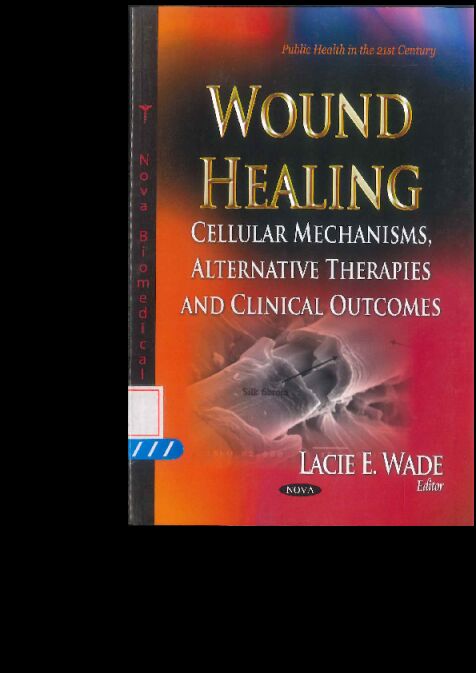
书名:Wound healing
出版时间:2015
出版社:Nova Science Publishers,
前言
Non-steroidal anti-inflammatory drugs (NSAIDs) are among the most widely used drugs for the suppression of inflammation and pain. However, the therapeutic uses of NSAIDs are frequently limited by the significant negative side effects including ulceration, most notably in the gastrointestinal tract. This book examines alternative therapies to healing wounds such as negative pressure wound therapy; and the use of honey and biomaterials. The book also examines the implications of involvement of NSAID-activated gene 1 in ulceration and wound healing.A\Chapter 1 - Introduction: The use of negative pressure wound therapy (NPWT) has expanded over time to include treatment of a variety of patients, including pediatric patients. Studies on the use of NPWT in children is lacking as compared to that of adults. As the scope of use for NPWT in patients continues to expand, periodic reviews of the guidelines and reports of both the successes and complications of its use are necessary to optimize management in wound therapy. This is a review of the current practices and guidelines of using NPWT in pediatric patients.A\Methods: Publications regarding the use of NPWT were reviewed and only those reports pertaining to pediatric cases were included in this review. Data were reviewed for various age groups, materials utilized, location of wounds and duration of therapy.A\Results: Several reports on the use of NPWT in the management of pediatric wounds have been published following an initial set of guidelines that were established in 2009, encompassing 137 patients and various findings. Closure of pediatric scalp and facial wounds with NPWT has been reported for the first time in the literature. Institutions have demonstrated complete closure of extremity wounds by using NPWT as a bridge to skin grafts and in patients with necrotizing fasciitis. Considerable research on NPWT in adults has guided its use in children; however the delicate protoplasm of the pediatric patient requires additional considerations on areas of use and duration. Recent published complications include erosion into the aorta subsequent to NPWT for a chest wound and wound infection when used in conjunction with synthetic skin grafting agents. An additional area of concern is the degree of culpability assigned to NPWT in the development of enterocutaneous fistulas and bowel perforations in the patient with an open abdomen.A\Conclusion: NPWT has offered successful options for the management of wounds in children. As this method of wound closure continues to develop, guidelines will need to be refined. Further studies are needed to assess the use of NPWT in pediatric patients with an open abdomen.A\Chapter 2 - Purpose. Utilization of self complementary adeno-associated virus(scAAV) to rapidly deliver and express a ribozyme (Rz) targeting profibrotic connective tissue growth factor (CTGF) in the cornea to reduce corneal haze formation.A\Methods: Secreted alkaline phosphatase (sAP) reporter system was used to analyze the ability of scAAV-CTGF-Active-Rz to target CTGF mRNA in cell culture. Next, scAAV expressing green fluorescent protein (scAAV-GFP) was delivered to rabbit corneas following excimer laser ablation to assess expression patterns in corneas. Corneas were removed at 0, 1, 2, 3,4, 7, 30 and 180 days after scAAV-GFP application and expression was visualized by direct fluorescence. Finally, rat corneas were ablated and treated with scAAV- CTGF-Active-Rz or PBS control. Re-epitheliaization rate was determined and haze was graded by masked observers for 14 days. After 14 days, corneas were removed and CTGF protein was quantified using ELISA.A\Results: In HEK293 cells, CTGF mRNA was reduced by 9, 24, and 30% at 24, 48 and 72 hours, respectively, after transfection compared to control plasmid. In ablated rabbit corneas, GFP fluorescence was first detected at 24 hours and peaked at day 7 which was 22 times greater than day 0. The transgene was expressed in all cell types of the cornea; epithelium, keratocytes and endothelium. Finally, scAAV-CTGF-Active-Rz resulted in significant knockdown of 19% of CTGF protein on day 14. No significant difference in re-epitheliaization rates or haze grading scores of treated and untreated rat corneas were found.A\Conclusion: The scAAV vectors had the ability to rapidly transduce and express the scAAV-CTGF-Active-Rz and create a small, but significant reduction of the CTGF protein. This level of reduction did not significantly reduce the clinically observed haze in a rat model of corneal injury.A\Chapter 3 - From ancient Egyptians and Greeks, honey has been widely used for wound care, and a broad spectrum of wounds is treated all over the world with natural honeys.A\However, more prospective randomized studies are needed to confirm the safety and efficacy of medical honey in wound care. "Nonetheless, the current evidence confirming the antibacterial properties and additional beneficial effects of medical honey on wound healing should encourage wound care professionals.A\Chapter 4 - Numerous wound dressings are currently used in the treatment of bums, chronic ulcers, decubitus ulcers, etc. An ideal wound dressing should prevent dehydration of the wound and retain a favorable moist environment at the wound interface, allow gas permeability, and act as a barrier against dust and microorganisms. Moreover, the wound dressing should be non-adherent and easily removed without trauma. Currently, wound dressings in the market are normally made from synthetic materials that have low biocompatibility with human cells. Recently, many research groups have focused on the production of novel wound dressings by synthesizing or modifying biocompatible materials that possess nontoxicity, good biocompatibility, and non-allergenic and antimicrobial properties, while also promoting the healing cascade. Current strategies also note the acceleration of the wound repair by systematically designed dressing materials. In this direction, most efforts have experimentally and clinically utilized biologically derived materials such as collagen, chitin, chitosan, and silk protein, which are capable of accelerating the healing processes at molecular, cellular, and systemic levels. This chapter reviews the natural biomaterials used for wound-healing applications in terms of their forms, advantages, disadvantages and the clinical outcomes of these preparations.A\Chapter 5 - NSAID has been known as a key family of anti-inflammatory drugs which ameliorate eicosanoid-mediated inflammation in diverse diseases by inhibiting a rate-limiting enzyme cyclooxygenase. Recent investigations suggest NSAIDs can work in cyclooxygenase-independent manners and potent roles of NSAID over the conventional actions have been explained by NSAID- activated gene 1 (NAG-1). NAG-1 is involved in different pathogenesis in human mucosal diseases and cancers as well as animal models. Despite lack of direct evidences of the involvement of NAG-1 in ulcerative diseases, cardiovascular and oncological studies on NAG-1 function implicate that NAG-1 can play crucial roles in drag-induced injuries and homeostatic healing. Here, roles of NAG-1 will be associated with epithelial injuries and healing process particularly in terms of epithelial disruption, inflammatory injury, barrier restitution, and fibrosis. This review will also focus on prospective Ying-Yang of NAG-1-meidated responses to the mucosal insults lessoned from related inflammatory, cardiovascular, or oncological investigations.
查看更多
目录
Preface vii
Chapter 1 The Use of Negative Pressure Wound Therapy in Children: An Updated Review 1
Chapter 2 Reduction of Profibrotic Connective Tissue Growth Factor in Wounded Rat Corneas Using aRibozyme Expressed in Self Complimentary Adeno-Associated Virus 25
Chapter 3 Honey and Wound Healing: New Solutions from an Old Remedy 43
Chapter 4 Biomaterials for Wound-Healing Applications 49
Chapter 5 Implications of Involvement of NSAID-Activated Gene 1 in Ulceration and Wound Healing: Lessons from the Oncological and Cardiovascular Studies 105
Index 123
查看PDF
查看更多
馆藏单位
中国医科院医学信息研究所