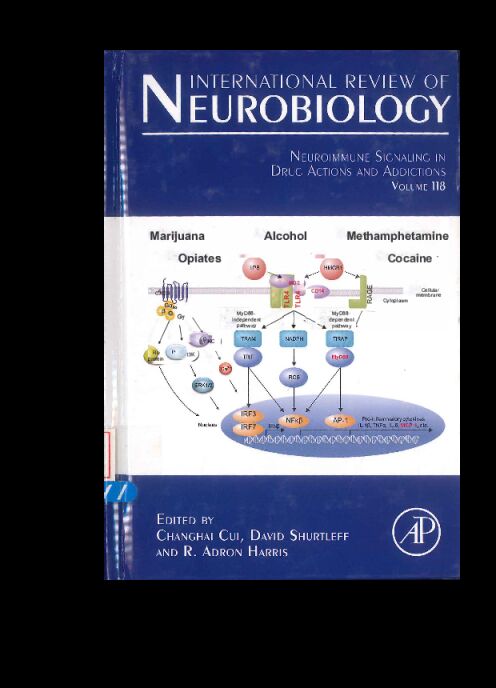
书名:Neuroimmune signaling in drug actions and addictions
责任者:Changhai Cui | David Shurtleff | R. Adron Harris. | Harris, R. Adron
ISBN\ISSN:9780128012840,0128012846
出版时间:2014
出版社:Academic Press,
摘要
This well-established international series examines major areas of basic and clinical research within neuroscience, as well as emerging and promising subfields. This volume concentrates on Neuroimmune Signaling in Drug Actions and Addictions.
•This book looks at neuroimmune signaling in drug actions and addictions in the light of the newest scholarly discoveries and insights
查看更多
目录
Contributors xi
1. Neuroimmune Mechanisms of Alcohol and Drug Addiction 1
1. Introduction 2
2. Neuroimmune Modulation of Synaptic Function 2
3. Neuroinflammation 3
4. Neuroimmune Molecules in Neurodevelopment 4
5. Neuroimmune Factors Modulate Neuroendocrine Function 5
6. Neuroimmune Mechanism and Addiction 5
7. Summary 7
References 8
2. Neuroimmune Pathways in Alcohol Consumption: Evidence from Behavioral and Genetic Studies in Rodents and Humans 13
1. Introduction 14
2. Immune Regulation of Ethanol Consumption and Ethanol Regulation of Immune Signaling 14
3. Peroxisome Proliferator-Activated Receptors: Anti-Inflammatory Action and Role in Alcohol Consumption 21
4. Alcohol Consumption and Neuroimmune-Related Gene Expression 24
5. Alcohol Consumption and Neuroimmune-Related microRNAs 26
6. Conclusions 30
Acknowledgments 31
References 31
3. Fetal Alcohol Spectrum Disorders and Neuroimmune Changes 41
1. Overview of Fetal Alcohol Spectrum Disorders 42
2. Normal Brain Development 43
3. FASD Neuropathology in Humans 43
4. FASD Neuropathology in Animal Models 45
5. Behavioral Consequences in Humans with FASD 47
6. Behavioral Consequences in Rodent Models of FASD 48
7. Overview: Alcohol Effects on Immune Response in the Brain 49
8. Microglia 50
9. Potential Long-Term Consequences of Immune Activation in the Developing CNS 54
10. Link Between Ethanol and Immune Responses 55
11. Therapies 61
12. Conclusions 64
Acknowledgments 66
References 66
4. Role of Microglia in Regulation of Ethanol Neurotoxic Action 81
1. Introduction 82
2. Microglial Cell Functions in the CNS 83
3. Microglial Mechanisms of the Neurotoxic Effects of Alcohol 86
4. Protective Effects of Microglia 89
5. Alcohol-Related Disease, Neurotoxicity, and Microglia 90
6. Summary and Future Directions 98
Acknowledgments 99
References 99
5. Functions of the Chemokine Receptor CXCR4 in the Central Nervous System and Its Regulation by u-Opioid Receptors 105
1. Chemokine System Overview 106
2. Opioid System Overview 108
3. CXCR4 and Opioids Actions in the Central Nervous System 109
4. CXCR4 Interactions with Opioids 114
5. Chemokine and Opioid Interactions in HAND 119
6. Gaps and Future Challenges 120
Acknowledgments 121
References 122
6. Discovery of a Novel Site of Opioid Action at the Innate Immune Pattern-Recognition Receptor TLR4 and its Role in Addiction 129
1. Introduction 130
2. Innate Immunity of the Central Nervous System 131
3. Parallels Between an Immune Response to Lipopolysaccharide and Opioids 132
4. How Immune Mediators Can Alter Behavior 136
5. Stress and the Central Nervous System's Innate Immune System 138
6. Addiction 139
7. Integrating Addiction Neuroscicnce with Immunology 143
8. Conclusion 156
References 157
7. Neuroimmune Basis of Methamphetamine Toxicity 165
1. Introduction 166
2. Part 1 166
3. Part 2 178
4. Part 3 179
5. Part 4 184
Acknowledgments 188
References 188
8. Marijuana Use and Brain Immune Mechanisms 199
1. Introduction 200
2. Phytocannabinoids and Immune Function 202
3. Immune Modulation and Cannabinoid Receptors 203
4. Marijuana and Neuroimmunity 205
5. Effect of Phytocannabinoids on Microglia 207
6. Marijuana and Astrocytes 211
7. Marijuana and Infectious Agents That Target the CNS 215
8. Summary and Future Prospectives 220
References 223
9. Interactions of HIV and Drugs of Abuse: The Importance of Glia, Neural Progenitors, and Host Genetic Factors 231
1. Introduction 232
2. Microglia 239
3. Astroglia 251
4. Genetic Factors That Modulate HIV-1 Infectivity and Neuropathogenesis 259
5. Neural/Glial Progenitors and HIV 267
6. Conclusions 275
Acknowledgments 276
References 276
10. Neuroimmune Basis of Alcoholic Brain Damage 315
1. Introduction 316
2. Alcohol-Induced Neurodegeneration and Alcoholism 317
3. Loss of Neurogenesis Could Contribute to Alcoholic Neurodegeneration 321
4. Monocytes and Innate Immune Genes 322
5. Alcohol, Neuroimmune Signaling, and Neurodegeneration 327
6. Ethanol Induction of HMGB1-TLR Signaling in Brain 336
7. NADPH Oxidase and Neurodegeneration 337
8. Neuroimmune Signaling, Hyperexcitability, and Neuronal Death 338
9. Adolescence: A Major Period of Risk for Alcohol Dependence 340
10. Neuroimmune Gene Expression in Postmortem Human Alcoholic Brain 347
11. Summary 348
References 348
11. Converging Actions of Alcohol on Liver and Brain Immune Signaling 359
1. Introduction 360
2. Pathology and Cellular Characteristics of Neuroinflammation After Alcohol Exposure 361
3. Molecular Mechanisms of Alcohol-Induced Neuroinflammation 364
4. Crosstalk Between Organs 370
5. Therapeutic Targets 372
6. Conclusions 373
References 374
12. Opportunities for the Development of Neuroimmune Therapies in Addiction 381
1. Introduction 382
2. Neuroimmune Treatments 386
References 394
13. NeuroHIV and Use of Addictive Substances 403
1. Brain-Immune Interactions: Induction of Neuroinflammation by Systemic Infections 404
2. Medical Uses and Adverse Effects of Addictive Substances 408
3. HIV-1 Infection and HIV-Associated Neuropathology 412
4. HIV-1 Infection, NeuroHIV, and the Use of Addictive Substances 414
5. Conclusion 423
References 425
Index 441
Contents of Recent Volumes 457
查看PDF
查看更多
馆藏单位
中国医科院医学信息研究所