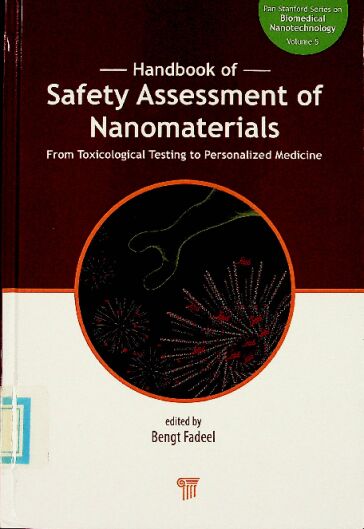
书名:Handbook of safety assessment of nanomaterials
出版时间:2015
出版社:Pan Stanford Publishing,
前言
Nanomedicine is the application of nanobiotechnology in clinical medicine. For instance, nanotechnologies offer exciting opportunities for targeted drug delivery, thus bringing to life the concept of a "magic bullet" imagined by Paul Ehrlich a century ago. Nevertheless, understanding whether such nanoscale objects per se exert adverse effects in a biological system is of critical importance. Nanotoxicology, in turn, may be viewed as the study of the undesirable interference between man-made nanomaterials and cellular nanostructures. In this handbook, included in the Pan Stanford series on biomedical nanotechnology, we attempt to bridge nanotoxicology and nanomedicine by applying the lessons learned from toxicological testing of manufactured nanomaterials to the field of nanomedicine.
The present volume opens with a historical perspective on the development of nanomedicine, written by Dr. Duncan, a pioneer in the field. Dr. Duncan points out that a balanced discussion ofthe risks and benefits of nanotechnologies is critically important to ensure the speedy and safe realization of the promises of nanomedicine. indeed, this is the underlying motivation for the entire volume. Then, Dr. Stone et al. discuss the basic principles of nanotoxicology, highlighting progress in the field in recent years; the authors also provide recommendations for the proper design of experiments to assess nanomaterial hazards. Drs. Warheit and Sayes touch on the need for robust physicochemical characterization of nanomaterials for toxicity testing, and Drs. Fadeel and Parak discuss the biological “identity" of nanomaterials.
These introductory chapters are followed by a series of chapters on different approaches to nanomaterial testing: Dr. Hartung makes the case for in vitro tests, while Drs. Lai and Warheit argue that short-term in vivo (animal) studies are needed. Dr. Burello adds an important perspective on mathematical modeling of quantitative structure—activity relationships (QSARs) for nanomaterials, pointing toward a predictive nanotoxicology. Finally, Dr Riviere explores the use of physiologically based nanomaterial pharmacokinetic models, or PBNPKS, with which to describe nanomaterial distribution and fate in vivo.
Our immune system serves as the first line of defense against foreign intrusion, and it is therefore ofkey importance to understand nanomaterial interactions with the immune system, not only from a toxicological point ofview, but also ifwe are to develop nanocarriers for targeted drug delivery or imaging. Three chapters are devoted to immune interactions of nanomaterials: Dr. Moghimi et al. discuss factors that regulate nanomaterial interactions with the innate and adaptive immune system, leading to immunostimulation or immunosuppression, while Dr. Szebeni focuses on complement activation by nanomaterials. Dr. Kostarelos et al. discuss a special case of immune cell interactions with nanomaterials, namely, the biodegradation of carbon-based nanomaterials by enzymes expressed in innate immune cells (or in plants).
Next, we find a comprehensive chapter devoted to genotoxicity and carcinogenicity of nanomaterials (Dr. Woei Ng et al.) and a series of chapters on nanomaterial toxicity affecting specific organs, including chapters on pulmonary and cardiovascular toxicity (Drs. Cassee and Castranova), neurotoxicity (Drs. Sharma and Sharma), dermatotoxicity (Drs. Monteiro-Riviere and Riviere), and reproductive toxicity (Dr. Saunders et al.), The chapter on pulmonary and cardiovascular toxicity focuses on two commercially relevant nanomaterials, titanium dioxide and carbon nanotubes, and on the inhalation route of exposure of particular relevance for occupational exposure. These findings may nevertheless inform us on mechanisms ofrelevance for nanomedicine. Similarly, the chapter on neurotoxicity takes as its starting point accidental exposure to various types of nanoparticles, but the authors add an exciting perspective on the use of nanomaterials for neuroprotection. The chapter on dermal effects of nanoparticles offers an overview of current literature, and the discussion is of equal relevance from pharmacological (i.e., topical application of drugs, vaccines) and toxicological points ofview. The potential for nanoparticles to exert adverse effects on the male or female reproductive systems remains poorly understood, but this is of particular importance not only to understand occupational/environmental exposure but also in the context of the deliberate administration of nanoscale objects in patients.
Finally, a perspective on ethical aspects of nanomedicine is provided. Here, Dr. Kuiken argues that there may be nothing new in terms of the ethical questions that arise as we are confronted with nanomedicines; the question is how much risk we are willing to accept with a new technology before it is proven effective and "safe.” This will become even more evident as personalized medicine is enabled, in part, through nanomedicine. This, then, brings us full circle: medicine, and nanomedicine, is essentially the art and science ofrisk-benefit assessment. Nanotoxicology provides the tools to deal with the "risk."
The book closes with a personal view of the future of (nano) medicine, written by Dr. Hunziker, president ofthe European Society of Nanomedicine (ESNAM).
l wish to thank the authors who contributed their valuable time and expertise toward the preparation of this book. 1 hope that the present volume will serve as a useful manual for students and scientists interested in the safe development of nanomedicines.
查看更多
目录
Preface xvii
1. Nanomedicine(s) and Their Regulation Ruth Duncan 1
1.1 Background: A Decade of"Nano"; Where Are We Now? 1
1.1.1 Convergence of Scientific Disciplines:Old ldeas, New Terminology? 3
1.1.2 Medicine Regulation: Evolution,Not Revolution 4
1.1.3 Lessons Learned from >40 Years of Clinical Experience with Nanomedicines 10
1.1.3.1 Products in routine use and clinical development 10
1.1.3.2 Clinically documented adverse reactions 15
1.2 Emerging Nanotechnologies: New Medicines or Nice Publications? 19
1.3 Nanomedicine Safety-Nanotoxicology: Lessons to Share 21
1.3.1 General Areas of Overlapping Interest 21
1.3.2 Manufacture, Characterization, and Formulation: Quality by Design 22
1.3.3 Definition of the Toxicity of a Nanomaterial/Nanomedicine 24
1.3.4 Pharmacokinetics, Body Distribution, and Passage across Biological Barriers 26
1.3.5 Endocytosis and Intracellular Trafficking 28
1.4 Conclusions 30
1.5 Update 2012-2014 30
2. Nanotoxicology: Focus on Nanomedicine Helinorjohnston, Ali Kermanizadeh, and Vicki Stone 43
2.1 introduction 43
2.2 Nanomedicine and Nanotoxicology 44
2.3 Nanomaterial Physicochemical Properties 47
2.3.1 Size 47
2.3.2 Morphology 49
2.3.3 Composition 50
2.3.4 Surface Properties 51
2.3.5 Dissolution 53
2.3.6 Agglomeration 54
2.3.7 Charge 55
2.4 Assessment of Nanomaterial Toxicity 55
2.5 Nanomaterial Physicochemical Characterization 58
2.6 Relationship between Exposure Route and Toxicity 59
2.7 Conclusions 61
3. Nanomaterial Characterization for Toxicity Testing David B. Warheit and Christie M. Sayes 69
3.1 introduction 69
3.1.1 Nanoparticles Used in the Industry 70
3.1.2 Nanoparticles Used in Medicine 70
3.2 Characterization of Particles Used in the industry 71
3.2.1 Titanium Dioxide 71
3.2.2 Amorphous Silica 73
3.2.2.1 Production ofsynthetic amorphous silica 74
3.2.2.2 Silica production based on the "wet process" 75
3.2.2.3 Production of pyrogenic silica 7S
3.2.2.4 Surface-modified synthetic amorphous silica 76
3.2.3 Health Risks 76
3.3 Characterization of Particles Used in Medicine 76
3.3.1 Polymeric Materials 77
3.3.2 Metal Colloids 78
3.4 Nanomaterial Characterization Methods 79
3.4.1 Transmission Electron Microscopy and Energy-Dispersive Spectroscopy 79
3.4.2 Emission and Absorption Spectroscopy 80
3.4.3 Dynamic Light Scattering and Zeta Potential 81
3.5 Conclusions 82
4. The Synthetic and Biological Identities of Nanomaterials Bengt Fadeel and Wolfgang J. Parak 85
4.1 Safety Assessment of Nanomaterials 85
4.2 Understanding Nanomaterial Properties 86
4.2.1 Linking Physicochemical Properties to Toxicity 87
4.2.2 Predictive Modeling of Nanomaterial Toxicity 91
4.3 The Nanomaterial Biocorona 93
4.3.1 The Biocorona Concept 93
4.3.2 Pathophysiological Impact of the Biocorona 95
4.3.3 Implications of the Biocorona for Targeting 97
4.3.4 Nanoparticles vs. Molecules: The Case of Dendrimers 99
4.4 Future Perspectives 100
5. Nanotoxicology: The Case for in vitro Tests Thomas Hartung 113
5.1 Introduction 113
5.2 Alternative or Advanced Methods in Toxicology 115
5.2.1 Do We Need Special Methods for Nanotoxicology? 116
5.2.2 Do We Need a Traditional or an Alternative Toxicology for NPs? 118
5.2.3 Special Problems for in vitro Nanotoxicology 124
5.2.3.1 Agglomeration 124
5.2.3.2 Stability 124
5.2.3.3 Dosimetry 124
5.2.3.4 In vitro biokinetics 125
5.2.3.5 Cell contact ofNPs 125
5.2.3.6 Artifacts 126
5.3 Existing Alternative Methods and Their Suitability for Nanotoxicology 126
5.3.1 Alternative Methods Based on Nanotechnologies 134
5.3.2 Opportunities for in silico Alternatives in Nanotoxicology 134
5.3.3 Are There Reasons to Make Current Alternative Tests Less Applicable
to NPs? 135
5.4 Towards a Human Toxome Project 135
5.5 Conclusions 138
6. Nanotoxicology: The Case for in vivo Studies David X Lai and David B. Warheit 153
6.1 introduction 153
6.2 In vivo Study Design and Methods 155
6.2.1 Inhalation Exposure 155
6.2.2 Other Inhalation Exposure Methods 158
6.2.2.1 lntratracheal instillation 158
6.2.2.2 Pharyngeal/laryngeal aspiration 160
6.2.2.3 lntratracheal inhalation 162
6.2.3 Dermal Exposure 163
6.2.4 Oral Exposure 164
6.2.5 Parenteral Exposure 164
6.3 In vivo Toxicity Studies of Nanomaterials 164
6.3.1 Nanotubes and Nanofibers 165
6.3.1.1 Pulmonary exposure 166
6.3.1.2 Effects on the cardiovascular system 175
6.3.1.3 Effects on the immune system 177
6.3.1.4 Oral exposure 178
6.3.2 Fullerenes 179
6.3.2.1 Pulmonary effects 179
6.3.2.2 Dermal and eye effects 181
6.3.2.3 Systemic effects 181
6.3.2.4 Reproductive and developmental effects 183
6.3.2.5 Genotoxic effects 183
6.3.3 Titanium Dioxide 184
6.3.3.1 Pulmonary effects 184
6.3.3.2 Carcinogenic effects 190
6.3.3.3 Dermal exposure 192
6.3.3.4 Oral exposure 193
6.3.3.5 Systemic effects 193
6.3.4 Nanosilver 195
6.3.4.1 Pulmonary exposure 196
6.3.4.2 Oral exposure 197
6.3.4.3 Dermal exposure 197
6.3.4.4 Genotoxicity 198
6.4 Conclusions 198
7. Predictive Nanotoxicology: ln silico Approaches Enrico Burello 221
7.1 Introduction 221
7.2 QSAR and QSPR Models for Nanomaterials 225
7.3 Density Functional Theory Approaches 230
7.4 Molecular Mechanics Approaches 234
7.5 Mathematical Modeling of Nanomaterial Bioactivity 236
7.6 Multiscale Modelling and Other Coarse—Graining Methods 237
7.7 Conclusions 239
8. Physiologically Based Nanomaterial Pharmacokinetic Models jim E. Riviere 243
8.1 Introduction 243
8.2 What Is Unique about Nanoparticle ADME? 244
8.2.1 Absorption 244
8.2.2 Distribution 245
8.2.3 Elimination 248
8.3 Pharmacokinetic Models 249
8.3.1 PBPK Models 250
8.3.2 In vitro Perfused Tissue Biodistribution Studies 251
8.4 Whole-Animal in vivo PBNPK Models 253
8.5 Need for Biological Characterization lndices 255
8.5.1 Biological Surface Adsorption Index 258
8.6 Conclusions 260
9. Immunotoxicity of Nanomaterials Barbara Lettiero, Z. Shadi Farhangrazi, and S. Moein Moghimi 265
9.1 Introduction 265
9.2 Nanoparticle Clearance by Immune Cells 268
9.3 Nanoparticle Modulation oflmmune Responses 271
.3.1 lmmunostimulation 272
9.3.1.1 Antigenicity 272
9.3.1.2 Adjuvanticity 273
9.3.1.3 Allergenicity and hypersensitivity 274
9.3.2 lmmunosuppression 275
9.4 Conclusions 277
10. Complement Activation by Nanomaterials janos Szebeni 289
10.1 introduction 289
10.2 Complement Activation: An Overview 290
10.3 Complement Activation by Nanoparticles 290
10.4 MechanismsofComplementActivation by Nanoparticles 297
10.4.1 Complement Activation by Liposomes 297
10.4.2 Complement Activation by Micelles 299
10.4.3 Complement Activation by PEG 302
10.4.4 Complement Activation on Polymer-Coated Nanoparticles 303
10.4.5 Complement Activation by Dendrimers, Other Polymers 303
10.4.6 Complement Activation by Carbon Nanotubes 304
10.5 Consequences of Complement Activation 305
10.5.1 The CARPA Concept 305
10.5.2 The Effector Arm ofCARPA 306
11. Biodegradation of Carbon-Based Nanomaterials Cyrill Bussy, Alberto Bianca, Maurizio Prato, and Kostas Kostarelos 319
11.1 Introduction 319
11.2 Carbon-Based Nanomaterials 320
11.3 Oxidation of Carbon-Based Nanomaterials 322
11.4 Ex vivo Biodegradation of CNMs 323
11.4.1 Ex vivo Biodegradation of SWCNTs 326
11.4.2 Ex vivo Biodegradation of MWCNTs 327
11.4.3 Ex vivo Biodegradation of Graphene 329
11.5 Biodegradation of CNMs in Living Systems 330
11.6 Biological Effects of Biodegraded CNMs 333
11.7 Conclusions 334
12. Genotoxicity and Carcinogenicity of Nanomaterials Kee Woei Ng, Yun Zhao, Mustafa Hussain Kathwala, Sijing Xiong, Chit Fang Check, and Say Chyejoachim Loo 341
12.1 DNA Damage and Repair: An Introduction 341
12.1.1 Endogenous DNA Damage 342
12.1.2 Exogenous DNA Damage 344
12.1.3 Repair ofVarious DNA Lesions by Specific DNA Repair Pathways 346
12.2 Evidence for Nanomaterial-lnduced Genotoxicity and Carcinogenicity 350
12.2.1 Carbon-Based Nanomaterials 350
12.2.2 Metal-Based Nanomaterials 354
12.2.3 Polymeric Nanoparticles 358
12.3 Mechanisms of Nanomaterial-lnduced Genotoxicity and Carcinogenicity 359
12.3.1 Physicochemical Properties 359
12.3.2 Primary and Secondary Genotoxicity 362
12.3.2.1 Primary genotoxicity 362
12.3.2.2 Secondary genotoxicity 365
12.3.3 Oxidative Stress 366
12.3.4 Carcinogenicity 366
12.4 Methods to Study Nanomaterial-lnduced Genotoxicity and Carcinogenicity 367
12.4.1 Ames Bacterial Mutagenesis 367
12.4.2 in vitro and in vivo Genotoxicity Assays 368
12.4.3 DNA Breakage Assays 368
12.5 Conclusions 371
13. Pulmonary and Cardiovascular Toxicity of Nanomaterials Flemming R. Cassee and Vincent Castranova 389
13.1 introduction 389
13.2 Respiratory and Cardiovascular Effects of Pulmonary Exposure to Nanoparticles/Nanotubes 390
13.2.1 Respiratory Response to Pulmonary Exposure to TiOz Nanoparticles 391
13.2.2 Respiratory Response to Pulmonary Exposure to Carbon Nanotubes 392
13.2.3 Cardiovascular Response to Pulmonary Exposure to TiOz
Nanoparticles 394
13.2.4 Cardiovascular Response to Pulmonary Exposure to Carbon
Nanotubes 395
13.3 Mechanisms by Which Pulmonary Exposure to Nanoparticles/Nanotubes Affects Cardiovascular Function 396
13.4 Conclusions 399
14. Neurotoxicity of Nanomaterials Hari Shanker Sharma and Aruna Sharma 407
14.1 Human Exposure to Nanoparticles 407
14.1.1 NP Exposure Affects Disease Pathology 408
14.1.2 Military Personnel and NPs Exposure 408
14.2 Neurotoxicity of Nanoparticles 409
14.3 Concepts ofNeurotoxicity 410
14.3.1 Blood-Brain Barrier Disruption: A Gateway to Neurotoxicity 410
14.3.2 BBB Breakdown to Proteins: Cause of Brain Edema Formation 413
14.3.3 Brain Pathology and Neurotoxicity 414
14.3.4 Pharmacology ofNeuroprotection and Neurotoxicity 414
14.4 Neurotoxicity of Engineered Metal Nanoparticles 415
14.4.1 Engineered NPs lnduce BBB Breakdown 416
14.4.1.1 Regional distribution of Evans blue albumin in the CNS 418
14.4.1.2 Immunostainingofserum albumin in the CNS 419
14.4.1.3 Ultrastructural changes in the BBB permeability 419
14.4.2 Nanoparticles induce Brain Edema Formation 419
14.4.2.1 NPS alter brain electrolyte content 419
14.4.3 Nanoparticles Induce Brain Pathology 420
14.4.2.1 Neuronal changes 420
14.4.2.2 Glial changes 420
14.4.2.3 Myelin changes 421
14.4.2.4 Ultrastructural changes 421
14.4.2.5 Heat shock protein expression 421
14.5 Neurotoxicity of Other Nanoparticles 422
14.5.1 Neurotoxicity ofSiOz Nanoparticles 422
14.5.2 Neurotoxicity of Mn nanoparticles 423
14.5.3 Neurotoxicity of TiOZ Nanoparticles 424
14.5.4 Neurotoxicity ofSingle—Walled Carbon Nanotubes 424
14.6 Nanoparticle Exacerbation of Brain Pathology 425
14.6.1 NPs Exacerbate Diabetes-Induced Brain Pathology 425
14.6.2 NPs Exacerbate Hyperthermia-lnduced Neurotoxicity 426
14.6.3 NP Intoxication Alters Pharmacology of Neuroprotection 427
14.7 Nanowired Drug Delivery for Neuroprotection 428
14.7.1 Nanowired Cerebrolysin Enhances Neuroprotection 428
14.7.2 Nanowired H-290/51 Enhances Neuroprotection 429
14.7.3 Nanowired Acure Pharma Compounds Enhance Neuroprotection 429
14.8 Conclusions 430
15. Dermatotoxicity of Nanomaterials Nancy A. Monteiro-Riviere and/im E. Riviere 439
15.1 Introduction 439
15.2 Why Is Skin Different to Other Routes of Exposure? 440
15.3 What Are the Biological Targets in the Skin? 441
15.4 Assessment of Nanomaterial Dermatotoxicity 444
15.4.1 in vitro Studies 445
15.4.2 In vitro Skin Penetration Models 448
15.4.3 In vivo Toxicity Studies 452
15.4.4 Nanomaterial Properties in Relation to Skin Penetration and Dermatotoxicity 453
15.4.5 Quantum Dot Penetration and Toxicity Studies 454
15.5 Conclusions 456
16. Reproductive Toxicity of Nanomaterials Margaret Saunders, Gary Hutchison, and Sara Correia Carreira 461
16.1 introduction 461
16.2 The Reproductive System 462
16.2.1 The Female Reproductive System 462
16.2.2 The Male Reproductive System 466
16.3 Reproductive Health 467
16.4 Reproductive Toxicity Testing 468
16.5 In vitro and in vivo Models for Reproductive Nanotoxicology 469
16.5.1 in vitro Models to Study Effects on the Female Reproductive Tract 469
16.5.2 in vivo Models to Study Impacts on the Female Reproductive Tract 472
16.5.3 In vitro Models to Study Effects on the Male Reproductive System 475
16.5.4 In vivo Models to Study Effects on the Male Reproductive System 477
16.6 Parameters That Influence Nanoparticle Effects on the Reproductive System 480
16.6.1 The Female Reproductive System 480
16.6.2 The Male Reproductive System 481
16.7 Conclusions 481
17. Nanomedicine: Ethical Considerations Todd Kuiken 499
17.1 Introduction 499
17.1.1 The Technology Landscape 500
17.1.2 Informatics/Databases 501
17.1.3 Proteomics 502
17.2 Personalized Medicine 503
17.2.1 Size/Scope of the Nanomedicine Market 505
17.3 Ethical and Policy Implications Surrounding Nanomedicine 506
17.3.1 Clinical Trials 507
17.3.2 Is Hype Driving the Ethics Debate? 508
17.3.3 Public Acceptance 509
17.4 Ethical Dilemma: Is Anything New or Unique to Nanomedicine? 510
17.5 Conclusions 516
Epilogue: Toward Personalized and Curative Medicine Patrick Hunziker 523
E.1 Today's Medicine 523
E.1.1 The Achievements of Modern Medicine 523
E.1.2 The Limitations of Modern Medicine: Efficacy, Toxicity, and Cost Triangle 526
E.2 The Future ofMedicine 526
E.3 Strategic Issues for Nanomedicine 528
E.4 The Ultimate Goal 532
Index 533
查看更多
馆藏单位
中科院文献情报中心