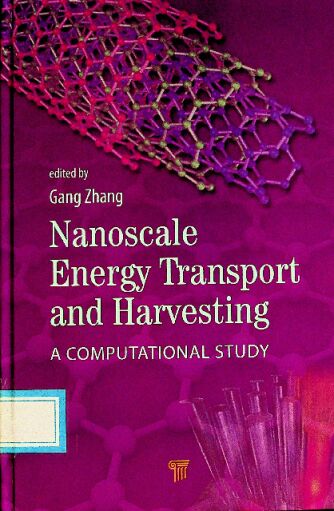
书名:Nanoscale energy transport and harvesting
ISBN\ISSN:9789814463027,9814463027
前言
Energy shortage is a great bottleneck in the supply of energy resources to an economy. The world's power demands are expected to rise 60% by 2030. Actually, people can solve the global energy crisis by enhancing the utilization efficiency of energy. Today, approximately 80% of the world's power is generated by heat engines that use fossil fuel combustion as a heat source, which is believed to be responsible for a large fraction of carbon dioxide emissions worldwide. The heat engines used in most thermal power station typically operate at 30-40% efficiency. This means that roughly 10 TW of heat energy is lost to the environment. Thermoelectric modules can potentially convert part of the wasted heat directly into electricity, reduce the usage of fossil fuels, and lower carbon emission. Moreover, microelectronic processors generate huge amount of heat in very small areas. Traditionally, this heat is considered as waste and may lead to the partial or total loss of the functionality of the processors. Power dissipation issues have recently become one of the greatest challenges for integrated electronic devices, and it is becoming a bottleneck for further development of smaller and faster devices. Currently, for every kilowatt-hour of energy consumed by a computer in a data centre, another kWh is needed for cooling. With the application of advanced thermal management and energy conversion technologies, world's household PCs can be converted to billions of mini power plants and up to 50% electric energy can be saved.
In addition, thermal management is also significantly important for solar energy harvesting. The solar cell technology can harvest and convert part of the solar energy into electricity by using the photovoltaic effect. The efficiency of conventional solar cells is usually quite low and limited because about 50% of the solar energy is lost to heat through radiation to the environment. Based on the thermoelectric effect, it is in principle possible to further convert the heat energy to electricity, which provides a new channel for solar energy harvest and may significantly improve the efficiency of solar cells.
Thermoelectric energy conversion efficiency depends on the figure of merit ZT, which is proportional to the Seebeck coefficient, electrical conductivity, and absolute temperature, but inversely proportional to thermal conductivity. Recently the basic possibility of significantly increasing ZT through creation of new classes of thermoelectric materials with low-dimensional nanoscale struc-tures has been demonstrated. The term nanoscale systems denote structures composed of a limited, small number of atoms. The interest of the scientific community in nanoscale systems has been boosted by the recent advent of micromanipulation techniques and nanotechnologies. Nanoscale materials have generated broad excitement both for fundamental science and for their potential applications in technology because of their scientific richness and promise in technological applications involving various devices. Efficient conversion between different forms of energy: thermal, electric, and optical, is a key enabler in many areas of science and engineering. Development of nanofabrication, characterization, measurement, and atomistic simulation tools can contribute to inspire new and better technologies for potential applications in energy saving and conversion.
The application of nano energy devices has highlighted the need for greater quantitative understanding of materials at the nanoscale. Understanding the physics of such systems by computational study is particularly important because their small size makes it is challenging to apply standard experimental measurement methods. Over the past decades, advances in computer science have spurred advances in fundamental theoretical techniques, mathematical modelling, and numerical simulation, giving rise to a revolution with extraordinary impact on nanoscience and nanoengineering.
The aim of this book is to provide an introduction for both theorists and experimentalists to the current computational technology and then looking at the applications of nanostructures in renewable energy and the associated research topics. The book should also be useful for graduate-level students who want to explore this new field of research. The book addresses the current and commonly used computational technologies and their applications in study of nanoscale energy transport and conversion. With content relevant to both academic and commercial viewpoints, the book will interest researchers and postgraduates as well as consultants in the renewable energy industry.
The chapters have been written by internationally recognized ex-perts in computational physics and provide in-depth introductions to the directions of their research. This approach of a multiauthor reference book appeared to be particularly useful in view of the vast amount of literature available on different forms of computational study. While there exists excellent reviews highlighting single facets of computational methods for renewable energy, we feel that the field lacks a reference that brings together the most important contributions to this topic in a comprehensive manner. This book is an attempt to fill the gap. Along these lines, our intention was to embed research on new energy materials into a wider context of computational researches. We thus hope that this book may serve as a catalyst both to fuse existing computational approaches and to inspire new computational tools in the rapidly growing area of new energy material research.
Accordingly, the book is organized into five chapters: The first chapter features a pedagogical introduction to molecular dynamics simulations. For large systems, molecular dynamics is a useful tool for investigating atomic motion. The trajectories of molecules and atoms can be determined empirically using a force field. The applications of molecular dynamics simulation have covered a wide range of research topics, such as liquids, defects, fatigue, surface, clusters, and biomolecules. Therefore, molecular dynamics simulation has become indispensable in today's research of physical and material science. The second chapter outlines the ballistic phonon transport theory in a quasi-one-dimensional (quasi-1D) system whose length is much shorter than the coherence length, which is bound by phonon scattering events. Landauer approach for describing the coherent phonon transport in a quasi-1D system was introduced. Thermal conductance of carbon nanotubes is reviewed.
Chapter three systematically discusses the non-equilibrium Green's function (NEG F) method and tries to offer a complete theory for the investigation of quantum thermal transport. The NEGF method is widely and successfully used for the study of electronic transport. Here the method is generalized for thermal transport. After this theoretical opening, thermal conductance of graphene, a two-dimensional crystal consisting of a single atomic layer of carbon, has been reviewed. The following chapter summarizes groundbreaking work on ballistic phonons thermal transport at low temperature in low-dimensional quantum structures. Within the Landauer transport theory, the authors present a general formula to calculate the ballistic thermal conductance associated with phonon in the linear response limit. Then, a comparative analysis for the ballistic thermal transport is made between two-dimensional and three-dimensional models. The fifth chapter provides a systematic review on the effect of surface passivation on the phonon thermal conductivity and thermoelectric property of nanowires, based on introduction of molecular dynamics simulations. The underlying physical mechanism and analysis method are also presented. These results are helpful to understand the enhancement of thermoelectric performance of nanomaterials and to the design of renewable energy devices.
I finally remark that the various points of view expressed in the single chapters may not always be in full agreement with each other. As editor, I do not necessarily aim to achieve a complete consensus among all authors, as differences in opinions are typical for avery active field of research such as the one presented in this book.
I am most grateful to Stanford Chong, director of Pan Stanford
查看更多
目录
Preface ix
1 Molecular Dynamics Simulations for Computing Thermal Conductivity of Nanomaterials
Jie Chen, Gang Zhang, and Boowen Li 1
1.1 Introduction to Molecular Dynamics 1
1.2 Force Field Potential 4
1.2.1 Pair Potential 4
1.2.2 Many-Body Potential 6
1.2.3 Mixing Rule 8
1.3 Integration of the Equations of Motion 8
1.4 Temperature in Molecular Dynamics 10
1.4.1 Heat Bath 10
1.4.2 Quantum Correction 11
1.5 Non-equilibrium Molecular Dynamics 15
1.5.1 Background 15
1.5.2 Effects of Heat Bath 18
1.5.3 Some Applications 27
1.6 Equilibrium Molecular Dynamics 32
1.6.1 Green-Kubo Formula 32
1.6.2 Different Implementations 36
1.6.3 Determination of Cut-Off Time 41
1.6.4 Some Applications 44
2 Non-equilibrium Phonon Green's Function Simulation and Its Application to Carbon Nanotubes
Takahiro Yamamoto, Kenji Sasaoka, and Satoshi Watanabe 59
2.1 Introduction: Thermal Transport at Nanoscale 59
2.2 Theory of Nanoscale Phonon Transport 60
2.2.1 Landauer Theory of Phonon Transport 60
2.2.2 Ballistic Phonon Transport and Quantization of Thermal Conductance 63
2.2.3 Non-equilibrium Green's Function Method for Phonon Transport 65
2.3 Application of Landauer-NEG F Method to Carbon Nanotube 70
2.3.1 Phonons in Carbon Nanotube 70
2.3.2 Thermal Conductance Reduction by Defect Scattering 72
2.3.3 Isotope Effects on Thermal Transport in Carbon Nanotubes 76
2.3.3.1 Characteristic lengths: mean free path and localization length 76
2.3.3.2 Universal phonon-transmission fluctuation 79
2.3.3.3 Anderson localization of phonons 80
2.4 Concluding Remarks 81
3 Thermal Conduction of Graphene 91
Yong Xu and Wenhui Duan
3.1 Basic Concepts of Quantum Thermal Transport 91
3.1.1 Thermal-Transport Carriers 91
3.1.2 Fundamental Length Scales of Thermal Transport 92
3.1.2.1 The characteristic wavelength of phonon λ 92
3.1.2.2 The phonon mean free path / 92
3.1.3 Different Transport Regions 94
3.1.4 The Landauer Formalism 94
3.1.5 Quantized Thermal Conductance 96
3.2 The Non-equilibrium Green's Function Method 98
3.2.1 Hamiltonian of Thermal-Transport Systems 98
3.2.2 The NEGF Formalism 100
3.2.2.1 Six real-time Green's functions 101
3.2.2.2 The Dyson equation 103
3.2.2.3 Basic equations of NEG F 103
3.2.2.4 Workflow of NEGF 105
3.2.3 NEGF and Thermal-Transport Properties 106
3.2.3.1 Phonon DOS 107
3.2.3.2 Thermal current 108
3.2.4 Thermal Conductance and Phonon Transmission 109
3.2.5 The NEGF Method and the Landauer Formalism 110
3.2.6 First-Principles-Based NEGF 111
3.3 Thermal Conduction of Graphene: Experiment 112
3.4 Thermal Conduction of Graphene: Theory 115
3.4.1 Graphene Nanoribbons 116
3.4.2 Origin of High Thermal Conductivity in graphene 124
3.4.2.1 Ballistic thermal conductance of graphene 125
3.4.2.2 Long phonon mean free path in Graphene 129
3.4.3 Thermal Transport in Graphene-Based Devices 130
3.4.3.1 Contact geometry 134
3.4.3.2 Ribbon width 135
3.4.3.3 Edge shape 140
3.4.3.4 Connection angle 141
3.4.3.5 Graphene quantum dots 141
4 Ballistic Thermal Transport by Phonons at Low Temperatures in Low-Dimensional Quantum Structures 149
Zhong-Xiang Xie and Ke-Qiu Chen
4.1 Introduction 150
4.2 Formalism 153
4.2.1 Landauer Formula for the Thermal Conductance 153
4.2.2 Continuum Elastic Model 156
4.2.3 Scattering-Matrix Method 158
4.3 Properties of Low-Temperature Ballistic Thermal Transport by Phonons in Low-Dimensional Quantum Structures 170
4.3.1 Properties of Ballistic Thermal Transport in 2D Quantum Structures 170
4.3.2 Ballistic Thermal-Transport Properties in 2D Three-Terminal Quantum Structures 176
4.3.3 Properties of Ballistic Thermal Transport in 3D Quantum Structures 178
4.3.4 Ballistic Thermal Transport Contributed by the Coupled P-SV Waves in Low-Dimensional Quantum Structures 180
4.4 Summary 180
5 Surface Functionalization-Induced Thermal Conductivity Attenuation in Silicon Nanowires:A Molecular Dynamics Study 189
Hai-Peng Li and Rui-Q in Zhang
5.1 Introduction 190
5.2 Model and Method 193
5.2.1 Structural Model 193
5.2.2 Green-Kubo MD Method 194
5.3 Surface Hydrogenation Effect on the Thermal Conductivity of SiNWs 196
5.4 Surface Nitrogenation Effect on the Thermal Conductivity of SiNWs 198
5.5 Conclusions and Remarks 201
Index 207
查看更多
作者简介
Prof. Gang Zhang is senior scientist and group manager in the Institute of High Performance Computing, A*STAR, Singapore. Before joining the IHPC, he was a full professor at Peking University, China. He received his BS and PhD in phhysics from Tsinghua University in 1998 and!2002, respectively. He is a world-recognized expert in the electrical and thermal property simulation of nanomaterials. He developed several novel approaches for moleculao dynamic and quantum chemistry simulations. He has authored or co-authored more than 100 publications in peer-reviewed international journals and conferences and more than 10invited reviews and book chapters. His research has gained him international recognition and media highlight. He is the recipient of the Outstanding Ph. D. Thhesis Award in Tsinghua University (2002) , Singapore Millennium Foundation Fellowship (2002-2004), IME Excellence Award (2012 Autumn Meeting).
查看更多
馆藏单位
中科院文献情报中心