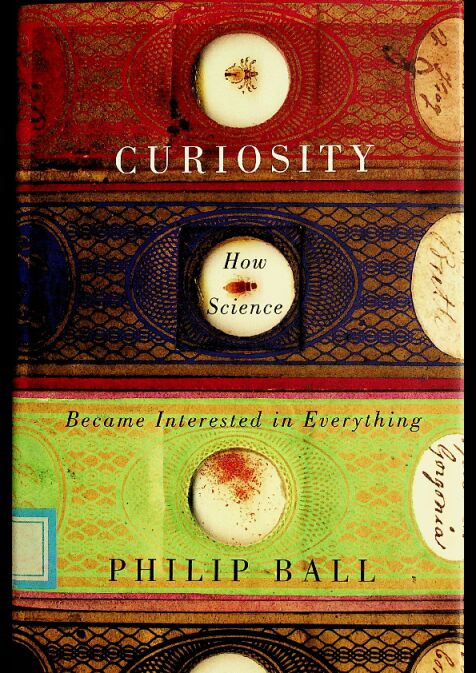
书名:Curiosity
ISBN\ISSN:9780226045795,022604579X
出版时间:2013
出版社:University of Chicago Press,
前言
While I was talking about this book with the literary scholar Mary Baine Campbell, we considered the idea that curiosity could become pathological. Isn't there something problematic about responding to an analysis of, let's say, domestic accounting during the Thirty Years War or the detailed manoeuvres of a gastric enzyme not with glazed eyes but with a breathless 'But that's so interesting!'? Recalibration of one's curiosity threshold is a necessary preparation for most PhD students, but in the wider world mightn't there be something ill- disciplined, even improper, about a voracious curiosity that permits nothing to be too trivial or obscure?
It was a sobering thought, I suspect for the both of us, as we acknowledged what seemed to me a guilty complicity. Was there after all something in the old accusation that it is weak-willed to succumb to the wiles of curiosity? But the problem of our times- and also its great good fortune- is that temptation is everywhere. Not only is it now acceptable to be curious- and this book is largely about how that came to be the case- but it is easier than ever, because of the knee-trembling quantity of information we have at our fingertips. We no longer have to seek out this stuff in dusty vaults and ancient libraries; it sits waiting for us at our desk, humming gently, perhaps even in scanned, gorgeously browning facsimile. More, we carry it everywhere in our bags and pockets. Yes, of course this is all just so much data, amorphous and indeed meaningless unless we have some notion of how to select and organize and filter. And yes, of course it is in some ways a mere side effect of, or accompaniment to, new opportunities for turning our back on curiosity altogether and immersing ourselves in the empty immediacy of a virtual now, of chatter and gossip and a numbing profusion of 'choice'.
But is all this, too, really so new? It has always been a complaint levelled at curiosity that it is the enemy of productivity, an unwelcome distraction from our daily duties. Meanwhile, the Enlightenment's mockers of curiosity were, as we'll see, often not utilitarian Gradgrinds but gossipy, solipsistic wits and libertines. And a surfeit of information has always given cause for grumbling. Alexander Pope felt that the printing press, 'a scourge for the sins of the learned', would lead to 'a deluge of Authors [that] covered the land'.
The relationship between access to information and curiosity about it has, I think, yet to be well explored. But it is clear that the first 'professors of curiosity' who flourished in the century of Pope's birth had to work tremendously hard to get their knowledge, and curiosity was, before profit or fame or reputation, their most significant motivation. This situation has been rightly celebrated, but rarely has it been examined or explained. Mary is one of the scholars who have begun that exploration, and as such, is one of those to whom I owe an immense debt for this book. All the more so because she kindly agreed to read the manuscript and offered insightful and important views on it. For similar acts of generosity I offered sincere thanks to Brian Ford, Michael Hunter, Neil Kenny and Catherine Wilson.
It has been my great pleasure to have published several books under the editorship of Will Sulkin at Bodley Head, who I (and many others) shall miss greatly after his retirement in 2012. Will's enthusiasm, erudition and passion about writing and ideas has been a vital source of encouragement. I am consoled to know that I will still enjoy the thoughtful and diligent editorial support of Jörg Hensgen, and of his colleagues Kay Peddle and Hannah Ross. David Milner has done another splendid job of copy-editing the text. And my good fortune to have Clare Alexander as my agent is one of those things that I always find a little astonishing. As ever, the greatest consolation, support and inspiration comes from my family, within which these days I can delight in watching curiosity bloom in its purest form.
查看更多
目录
Preface vii
1 Old Questions 1
2 The Academies of Secrets 23
3 The Theatre of Curiosity 49
4 The Hunt of Pan 85
5 Professors of Everything 113
6 More Things in Heaven and Earth 145
7 Cosmic Disharmonies 175
8 The First Men in the Moon 215
9 Nature Free and Bound 256
10 On the Head of a Pin 287
11 The Light of Nature 321
12 Chasing Elephants 353
13 Professional Virtuosi, or Curiosity Served Cold 389
Cast of Characters 411
Notes 419
Bibliography 445
Image Credits 455
Index 457
查看更多
作者简介
PHILIP BALL is a freelance writer who lives in London. He worked for over twenty years as an editor for Nature, writes regularly in the scientific and popular media, and has authored many books on the interactions of the sciences, the arts, and the wider culture, including Critical Mass, The Self-Made Tapestry: Putern Formation in Nature, Life's Matrix, Bright Earth, Universe of Stone, and The Music Instinct.
查看更多
馆藏单位
中科院文献情报中心