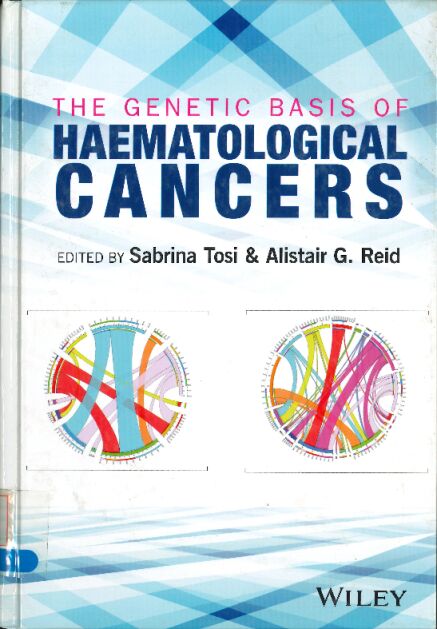
书名:The genetic basis of haematological cancers
责任者:Sabrina Tosi | Alistair Reid.
出版时间:2016
出版社:John Wiley & Sons Inc.,
分类号:医药、卫生
页数:xiv, 365 p. :
前言
The haematological malignancies are a complex group of neoplastic diseases, linked by their origin in bone marrow-derived cells. Since the discovery of the Philadelphia chromosome, in the 1960s, as the pathognomonic marker of chronic myeloid leukaemia, the field of haematological malignancy has provided several important paradigms for the direct contribution of causal genetic lesions to the initiation of human cancer.
The subsequent leap in our understanding of leukaemia and lym-phoma pathogenesis via a variety of molecular and cytogenetic abnormalities that disrupt normal cellular processes has challenged traditional approaches to disease classification and transformed both the diagnosis and management of patients. The characterization of tumour cells by genetic methods is now regarded as being as important as the traditional morphological approach to diagnosis. This trend is being accelerated by the introduction of monoclonal antibody therapy and by novel drugs designed to target specifically the molecular abnormalities responsible for the development of the tumour. Somatic genetic changes therefore increasingly define not just the diseases themselves, but the way in which an individual patient should best be treated and monitored.
With the following chapters, compiled by leading researchers in the field, we aim to provide a summary of current knowledge on the contribution of genetic and epigenetic lesions to the biology and management of haematological malignancies. A unifying factor of these biologically diverse diseases is the recent explosion of information on hitherto unrecognized molecular lesions arising from the application of novel next-generation sequencing technologies. In most diseases, these newly identified aberrations are already contributing to improved stratification and, in some cases, showing early promise as therapeutic targets. It is hoped that further functional analysis of recurrent lesions will permit the development of additional therapies targeted against critical oncogenic drivers. Although the majority of recurrent changes appear to have been identified, there remains scope for further refinement of this knowledge with studies of larger cohorts, the increasing use of whole genome sequencing, greater incorporation of rearrangement-based bioinformatic analysis and enhanced integration with epigenomic data. These areas, together with the investigation of the importance of sequential acquisition of mutations in the initiation of a malignant phenotype and the interaction of these lesions with the bone marrow microenvironment, are likely to keep researchers occupied for the foreseeable future. Nevertheless, as the following chapters beautifully illustrate, a comprehensive picture is emerging of the key genetic drivers of haematological malignancy, and these provide a rational basis for future research towards a complete understanding of, and effective treatment for, this complex group of diseases.
查看更多
目录
List of contributors xi
Preface xiii
1 The myelodysplastic syndromes 1
Introduction 1
Predisposing conditions 2
Familial platelet disorder with propensity to myeloid malignancy (FPD/AML) 2
Severe congenital neutropenia (SCN) 5
Poikiloderma with neutropenia 6
Familial MDS/AML 6
Shwachman-Diamond syndrome (SDS) 7
Dyskeratosis congenita (DKC) and telomere syndromes 8
Fanconi anaemia (FA) 11
Down syndrome 12
Cytogenetics 12
Loss of Y chromosome (-Y) and del(llq) 13
Del(20q) 15
idic(X)(ql3) 15
Del(17)(pl3)/i(17q) 15
Del(12p) 16
Trisomy 8 16
Rare trisomies: +6, +13, +14, +15, +16, +19, +21 16
Monosomy 7 and del(7q) 17
Rare monosomies 19
Unbalanced translocations involving 1q 19
t(17;18)(pl0;q10) 20
Rare or sporadic balanced translocations 20
Complex karyotypes 22
Chromosome 5q deletions 23
Somatic mutations 31
Oncogenes and tumour suppressor genes 31
Mutations of genes involved in epigenetic modulation 39
Mutations of genes involved in the spliceosome machinery 45
Rare gene mutations in myelodysplastic syndromes 48
Epigenetics 49
DNA methylation 50
Histone modifications 52
RNA 53
Conclusion 54
References 54
2 Molecular genetics of the myeloproliferative neoplasms 80
Introduction 80
Overview of the different types of mutation found in MPN patients 80
Acquired mutations in cytokine signalling pathways 82
Acquired mutations in pathways controlling transcriptional regulation 84
Acquired mutations associated with transformation to advanced-phase disease 87
Inherited predisposition to clonal MPNs 87
Inherited non-clonal disorders that phenocopy distinct MPNs 87
Polycythaemia vera (PV), essential thrombocythaemia (ET) and primary myelofibrosis (PMF) 88
Acquired mutations in cytokine signalling pathways (Table 2.3) 89
Acquired mutations in pathways controlling transcriptional regulation (Table 2.4) 95
Acquired mutations associated with progression to advanced and blastic-phase disease 101
Inherited predisposition to clonal MPNs 103
Inherited non-clonal disorders that phenocopy distinct MPNs 104
Principles and clinical utility of laboratory testing 107
Chronic eosinophilic leukaemia 109
Acquired mutations in cytokine signalling pathways 109
Acquired mutations in pathways controlling transcriptional regulation 113
Acquired mutations associated with progression to advanced and blastic-phase disease 113
Inherited predisposition to clonal MPNs 113
Inherited non-clonal disorders that phenocopy distinct MPNs 114
Principles and clinical utility of laboratory testing 114
Neoplastic mast cell disease 115
Acquired mutations in cytokine signalling pathways 116
Acquired mutations in pathways controlling transcriptional regulation 118
Acquired mutations associated with progression to advanced and blastic-phase disease 118
Inherited predisposition to clonal MPNs 119
Inherited non-clonal disorders that phenocopy distinct MPNs 119
Principles and clinical utility of laboratory testing 120
References 121
3 Acute myeloid leukaemia 133
Introduction 133
AML classification 134
Cytogenetic aberrations 135
Fusion genes arising from structural rearrangements 135
Monosomies 148
Complex and monosomal karyotypes 148
Trisomies 148
Double minute chromosomes 151
Normal karyotype - is it really normal? 151
Altered gene expression 152
EVI1 152
BAALC 153
MN1 153
ERG 154
SET 154
BRE 154
WT1 154
miRNA genes 154
Diagnosis and classification of AML 155
Current risk stratification of AML patients: European LeukemiaNet (ELN) guidelines 156
Therapeutic regimens in AML 158
Management of younger adults aged 18-60 years 159
Older AML patients (aged >60 years) 159
Novel agents 160
Monitoring response to therapy (MRD) 160
The genomics of AML 161
Clonal evolution of AML 161
Established recurrent mutations in AML 163
Novel recurrent mutations in AML 173
Emerging concepts and future directions 179
Age-related clonal haematopoiesis (ARCH) 179
Application of genomic technologies to the diagnosis of AML 179
Conclusion 181
Mini-glossary 183
References 184
4 Molecular genetics of paediatric acute myeloid leukaemia 203
Clinical introduction 203
Epidemiology of AML 203
Diagnostic approach 204
Treatment and outcome 205
Relevant molecular and genetic aberrations in paediatric AML 206
Type I/II aberrations and their non-random associations 206
Relevance of type II1I aberrations for outcome and stratification of paediatric AML treatment 209
Epigenetic modifiers and hydroxymethylation pathway mutations 212
Further strategies 213
Further genomic approaches to unravelling the biology of paediatric AML 213
Molecularly targeted therapy 214
Conclusion 215
References 215
5 Acute lymphoblastic leukaemia 223
Introduction 223
Chromosomal aberrations in BCP-ALL 224
High hyperdiploidy 227
t(12;21) (p 13;q22)/ETV6-R UNXI 232
t(l;19)(q23;p13)/TCF3-PBXl 233
t(17;19)(q22;pl3)/TCF3-HLF 234
Hypodiploidy 234
Ilq23/KMT2A (MLL) gene rearrangements 236
t(9;22) (q34;ql 1.1)/BCR-ABL1 237
Intrachromosomal amplification of chromosome 21 (iAMP21) 238
Complex karyotype 239
Submicroscopic genetic alterations in BCP-ALL 240
Alteration of transcription factors in BCP-ALL 241
CRLF2 rearrangements and Janus kinase mutations in ALL 242
BCR-ABL1 -like or Ph-like ALL 243
ERG-altered ALL 245
Genetic rearrangements in T-lineage ALL 245
TAL1/LM02 rearranged T-ALL 247
TLX1/TLX3 rearranged T-ALL 248
Early T-cell precursor ALL 249
Other T-ALL genetic subtypes: MLL rearranged and PICALM-MLLT10 250
Relapsed ALL 251
Future directions 252
References 252
6 The genetics of mature B-cell malignancies 265
Introduction 265
Chronic lymphocytic leukaemia 266
Immunoglobulin heavy-chain variable region gene mutational status 267
Chromosomal banding and interphase molecular cytogenetics 268
Copy number alterations 269
Deletions of 13ql4 269
Trisomy 12 272
Deletions of 11 q24 and mutations of ATM 273
Deletions of 17pl3 and mutations of TP53 275
Other copy number alterations in CLL 276
Genome complexity and chromothripsis 277
Novel mutations in patients with CLL 279
NOTCH1 280
SF3B1 281
Other genes 282
Novel genetic mutations in clinical practice 282
Germinal centre lymphomas 284
Follicular lymphoma 286
Diffuse large B-cell lymphoma 293
Conclusions and future perspectives 296
Acknowledgements 299
References 299
7 The genetics of chronic myelogenous leukaemia 312
Introduction 312
Clinical features 313
The structure and physiological function of BCR and ABL1 316
The structure of the BCR-ABL1 fusion gene 317
Mechanisms of BCR-ABL1 -induced oncogenesis 319
Potential mechanisms underlying the genesis of CML 320
CML blast crisis transformation 321
Tyrosine kinase inhibitor (TKI) therapy 325
The genetic basis of TKI resistance 326
Novel therapeutic approaches 330
Genetics in patient management 332
Cytogenetic and molecular cytogenetic monitoring 332
Quantitative reverse transcriptase polymerase chain reaction (RT-qPCR) 334
BCR-ABL1 mutation analysis 337
Conclusion 338
References 339
Index 359
查看PDF
查看更多
馆藏单位
中国医科院医学信息研究所