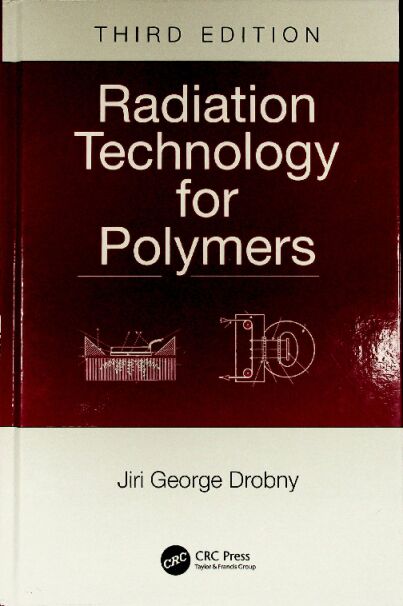
书名:Radiation technology for polymers
ISBN\ISSN:9780367189327,9780367511920
分类号:化学工业
版次:Third edition.
页数:xxi, 315 pags :
摘要
This practical book sets the standard as a valuable, time-saving resource offering systematic fundamental information about industrial radiation technologies. This new edition explores updates to emerging applications of ultraviolet (UV) and electron beam (EB) radiation to polymer processing and offers updates throughout to detail changes changes, new trends, and general issues in radiation technology. It presents vital, cutting-edge information to aid further reduction of volatile organic compounds and toxic substances in the environment, develop alternative sources of energy, and harness energy in both medical and industrial applications.
New features of this edition include:
Stresses the practical aspects of UV/EB technology and its industrial application
Includes updates on UV radiation processes and applications of UV radiation
Explores new engineering data of selected commercial products
Written by an expert with over forty years of experience, this book would make an excellent resource for scientists and engineers in the fields of materials science and polymer chemistry.
查看更多
前言
Preface to First Edition
The industrial use of ultraviolet (UV) and electron beam (EB) radiation is growing at a fast pace and is penetrating many areas, such as electronics, automotive, printing, adhesives and coatings, packaging, etc., which traditionally have had their own well-established processes. Information on this topic useful to a professional can be found in many places, such as encyclopedias (Encyclopedia of Polymer Science and Engineering, Ullmann's Encyclopedia of Industrial Chemistry), professional publications (PCI, Paint and Coating Industry, Paint & Powder, FLEXO, Converting, Modern Plastics, Rubber Chemistry and Technology, Modern Plastics, Wire and Cable, Radiation Physics and Chemistry, Journal of Applied Polymer Science) and others. RadTech News, a publication of RadTech North America covers applications, new technology, and industry news. During the past few years, several very informative books have been published by SITA Technology Ltd. in the UK that covers different aspects of UV/EB radiation technology in great detail. However, seeking specific information may be prohibitively time consuming and a need for a quick reference book is obvious.
Radiation Technology of Polymers is designed to meet this need by providing systematic fundamental information about the practical aspects of UV/EB radiation to professionals in many different fields. The intended audiences are mainly chemists or chemical engineers new to UV/EB radiation technology. Another reader of this book may be a product or process designer looking for specifics about the effects of UV/EB on a specific polymeric material or for a potential technological tool. This book may also be a useful resource for recent college and university graduates or for graduate or undergraduate students pursuing polymer science and engineering and people who undergo corporate training. Given the breadth of the field and the multitude of applications available, the book does not go into details; this is left to publications of a much larger size and scope and to professional periodicals. Rather, it covers the essentials and points the reader toward sources of more specific and/or detailed information. Radiation Technology of Polymers is not a competition to other books on the subject, it merely complements them. With this in mind, this book is divided into 11 separate chapters, covering the principles of generating UV and EB energy, equipment, processes, applications, dosimetry, safety and hygiene. The last chapter covers the newest developments and trends.
This book began as lectures and seminars at the Plastics Engineering Department of the University of Massachusetts at Lowell and to varied professional groups and companies in the United States and abroad. It draws from the author's more than 40 years of experience as an R&D and manufacturing professional in the polymer processing industry and more recently as an independent international consultant.
My thanks are due to the team from the CRC Press, Susan Farmer, Helena Redshaw and Sylvia Wood for helping to bring this work to fruition, to my family for continuing support and Dr. Ewa Andrzejewska, John Chrusciel, Dr. Joseph Koleske, and Richard W. Stowe for their valuable comments and recommendations.
Merrimack, New Hampshire
Preface to Second Edition
The first edition of Radiation Technology for Polymers had the main goal to provide systematic fundamental information to professionals entering the industrial practice of radiation technology as it applies to processing of polymers or people already working in this field. Since its publication in 2003, the industry has changed markedly. Many technological developments have taken place, new applications and products have been developed and commercialized, and some already established ones were discontinued. Companies were sold and bought, reorganized and/or renamed. The UV/EB technology is becoming increasingly more important in a variety of issues, such as continuing quest for further reduction of volatile organic compounds and toxic substances in the environment, development of alternative sources of energy and more. Thus, it was time to update the publication to include these changes, developments, and issues. As the first edition, the second edition still emphasizes the practical aspects of UV/EB technology and its industrial applications. Few illustrations were added and one of the major features is the addition of processing and engineering data of some commercial products. In addition, the feedback from colleagues, students, clients and attendants of various seminars and training sessions were helpful in preparing the manuscript of this updated and expanded edition.
Special thanks go to Anthony J. Berejka, Dr. Marshall R. Cleland, and Richard W. Stowe for editing parts of the manuscript and providing helpful comments and recommendations.
Allison Shatkin who was very helpful and encouraging from the beginning until the end of the preparation of the manuscript deserves many thanks. A special credit is due to the team from CRC Press, particularly to Andrea Dale, Jennifer Ahringer, and Amy Rodriguez for bringing this work to fruition.
Jiri George Drobny
Merrimack, NH and Prague, Czech Republic
Preface to Third Edition
The previous two editions of Radiation Technology for Polymers had as the main goal to provide systematic, fundamental information to professionals who are entering the industrial practice of radiation technology as it applies to processing of polymers, and to those already working in this field. Since the publication of the second edition in 2010, many technological developments and changes have taken place; new applications and products have been developed and commercialized, and some already established ones were discontinued; companies have been sold and bought, reorganized, and/or renamed.
UV/EB technology continues to be important in a variety of issues, such as the continuing quest for further reduction of volatile organic compounds and toxic substances in the environment, development of alternative sources of energy, and more. Thus, it was time to update the publication to include these changes, developments, and issues.
As the previous editions, the third edition still stresses the practical aspects of UV/EB technology and its industrial applications. In order to cover the technological progress and other changes better, a contributing author, a specialist in specific areas, is covering individual chapters or chapter sections. The original author has taken the responsibility as editor of the entire work in addition to writing several chapters that cover areas of his expertise. As before, a few illustrations were added, and the processing and engineering data of selected commercial products were updated. One of the major challenges was the fact that most of the conventional equipment and technologies are still used, so we still had to keep the appropriate information available and yet insert the new items so that it does not become incoherent or confusing.
We have continued to obtain feedback from colleagues, students, clients, and attendants of various seminars and training sessions as an important source for preparing the manuscript of this updated and expanded edition. There were, as always, good friends and colleagues who helped by giving valuable advice, providing photographs, data, and connections within the industry. We are very thankful to John Chrusciel, David Engberg, Michael Fletcher, Mickey Fortune, Georgina Gonzales, Stacey Hoge, Kevin Joesel, Urs Läuppi, Bengt Laurell, Erich Midlik, and Karl Swanson for doing just that. The very rapid and dynamic growth of the industry presented a major challenge, and we hope that we are providing a true and accurate snapshot of the current state of the knowledge and technology.
As in the case of the two previous editions, Allison Shatkin from CRC Press was very helpful and encouraging from the beginning until the end of the preparation of the manuscript and deserves many thanks. A special credit is due to the team from CRC Press, particularly to Gabrielle Vernachio for bringing this work to fruition.
Jiri George Drobny
Merrimack, NH and Prague, Czech Republic
查看更多
目录
1.1 Basic Concepts 2
References 4
PA\2. Review of Elements of Radiation Science and Technology 5
2.1 UV and Visible Radiation 5
2.1.1 Light Emission from Mercury Gas Discharge 6
2.1.2 Light Emission from Microwave-Excited Discharge 9
2.1.3 Generation of Monochromatic UV Radiation 9
2.1.4 UV Radiation from UV Light-Emitted Diode 11
2.2 Ionizing Radiation Types 13
2.2.1 Electron Beam Energy 14
2.2.2 Gamma Rays 16
2.2.3 X-Rays 18
2.2.4 Other Types of Ionizing Radiation 19
2.3 Comparison of UV and EB Processes 20
References 22
PA\3. Ultraviolet Curing Equipment (with Ruben Rivera) 25
3.1 UV Lamps 26
3.1.1 Medium-Pressure Mercury Lamps 27
3.1.2 Electrodeless Mercury Lamps 28
3.1.3 Low-Pressure Mercury Lamps 30
3.1.4 High-Pressure Mercury Lamps 30
3.1.5 Excimer Lamps 30
3.1.5.1 Barrier-Discharge-Driven Excimer Lamps 31
3.1.5.2 Microwave-Driven Excimer Lamps 33
3.1.6 Xenon Lamps 33
3.1.7 Light-Emitting Diode Lamps 35
3.2 Lamp Housings 38
3.3 Power Supply and Controls 40
3.3.1 Power Supply Systems 40
3.3.2 Control Systems 42
3.4 UV-LED Curing Systems 43
3.4.1 Selected UV-LED Industrial Lamps/Systems 45
References 49
PA\4. Electron Beam Curing Equipment 51
4.1 Particle Accelerators 54
4.1.1 Direct Accelerators 55
4.1.1.1 Electrostatic Generators 56
4.1.1.2 Resonant Transformers 56
4.1.1.3 Iron Core Transformers 57
4.1.1.4 Insulating Core Transformers 57
4.1.1.5 Cockcroft-Walton Generators 58
4.1.1.6 Dynamitrons 58
4.1.2 Indirect Accelerators 59
4.1.2.1 Traveling Wave Linacs 60
4.1.2.2 Standing Wave Linacs 61
4.1.2.3 Resonant Cavity Accelerators 61
4.1.2.4 Linear Induction Accelerators 61
4.1.2.5 Rhodotron Accelerators 62
4.1.3 Low-Energy Electron Accelerators 64
4.1.3.1 Single-Stage Scanned Beam Accelerator 66
4.1.3.2 Linear Cathode Electron Accelerators 67
4.1.3.3 Multifilament Linear Cathode Electron Accelerators 70
4.1.4 Sealed Tube Lamp Accelerators 74
References 77
PA\5. UV Radiation Processes (with Ruben Rivera) 81
5.1 Basic Concepts 81
5.2 Photoinitiators and Photosensitizers 83
5.2.1 Free Radical Photoinitiators 84
5.2.1.1 Type I Photoinitiators 85
5.2.1.2 Type II Photoinitiators 85
5.2.2 Free Radical Photoinitiators for UV-LED Curing 86
5.2.3 Cationic Photoinitiators 89
5.2.4 Anionic Photoinitiators 89
5.2.5 Oxygen Inhibition of Cure 90
5.2.6 Initiation of UV Hybrid Curing 91
5.3 Kinetics of Photoinitiated Reactions 91
5.3.1 Kinetics of Free Radical Photopolymerization 91
5.3.2 Kinetics of Cationic Photopolymerization 92
5.4 Chemical Systems in UV Processing 94
5.4.1 Free Radical-Initiated Systems 94
5.4.1.1 Acrylate/Methacrylate Systems 94
5.4.1.2 Styrene/Unsaturated Polyesters 96
5.4.1.3 Vinyl Ether/Unsaturated Esters 96
5.4.1.4 Thiol-Ene Systems 96
5.4.1.5 Donor-Acceptor Complexes 97
5.4.2 Cationic Systems 97
5.5 Photo-Cross-Linking of Polymers 99
References 99
PA\6. Electron Beam Processes 103
6.1 Introduction 103
6.2 Radiation Cross-Link Promoters 110
6.2.1 Indirect Cross-Link Promoters 110
6.2.1.1 Halogenated Compounds 110
6.2.1.2 Nitrous Oxide 110
6.2.1.3 Sulfur Monochloride 110
6.2.1.4 Bases 110
6.2.2 Direct Cross-Link Promoters 111
6.2.2.1 Maleimides 111
6.2.2.2 Thiols (Polymercaptans) 111
6.2.2.3 Acrylic and Allylic Compounds 112
6.3 Retardants of Radiation Cross-Linking 113
6.4 Electron Beam Processing of Plastics 115
6.4.1 Polyolefins 115
6.4.1.1 Polyethylene 115
6.4.1.2 Polypropylene 117
6.4.2 Polystyrene 117
6.4.3 Polyvinylchloride 118
6.4.4 Polymethacrylates and Polyacrylates 118
6.4.5 Polyamides 118
6.4.6 Polyesters 118
6.4.7 Fluoroplastics 118
6.4.7.1 Polytetrafluoroethylene 118
6.4.7.2 FEP 119
6.4.7.3 Other Fluoroplastics 119
6.5 Electron Beam Processing of Elastomers 120
6.5.1 Physical Properties of Radiation Cross-Linked Elastomers 123
6.5.2 Effects of Radiation on Individual Elastomers 124
6.5.2.1 Natural Rubber (NR) and Synthetic Polyisoprene 124
6.5.2.2 Polybutadiene and Its Copolymers 127
6.5.2.3 Polyisobutylene and Its Copolymers 129
6.5.2.4 Ethylene-Propylene Copolymers and Terpolymers 131
6.5.2.5 Polychloroprene 132
6.5.2.6 Silicone Elastomers 133
6.5.2.7 Fluorocarbon Elastomers 134
6.5.2.8 Fluorosilicone Elastomers 135
6.5.2.9 Thermoplastic Elastomers 136
6.6 Electron Beam Processing of Liquid Systems 138
6.7 Grafting and Other Polymer Modifications 140
6.7.1 Grafting 140
6.7.2 Other Polymer Modifications 143
References 144
PA\7. Coating Methods Used in UV/EB Technology 153
7.1 Roll Coating 153
7.1.1 Direct Roll Coating 153
7.1.2 Reverse Roll Coating 154
7.2 Curtain Coating 155
7.3 Spray Application 157
7.3.1 Compressed Air Gun Spraying 157
7.3.2 Airless Gun Spraying 157
7.4 Dip Coating 158
7.5 Flow Coating 158
7.6 Spin Coating 158
7.7 Rod Coating 158
7.8 Vacuum Coating 159
References 160
PA\8. Applications of UV Radiation 161
8.1 UV Curing of Coatings and Paints 164
8.1.1 Functional and Decorative Coatings 164
8.1.1.1 Coatings on Flat, Rigid Substrates 164
8.1.1.2 UV Curing of Coatings on Flexible Substrates 165
8.1.2 UV Curing of Lacquers, Varnishes, and Paints 166
8.1.3 Three-Dimensional Curing 166
8.1.4 UV Curing of Coatings and Inks on Cylindrical-Shaped Parts 167
8.1.5 UV Matting of Coatings 167
8.2 UV Curing of Adhesives 167
8.2.1 Energy-Curable Laminating Adhesives 168
8.2.2 Energy-Curable Pressure-Sensitive Adhesives 169
8.2.3 Energy-Curable Assembly Adhesives 172
8.3 UV-Cured Silicone Release Coatings 173
8.4 Spot Curing 174
8.5 UV Curing in Printing and Graphic Arts 176
8.5.1 Screen Printing 177
8.5.2 Flexography 178
8.5.3 Letterpress and Offset Letterpress (Dry Offset) 180
8.5.4 Lithography 181
8.5.5 Rotogravure Printing 182
8.6 Rapid Prototyping 185
8.7 UV Powder Coatings 185
8.7.1 The Chemistry of UV Curable Powders 186
8.7.2 Material and Substrate Preparation 187
8.7.3 Powder Coating Application 188
8.7.4 Substrates Suitable for UV Powder Coating 190
8.7.5 Industrial Applications 191
8.8 Other Applications for UV Curing 191
8.8.1 Electronics 191
8.8.2 Optical Components and Optoelectronic Applications 192
8.8.2.1 Optical Fibers 192
8.8.2.2 Other Optical and Optoelectronic Applications 192
8.9 Automotive Applications 193
8.9.1 OEM Applications 193
8.9.2 Automotive Refinish Applications 195
8.9.3 3D Printing 195
8.10 Production of Composites by UV Radiation 197
8.10.1 Dental Applications 197
8.10.2 Other Composite Applications 197
8.11 Hydrogels 198
References 199
PA\9. Applications of Electron Beam Radiation 203
9.1 Electron Beam Process in Wire and Cable Technology 203
9.1.1 Equipment and Process 208
9.1.2 Materials 212
9.1.3 Recent Developments and Trends 212
9.2 Electron Beam Process in Tire Technology 213
9.3 Electron Beam Process in the Manufacture of Polyolefin Foams 217
9.3.1 Foam Expansion and Its Control 218
9.3.2 Manufacturing Processes 219
9.3.3 Comparison of Chemical and Radiation Processes 219
9.4 Electron Beam Process in the Production of Heat-Shrinkable Materials 221
9.4.1 Heat-Shrinkable Tubing 222
9.4.2 Heat-Shrinkable Sheets and Films 226
9.5 Electron Beam Process in Coatings, Adhesives, Paints, and Printing Inks 227
9.5.1 Magnetic Media 228
9.5.2 Coatings 228
9.5.3 Printing and Graphic Arts 230
9.5.4 Adhesives 231
9.5.4.1 Pressure-Sensitive Adhesives (PSAs) 231
9.5.4.2 Laminating Adhesives 232
9.5.5 Polymeric Fiber-Reinforced Composites 233
9.5.6 Hydrogels 235
9.5.7 Production of Fluoroadditives 235
9.6 Other Applications for Electron Beam Radiation 236
References 237
PA\10. Dosimetry and Radiometry 243
10.1 EB Dosimetry 243
10.2 UV Radiometry 249
10.2.1 Actinometers 250
10.2.2 Radiometers 250
10.2.2.1 Radiometers for Conventional Ultraviolet Lamps 250
10.2.2.2 Radiometers for Ultraviolet Light-Emitting Diode Lamps 256
10.2.3 Radiochromic Films 259
References 261
PA\11. Safety and Hygiene 263
11.1 UV Equipment Health and Safety 263
11.2 EB Equipment Health and Safety 265
11.3 Chemical Hazards 266
References 268
PA\12. Recent Developments and Trends 269
12.1 Current Trends in Equipment and Chemistry 270
12.1.1 UV/EB Equipment 271
12.1.2 Chemistry 271
12.2 Emerging Technologies and Applications 271
12.2.1 The Use of UV-LED in 3D Printing 271
12.2.2 Modification of Polymer Substrates Using Electron Beam-Induced Graft Copolymerization 272
12.2.3 Improving Surface Cure with UVC LED Lamps 272
12.2.4 Applications for Sealed Tube EB Lamps 273
12.2.5 Advances in Energy Cure Inkjet Printing 273
12.2.6 Current State of and Trends in the UV-LED Technology 273
12.2.7 Advances in Energy-Curable Pressure-Sensitive Adhesives 274
12.2.8 EB Curing Technology in Web Package Printing 275
12.2.9 Polymer Optics from UV-Curable Polymer Systems 276
12.2.10 UV-LED for Automotive and Transportation Applications 276
References 277
PA\Glossary 279
Appendix I: Bibliography 293
Appendix II: Major Equipment Manufacturers 297
Appendix III: Standard Radiation and Dosimetry Tests 301
Appendix IV: Major Suppliers of Raw Materials for UV/EB Curing 303
Appendix V: The Twelve Principles of Green Chemistry 305
Index 307
查看PDF
查看更多
作者简介
Jiri George Drobny was educated at the Technical University in Prague in Chemical Engineering, at the Institute of Polymer Science of the University of Akron, and at Shippensburg State University in Business Administration. His career spans over 50 years in the rubber and plastics processing industry in Europe, the US, and Canada, mainly in R&D with senior and executive responsibilities. Currently, he is President of Drobny Polymer Associates, an international consulting firm specializing in fluoropolymer science and technology, radiation processing, and elastomer science and technology. He has been active as an educator, lecturer, author, and as a technical and scientific translator. He is a member of the Society of Plastics Engineers, American Chemical Society, and RadTech International North America and is listed in Who's Who in America, Who's Who in Plastics and Polymers, Who's Who in Science and Engineering, and Who's Who in the East. He resides in New Hampshire. PA\Contributing author: Ruben Rivera, Regional Sales Manager, South, Phoseon Technologies
查看更多
馆藏单位
中科院文献情报中心