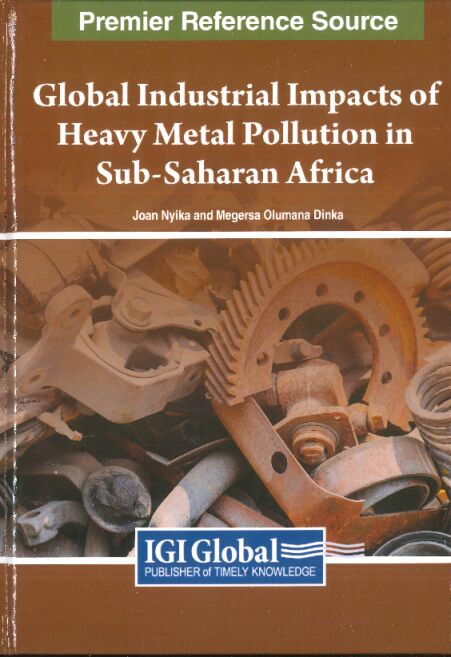
书名:Global Industrial Impacts of Heavy Metal Pollution in Sub-Saharan Africa
责任者:Joan Nyika;Megersa Dinka | Dinka, Megersa
分类号:环境科学、安全科学
页数:xiii, 406 p.
前言
Industrialization along with its drivers including the need for economic growth, urbanization and population rise around the globe is inevitable, multifaceted, and dynamic. The relationship between industrial growth and environmental quality is indirectly proportional. With rapid growth in industrialization, various environmental issues and a series of pollution kinds emanate and spread at different temporal rates and spatial extents. The environmental issues are as a result of greater carbon emissions and contaminant release during production and manufacturing processes. Additionally, industrialization promotes pollution by releasing solid waste, wastewater (effluents), particulate matter and emissions containing toxic organic and inorganic pollutants such as heavy metals. The pollutants accumulate in various environmental compartments including air, soil and water beyond the natural degradation capacity. This is because most of these pollutants including heavy metals (HM), phenolic compounds, aromatic hydrocarbons and surfactants are recalcitrant and nonbiodegradable. As such, they are then transferred to trophic levels and exert their noxious effects on living things and natural resources.
Heavy metals are naturally occurring elements in the earth's crust and have a variety of uses that are increasing in the industrial era. Subsequently, their increased use had resulted to a surge in the aquatic and terrestrial ecosystems as effluents and solid wastes are being produced from manufacturing activities. Anthropogenic activities including foundry, smelting, metal mining, textile making, jewelry production and chemical production are metal-based and result to environmental pollution due to the leaching of such pollutants from open dumpsites, landfill, sewer drains, animal manure, excretion, automobiles, runoffs and roadworks. The use of heavy metals in the manufacture of fertilizers, insecticides and pesticides for various agricultural activities is also a source of pollution. Metal evaporation, corrosion and volcanic activity among othernatural processes occurring during weathering, soil pedogenesis and sedimentation also contribute to the environmental heavy metal load though human activities are the largest contributors.
The potential etiology resulting from environmental pollution by heavy metals and the subsequent degradation of land and water resources is one of the most pressing global issues of modern day. Overuse and misuse of natural resources in attempts to meet demands of an unsustainable development pattern worldwide is causing considerable health risks and public concerns to existence of living things. For this reason, it is imperative to understand the pollution potential of various heavy metals, their anthropic sources, ways to assay and rate them and control and preventative measures to take to avoid widespread pollution and its associated effects. Such undertakings are because of existent evidence showing that heavy metals not only cause environmental pollution but they are also atmospheric pollutants that are lethal to humans. Once the metal mix with different elements of the environment such air, soil and water, they become strongly toxic and such effects can spread to ecosystems.
This book contributes, holistically, to these efforts by presenting the toxic effects of heavy metals to living things from a general viewpoint and relating their pollution to industrialization developments in the world and in Sub-Saharan Africa (SSA) region. This is because industrialization is growing and the use of heavy metals now and in the future will become inevitable. Consequently, production of solid waste and effluents containing the toxic metals will also grow. In such a trend, devising solutions geared to eliminating and preventing the toxins from polluting the environment and in particular, soils will be a bold step towards sustainable development. This is because advances to more resilient and pollution-free soils will promote better life on land and water, cleaner water, better consumption, sustainable communities, reduced poverty, food security and proactive climate action, aspects that are engraved in the sustainable development goals (SDGs).
The book further discusses the techniques for assaying the heavy metals in environmental samples and particularly, soils before discussing how to rate heavy metal pollution extent and impacts to the ecology using various indices. The discussion is done with the precognition that techniques of assaying heavy metals in soils are varied, have some merits and demerits and determine accurate and representative rating of pollution in assayed samples. Soil pollution by lead (Pb), chromium (Cr), arsenic (As), mercury (Hg), cadmium (Cd), nickel (Ni), copper (Cu) and zinc (Zn) in soils of SSA region is discussed. The metals are known to be the most lethal in the environment, to natural resources and humans. The approaches to manage and measures to control and prevent heavy metal pollution in soils of the SSA and the globe at large, are also discussed.
Chapter 1 focuses on the chemistry of heavy metals to understand their capacity to induce toxicity in the environment and living things. Some of the metals discussed include As, Cd, Co, Cr, Cu, Hg, Ni, Pb and Zn. The factors that influence the bioavailability of metals for uptake and the mechanisms they use to inflict toxic effects are explored and demonstrated using various equations. The toxicity of heavy metals to living organisms is discussed under several categories including their ability to cause neurotoxicity, nephrotoxicity, carcinogenicity, hepatoxicity, immunological toxicity, cardiotoxicity, genotoxicity and reproductive and developmental toxicity.
In Chapter 2, a general overview of industrial growth globally and its effects on environmental pollution by heavy metals is discussed. Industrialization growth periods are classified into five based on technological advancements. Furthermore, the growth is related to environmental pollution by heavy metals in water, soil and air compartments as well as the trophic transfer of the pollutants to living organisms. In the chapter, the manufacturing, cement, chemical, coal, oil and petroleum, foundry, smelting, milling and mining industries are identified as key sources of heavy metals.
Chapter 3 specifically focuses on heavy metal pollution in sub-Saharan Africa, which just like other parts of the globe is experiencing industrial growth in recent times. The drivers of heavy metal pollution particularly the transportation sector, waste management systems, agricultural activities and the industrial sector are discussed and connected to heavy metal release to the environment. A specific focus on Eastern, Western and Southern Africa in relevance to their heavy metal pollution status is also detailed using specific-country examples.
Chapter 4 discusses the techniques of assaying for heavy metals in soil samples in order to make inferences on the soil status of a given region. The chapter begins with discussing the sampling approaches to use and the precautions to take to preserve and prepare collected samples before analysis and without losing their contents. Direct and indirect methods of assaying for heavy metals are also detailed along with their merits and demerits. Some of the discussed methods apply the principles of spectrometry, spectroscopy, chromatography and electrophoresis.
In Chapter 5, the rating of analyzed soil samples based on their pollution classes is discussed. In this case, the use of indices as tools and indicators of pollution status is explored. Indices used are categorized as single and total complex pollution indices based on their simplicity and applications. The factors to consider when selecting an index for pollution rating are also explored. These include the soil uses, data availability on background values, comparability of the calculated values and the purpose of the study.
Chapter 6 reports of a case study of heavy metal pollution in soils of five suburban regions of Nairobi, Kenya where untreated industrial effluent was used for vegetable irrigation. Soils were assayed for heavy metals using mass spectrometry and both single and total complex indices were used to rate pollution in soils. Using the pollution load index (PLI), soils of the study area had high pollution and ecological risk while Cd and Hg were the most lethal metals to soils.
Pollution by Pb, Cr, As, Hg, Cd, Ni, Cu and Zn were discussed in Chapters 7 to 13 in respective order. In each case, the properties of the metal that make it toxic to soils, the industrial sources of the metal and its physicochemical modifications to soils were discussed. Mining and smelting, unsystematic management of effluent and solid waste and use of agrochemicals were common sources of metal contamination to soils. The mining industry was the dominant cause of heavy metal pollution in soils of SSA region.
In Chapter 14, the management of polluted soils towards their reclamation and rehabilitation was discussed. Techniques used to manage soils were categorized as physical, chemical and biological remediation approaches. They were also compared based on their merits and demerits. Physicochemical techniques were found to be expensive to implement in large-scale polluted areas in addition to causing more pollution through production of sludge while bioremediation was found to be eco-friendlier though its application at field-scale is still at nascent stages. The need to find the best fit technique to remediate a particular heavy metal in a targeted soil was emphasized as the key to optimizing removal efficacy.
Chapter 15 discussed the specific measures that can be taken to prevent and control heavy metal pollution in soils of SSA region. The measures can also be replicated in other areas of the globe. The chapter emphasizes on avoidance of pollutant sources (industrial activities) through uptake of a circular economy, use of advanced technologies to predict, detect, analyze and model heavy metals pollution in soils, sustainable management of waste including effluents, regulated use of agrochemicals to prevent over- and misuse and enactment of effective policies of land management, reclamation and rehabilitation as potential corrective measures.
The book is a useful resource to academicians and researchers in the field of environmental and natural resources management who can use it to gain knowledge on heavy metal pollution extent, sources and effects in SSA. They can also use aspects of the book to teach on sampling of soils suspected to be polluted, analyzing collected samples at field and/or laboratory scale and transforming analyzed data to credible information on the pollution state of a specified area. With the knowledge, they can conduct their teaching with emphasizes on preventing further pollution. Additionally, they can conduct research geared towards taking affirmative action to control and prevent further heavy metal pollution using innovative, sustainable, cost-effective and environmentally friendly technologies. The book is also relevant to regulatory agencies and policymakers charged with sustainable environmental management and planning in SSA and the world. With the concepts outlined in the book, such individuals can prioritize on actions to take towards better management of heavy metal pollution in soils and other natural resources, soil reclamation and land rehabilitation if pollution has already taken place. Furthermore, they can use the information to push for policies and regulatory measures geared to protection of soils and land resources from heavy metal pollution.
The book is therefore one of a kind in the field of environmental science since it shows the influence of the pollution on land resources and particularly soils. It pays attention to SSA region that is vulnerable to soil pollution, although it is least prepared to deal with the resultant effects. The book also cautions on the need to advance industrialization while being environmental sensitive of the impacts of such developments and their capacity to reverse gains towards sustainable development. As such, it is a wakeup call for to rethink industrialization and environmental sustainability as inextricable rather than distinct occurrences.
We hope you shall appreciate it.
查看更多
目录
Preface viii
Acknowledgment xiii
Chapter 1 Introduction to Heavy Metals and Their Toxicity 1
Chapter 2 Global Industrialization and the Introduction of Heavy Metal Pollution to the Environment 39
Chapter 3 Environmental Pollution by Heavy Metals in Sub-Saharan Africa 67
Chapter 4 Methods of Assessing and Analyzing Heavy Metal Pollution in Soils 90
Chapter 5 Methods of Rating Heavy Metal Pollution in Soils Using Indices 122
Chapter 6 Heavy Metal Pollution of Soils and Their Ecological Risk in Suburban Areas: A Case Study From Eastern Africa 141
Chapter 7 Soil Pollution by Lead in Sub-Saharan Africa 161
Chapter 8 Soil Pollution by Chromium in Sub-Saharan Africa 178
Chapter 9 Soil Pollution by Arsenic in Sub-Saharan Africa 196
Chapter 10 Soil Pollution by Mercury in Sub-Saharan Africa 214
Chapter 11 Soil Pollution by Cadmium in Sub-Saharan Africa 233
Chapter 12 Soil Pollution by Nickel in Sub-Saharan Africa 252
Chapter 13 The Dynamics of Copper and Zinc Pollution in Soils: The Case of Sub-Saharan Africa 268
Chapter 14 Approaches to the Management of Heavy Metals in Polluted Soils 285
Chapter 15 Measures to Control and Prevent Heavy Metal Pollution in Soils of Sub-Saharan Africa 311
Compilation of References 322
About the Authors 402
Index 404
查看PDF
查看更多
馆藏单位
中国化工信息中心